Livestock Transportation Stress: How to Safely Move Cattle, Horses & Sheep
By FarmVetGuide Editorial Team · Published May 2026 · Updated March 2026 · Based on verified data from our directory of 9,500+ practices
Why Livestock Transportation Stress Is a Serious Health Concern
Moving livestock—whether it's a single horse to a new barn, a group of calves to a sale barn, or a semi-load of market hogs from a finishing site to a packing plant—exposes animals to a cascade of physiological and psychological stressors that can have real consequences for their health, welfare, and production performance. Transportation stress is not merely an animal welfare concern: it directly costs producers money through shrink weight losses, increased disease susceptibility, injuries, and in severe cases, dead-on-arrival (DOA) losses.
Understanding the science of transportation stress and applying best management practices during loading, transit, and unloading is one of the most impactful things a producer can do to protect their animals and their bottom line. This guide covers the full arc of livestock transportation—from pre-transport health assessment through arrival protocols—for cattle, horses, sheep, and other livestock species.
We'll also cover the regulatory and veterinary requirements you need to know: when a Certificate of Veterinary Inspection (CVI) is required, how interstate movement rules work, what to do in a medical emergency during transit, and how to find a large animal veterinarian when you need one urgently.
The Physiology of Transportation Stress
To manage transportation stress effectively, it helps to understand what's happening inside your animal when you load it on a trailer. Transportation triggers a well-documented stress response cascade:
The Stress Response
When an animal perceives a threat—including the unfamiliar environment, sounds, smells, motion, and social disruption of transport—its hypothalamic-pituitary-adrenal (HPA) axis activates. Cortisol and adrenaline surge. Heart rate, respiratory rate, and blood pressure increase. Blood flow is redirected from the gut and immune system toward muscles. Digestion slows or stops. Immune function is suppressed.
In a brief, acute stress event, this response is adaptive and reversible. But during prolonged transport—particularly under conditions of heat, crowding, poor ventilation, or rough road surfaces—the stress response can become chronic and harmful. Chronically elevated cortisol suppresses lymphocyte function, reduces natural killer cell activity, and impairs mucosal immunity in the respiratory tract. This is precisely why "shipping fever" (bovine respiratory disease triggered by transport stress combined with pathogen exposure) is one of the most costly diseases in the beef cattle industry.
Dehydration and Electrolyte Loss
Animals lose significant water and electrolytes during transport through respiration, urination, and fecal output—even more so in hot weather. Cattle transported for 8 hours can lose 4–7% of their body weight, much of it from body water. At 6–8% body water deficit, physiological function begins to be impaired. Dehydrated animals are more susceptible to respiratory disease and have reduced healing capacity.
Shrink Weight
"Shrink" refers to the weight loss animals experience during and after transport. Shrink has two components:
- Gut fill loss (fill shrink): Loss of digesta, urine, and feces from the gastrointestinal tract. This is partially recoverable within 24–48 hours of arrival when feed and water are available. It represents roughly 60–70% of total transport shrink.
- Tissue shrink: True loss of body tissue (muscle, fat) from energy expenditure and dehydration. This is not recoverable by simply feeding the animal at destination—it represents a permanent loss at the time of sale or slaughter. It represents roughly 30–40% of transport shrink under stressful conditions.
Minimizing shrink is economically important when animals are sold by weight at destination. Well-managed transport in cool conditions with appropriate rest stops and water access dramatically reduces total shrink compared to poorly managed long hauls in hot weather.
Pre-Transport Health Assessment
The most important step in any livestock movement—especially for longer distances—is a thorough pre-transport health check. This serves multiple purposes: it ensures that only fit animals enter the transportation chain, it identifies animals that may need veterinary treatment before transport, and it documents the health status of animals at point of origin.
Fitness for Transport Assessment
The following animals should NOT be transported (or should only be transported with special veterinary documentation and care) unless for emergency veterinary treatment:
- Animals that cannot bear weight on all four limbs or that cannot walk without assistance
- Animals with open, infected wounds or prolapses
- Animals in the late stages of pregnancy (within 10% of expected parturition date for the species), or that have given birth within 48 hours
- Animals with severe respiratory distress at rest
- Neonates with unhealed navels (transport increases infection risk)
- Animals with obvious signs of acute illness (fever, severe diarrhea, neurological signs)
- Blind animals that may be prone to panic and injury in the trailer environment
Transporting unfit animals is not only inhumane—it is a legal issue. Federal regulations under the 28-Hour Law and USDA regulations, as well as state laws, prohibit transport of non-ambulatory animals in most circumstances.
Pre-Transport Veterinary Examination
For interstate movement, a Certificate of Veterinary Inspection (CVI, or health certificate) is required in most circumstances. This document requires a licensed, USDA-accredited veterinarian to physically examine the animals within a specific time window before transport (typically 30 days, though some states require 10 days or less—check destination state requirements). The examination covers:
- Visual and hands-on assessment of each animal's health status
- Verification of required identification (ear tags, tattoos, brands)
- Confirmation that required testing (brucellosis, tuberculosis for cattle; Coggins for horses) is current
- Review of vaccination history if required by destination state
Plan your vet appointment well in advance of your transport date. CVIs often have a validity window of 30 days from the date of examination, and some required tests (like Coggins for equine infectious anemia) may take several days to return results.
Pre-Transport Management: 12–24 Hours Before Loading
- Feed and water access: Ensure animals have ad libitum access to water and roughage up to the time of loading. Avoid fasting animals before transport—contrary to common practice, full gut fill provides ballast that reduces swaying and motion sickness. Fasting beyond 6–8 hours before long hauls increases tissue shrink and dehydration.
- Sort and pen appropriately: Pre-sort animals into the groups you will load together. Avoid mixing unfamiliar animals in the pre-load pen where possible—mixing stress compounds transport stress.
- Trim hooves if needed: Overgrown hooves increase the risk of slipping, stumbling, and injury on trailer floors.
- Document ear tags or other ID: Verify that all animals have required identification before loading.
- Check weather forecast: If a heat or cold weather event is forecast along your route, adjust your departure time or travel plan accordingly.
Trailer Preparation and Equipment
The condition of your trailer is a critical determinant of animal welfare and transportation outcomes. A poorly maintained trailer causes physical injuries, increases stress, and can introduce disease.
Trailer Inspection Checklist
- Flooring: Check for soft spots, holes, and slippery surfaces. Non-slip flooring (rubber mats, grooved aluminum, or adequate bedding) is essential. Wet, slippery floors are a leading cause of livestock transport injuries.
- Ventilation: Ensure ventilation openings are functional and appropriate for weather conditions. Good airflow prevents heat stress and ammonia buildup. Adjust slats and side vents based on temperature and wind.
- Structural integrity: Check gates, latches, hinges, and dividers. A gate failure during transit can cause catastrophic injuries.
- Cleanliness and disinfection: Remove all old bedding and manure. Wash and disinfect the trailer with an appropriate disinfectant (quaternary ammonium, peracetic acid, or phenolic compounds). Allow adequate contact time and rinse thoroughly. Allow to dry completely before loading. This is especially critical when transporting animals from different sources or species.
- Bedding: Add adequate fresh bedding (straw, shavings) to absorb moisture and provide traction. Bedding depth requirements vary by species and weather—more bedding is needed in cold weather for insulation.
- Water system (if equipped): Test water lines and troughs if your trailer has an onboard water system.
- Lights and brakes: Verify all trailer lights, brakes, and safety chains are functional.
- Tires: Check tire pressure and condition on all trailer tires before each trip.
Bedding Recommendations by Season
| Season / Temperature | Recommended Bedding Depth | Material |
|---|---|---|
| Summer (>85°F) | 2–3 inches (traction focus) | Straw or shavings; prioritize ventilation over insulation |
| Mild (50–85°F) | 3–4 inches | Straw or shavings |
| Cold (30–50°F) | 4–6 inches | Straw preferred for insulation and moisture absorption |
| Very cold (<30°F) | 6–8+ inches | Deep straw pack; consider side curtains; avoid wet bedding |
Loading Density: How Many Animals Can You Safely Transport?
Loading density—how many animals fit in a given trailer space—is one of the most important and most commonly mismanaged aspects of livestock transport. Both overcrowding and excessive undercrowding increase the risk of injury and stress.
Overcrowding prevents animals from maintaining balance, increases body heat production, restricts airflow, and dramatically increases the risk of trampling injuries and stress-related disease. At the same time, too few animals in a trailer means animals cannot brace against each other during movement, leading to increased falls and injuries—this is particularly true for cattle in trailers without internal dividers.
Cattle Loading Density Guidelines
| Body Weight | Recommended Space per Animal | Notes |
|---|---|---|
| 200–400 lbs (calves) | 3.5–5.0 sq ft per animal | Group together for warmth and balance; more space in summer |
| 400–600 lbs (stocker) | 5.0–7.0 sq ft per animal | |
| 600–900 lbs (growing steers) | 7.0–9.5 sq ft per animal | |
| 900–1,200 lbs (finished steers) | 9.5–12.5 sq ft per animal | |
| 1,200–1,400 lbs (cows) | 12.5–15.0 sq ft per animal | |
| Horned cattle | Add 10–15% additional space | Horns increase injury risk to pen mates |
Density targets are for trips under 8 hours. For longer hauls, reduce density by 10–15%. In hot weather (>85°F), reduce density by 15–20% to allow heat dissipation.
Horse Loading Density Guidelines
| Horse Size | Minimum Space | Notes |
|---|---|---|
| Pony (<14.2 hh) | 20–25 sq ft per animal | Allow enough head room; check trailer height |
| Light horse (14.2–16 hh) | 28–35 sq ft per animal | Standard 2-horse trailer: 2 horses maximum |
| Warmblood / Draft cross (16+ hh) | 35–45 sq ft per animal | Many standard trailers too short/narrow; measure before loading |
| Draft breeds | 45–60 sq ft per animal | Require specialized stock trailers; confirm height clearance |
Note: These are minimums for animal welfare. Some horses travel better with a divider removed and additional room to spread their legs and balance. Consult with your equine vet for horses with known transport anxiety or previous transport injuries.
Sheep and Goat Loading Density Guidelines
| Animal | Weight Range | Space per Animal |
|---|---|---|
| Lambs | 40–80 lbs | 2.0–3.0 sq ft |
| Yearling sheep | 80–130 lbs | 3.0–4.0 sq ft |
| Adult ewes/rams | 130–250 lbs | 4.0–5.5 sq ft |
| Meat goats (kids) | 20–60 lbs | 1.5–2.5 sq ft |
| Adult goats | 60–200 lbs | 3.0–4.5 sq ft |
| Heavy rams / bucks | 200–350 lbs | 5.0–6.5 sq ft |
In cold weather, slightly higher density helps conserve body heat in small ruminants, which lose heat rapidly. In hot weather, reduce density and prioritize ventilation. Separate rams and bucks from females and other males to prevent fighting injuries during transit.
Swine Loading Density Guidelines
| Pig Weight | Space per Animal | Notes |
|---|---|---|
| 50–100 lbs (nursery/feeder) | 1.5–2.0 sq ft | Group carefully; pigs settle and pile; monitor for smothering |
| 100–200 lbs (grower) | 2.0–3.0 sq ft | |
| 200–280 lbs (finisher) | 3.0–4.0 sq ft | Market weight; most common transport category |
| Sows / boars | 7.0–10.0 sq ft | Separate boars; fighting causes serious injury |
Pigs are extremely sensitive to heat during transport. Reduce density significantly in summer and ensure adequate misting/ventilation. Pigs cannot sweat and will die rapidly from heat stress in an overcrowded, poorly ventilated trailer.
Heat Stress During Transit
Heat stress during transport is a major cause of livestock losses and welfare problems, particularly in summer months. Understanding the risk factors and preventive measures is essential for every producer who moves livestock.
Risk Factors for Heat Stress in Transit
- Ambient temperature above 85°F (29°C), especially combined with high humidity
- Overcrowding—more animals means more metabolic heat production per unit of space
- Inadequate ventilation—trailer vents closed, stuck, or insufficient for the load
- Extended time in stationary traffic (air flow stops when the vehicle stops moving)
- Previous exertion or excitement during loading
- Dark-colored animals absorb more solar radiation than light-colored animals
- Pre-existing respiratory disease compromises heat dissipation
Heat Stress Recognition by Species
| Species | Early Signs | Severe Signs |
|---|---|---|
| Cattle | Open-mouth breathing, bunching to avoid sun, excessive salivation, reduced activity | Staggering, collapse, recumbency, elevated respiratory rate >80/min |
| Horses | Sweating profusely, flared nostrils, elevated respiration, elevated heart rate | Weakness, stumbling, muscle cramping (tying-up), collapse |
| Sheep/Goats | Panting, bunching, lethargy, seeking shade/corners of trailer | Collapse, open-mouth breathing, inability to stand |
| Pigs | Panting heavily, reddening/blueing of skin, piling up in corners | Prostration, convulsions, death (can occur within 30–60 minutes of severe heat stress) |
Heat Stress Prevention During Transport
- Travel timing: Move livestock during the coolest parts of the day—early morning departures, overnight travel for longer hauls. Avoid mid-afternoon loading in summer.
- Shade during stops: Park in shade during rest stops. Never leave livestock parked in direct sunlight in a trailer in summer.
- Water access during stops: Offer water at every rest stop. Dehydration compounds heat stress rapidly.
- Reduce loading density: As discussed above—reduce density by 15–20% in hot weather.
- Sprinkler/mist systems: Some operations use trailer-mounted sprinkler systems during hot-weather transport, particularly for hogs. Wetting the skin provides evaporative cooling. Do NOT use this for horses (can cause muscle cramping) without veterinary guidance.
- Minimize time in pre-load pens: Loading facilities heat up rapidly in summer sun. Process and load animals quickly; do not hold them in crowded, sun-exposed pens while waiting for the truck.
- Monitor continuously: Check on livestock during transit, especially at rest stops. If any animals show severe signs of heat stress, stop immediately and call your veterinarian.
Cold Stress During Transit
Cold weather transport is less publicized than heat stress but carries significant risks, particularly for young animals, animals in poor body condition, and wet or recently shorn animals. The critical factor is not just temperature but the combination of temperature, wind chill, and wetness.
Risk Factors for Cold Stress in Transit
- Ambient temperature below 32°F (0°C), especially combined with wind
- Wet animals or wet bedding—wetness destroys the insulating ability of hair/wool
- Newborns and young animals with limited fat reserves
- Recently sheared sheep or goats
- Animals in poor body condition (thin animals lack insulating fat)
- Inadequate bedding depth—animals cannot get off the cold metal floor
- Excessive ventilation in very cold weather—strong airflow carries heat away from animals rapidly
Cold Weather Management
- Deep bedding: As shown in the bedding table, use 6–8+ inches of dry straw in very cold weather. Wet bedding is nearly useless for insulation—check and replace if wet during long hauls.
- Adjust ventilation: Reduce ventilation opening in very cold weather, but never close ventilation completely—ammonia buildup from manure and respiratory moisture creates respiratory disease risk.
- Do not transport wet animals: Rain-soaked or recently bathed animals should not be transported in cold weather until dry.
- Do not transport recently shorn sheep or goats in cold weather without coats or other protection unless hauling very short distances.
- Separate young animals: Neonates and very young animals should be in a protected area of the trailer with additional bedding.
- Monitor temperature inside the trailer: Temperature inside a moving, closed trailer can drop rapidly in extreme cold. Check animals at rest stops.
Loading and Unloading: The Highest-Risk Moments
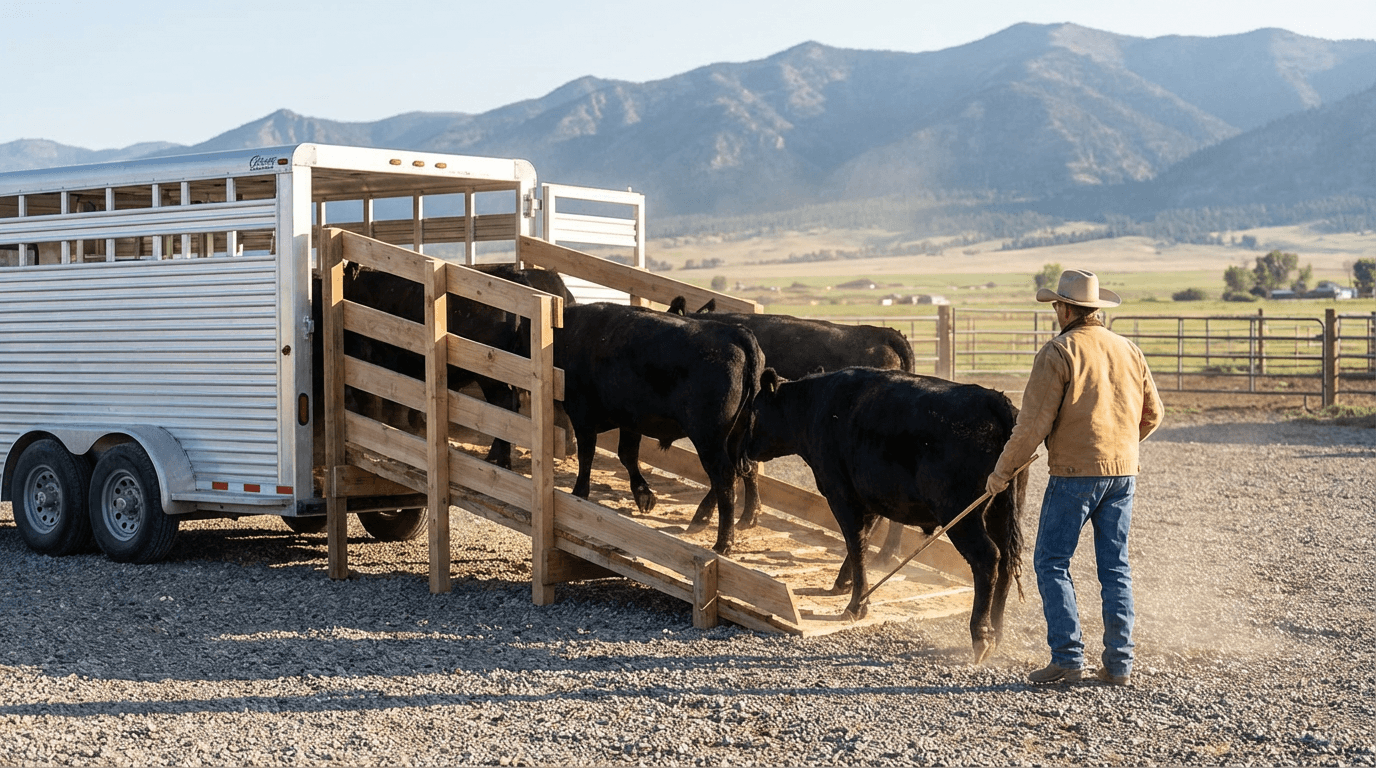
More livestock injuries occur during loading and unloading than at any other point in the transportation process. The combination of unfamiliar environments, pressure from handlers, poor footing, and the natural flight response of prey animals creates the conditions for slips, falls, and gate-related injuries.
Low-Stress Handling Principles for Loading
The foundational principle of low-stress livestock handling (based on the work of Temple Grandin and others) is to work with the animal's natural behavior rather than against it:
- Understand the flight zone: Every prey animal has a flight zone—the distance within which a handler's presence causes the animal to move away. Working at the edge of the flight zone drives the animal forward. Penetrating deep into the flight zone causes panic and explosive movement.
- Work from the point of balance: The point of balance for most livestock is at the shoulder. Move behind the shoulder to drive the animal forward; move in front of the shoulder to stop or back the animal.
- Minimize noise: Loud noises (yelling, metal clanging, air escaping from pneumatic systems) dramatically increase stress and erratic movement during loading. A quiet loading environment loads faster than a chaotic one.
- Minimize the use of electric prods: Use electric prods only as a last resort, never on sensitive areas (face, rectum, genitals), and never on sick, young, or very stressed animals. Excessive use of prods increases falls and injuries.
- Remove distractions: Animals balk at changes in footing, shadows, reflections, chains hanging across the chute, loud fans, or moving objects visible through gaps. Eliminate or minimize these wherever possible.
- Use solid-sided loading chutes: Animals load more calmly through solid-sided chutes where they cannot see activity alongside the chute.
Loading Chute Setup
- Chute slope should not exceed 20 degrees (some guidelines say 25 degrees for some species)—steeper slopes increase falls
- Non-slip flooring on the chute and trailer entry is non-negotiable
- Chute width should accommodate the largest animals being loaded without squeezing (cattle typically need 26–30 inches)
- Lighting: ramp up toward the trailer opening if possible—livestock move toward light
- Remove dangling chains, ropes, or equipment that animals can see through the chute side panels
Unloading
Unloading carries the same injury risks as loading, with the added challenge that animals may be fatigued, dehydrated, and disoriented after a long trip. Take your time. Allow animals to exit at their own pace. Have adequate personnel to manage animals as they come off the trailer. Provide water immediately on arrival—before feed—to address dehydration from transport.
Driving and Route Management
How you drive matters enormously for livestock welfare in transport. Studies using accelerometers inside trailers show that rapid acceleration, hard braking, and sharp cornering create significant physical stress for animals, causing repeated loss of balance and bracing that leads to fatigue and injury over long distances.
Driving Best Practices
- Accelerate and decelerate gradually: Give animals time to shift their weight and brace. Hard stops cause falls and pile-ups.
- Take curves slowly: Lateral G-forces from fast cornering are particularly destabilizing for livestock.
- Avoid rough roads when possible: Rough road surfaces cause continuous jostling that exhausts animals over long distances.
- Rest stops: Federal regulations (the 28-Hour Law) require that cattle, sheep, swine, and other livestock transported by rail must be unloaded, fed, watered, and rested for at least 5 consecutive hours after 28 consecutive hours of confinement. While this law does not technically apply to truck transport, the biological need for rest and water access is the same regardless of transport mode. Best practice for truck transport: allow water access and, for very long hauls, rest stops of at least 30–60 minutes every 8–10 hours.
- Plan your route: Know where you can stop for emergencies along your route. Identify veterinary clinics and emergency services along your path before departing, especially for long interstate hauls.
Interstate Movement Regulations: What You Need to Know
Moving livestock across state lines is regulated by both federal and state law. Requirements vary significantly by species and destination state. Getting this wrong can result in your animals being turned back at the state line, significant fines, and a bad experience for your animals. Plan ahead.
The Certificate of Veterinary Inspection (CVI / Health Certificate)
Most states require a CVI for incoming livestock from other states. Key points:
- Must be issued by a USDA accredited veterinarian who physically examines the animals
- Must be completed within the time window specified by the destination state (often 30 days, some states require 10 days or less)
- Must include required identification for each animal (ear tags, brand, tattoo)
- Must confirm required health testing is current (see species-specific requirements below)
- Original CVI must accompany the animals during transport (a copy should be retained by the shipper)
Species-Specific Interstate Movement Requirements
| Species | Typical Requirements | Variable Requirements |
|---|---|---|
| Cattle | CVI; official ID (USDA ear tag); brucellosis class-free status for most states | TB testing (for cattle from some states); some states require brand inspection; livestock disease area restrictions |
| Horses/Equine | CVI; negative Coggins (EIA test) within 6–12 months (varies by state); official ID | Some states require a more recent Coggins (within 30 days); some require rabies vaccination documentation; AHC (Equine Herpesvirus) documentation increasingly requested |
| Sheep | CVI; scrapie eradication program ID (official ear tag with flock number); scrapie status documentation | Some states require brucellosis testing for breeding animals from certain areas |
| Goats | CVI; official scrapie ID (ear tag or tattoo); scrapie status | Some states have additional requirements for breeding stock |
| Swine | CVI; official ID; pseudorabies-free status of origin herd | Some states require brucellosis testing; some states have specific import permit requirements for swine |
| Poultry | CVI; negative NPIP pullorum-typhoid test or NPIP certified flock paperwork | Requirements vary significantly by state; some states require import permits |
These represent general patterns as of 2026. Requirements change. Always verify current requirements with the State Veterinarian's office in the destination state before transport. The USDA APHIS interstate certificate requirements page and the NAIS system can also help.
The 28-Hour Law
The federal 28-Hour Law (49 U.S.C. 80502) requires that livestock transported by carrier (rail or vehicle) must be unloaded, fed, watered, and rested for at least 5 consecutive hours after 28 hours of continuous confinement. The 28-hour period can be extended to 36 hours if the owner or shipper requests it in writing. Note that this law technically applies to vehicles operated by carriers for hire, not necessarily to producers hauling their own animals—but the welfare principle is the same regardless.
Import Permits
Some states require an import permit (issued by the state department of agriculture) in addition to a CVI for certain species or movements. This must often be obtained in advance. Contact the destination state's department of agriculture well before your transport date to check permit requirements.
Arrival Protocols: The First 48 Hours Matter
What you do in the first 48 hours after animals arrive at their destination significantly affects their health outcomes, particularly for cattle moved long distances.
Immediate Arrival Care
- Water first, then feed: Dehydration is the most urgent physiological consequence of transport. Provide clean, fresh water immediately upon arrival. Electrolyte supplementation in water can be beneficial for long-haul cattle. Offer hay or roughage before grain to prevent rumen acidosis in stressed, empty cattle.
- Visual assessment of all animals: Walk through the unloaded group immediately and note any animals that appear lame, depressed, injured, or showing respiratory distress. Separate these animals to a hospital pen for individual assessment.
- Minimize further handling: Resist the urge to immediately process (vaccinate, implant, treat) newly arrived animals. Give them 12–24 hours to rest and rehydrate. Their immune systems are suppressed from transport stress, and processing immediately adds additional stress. Exception: injuries or illness that require immediate attention should always be addressed promptly.
- Processing protocol: After the rest and rehydration period, process animals according to your health program: vaccination, parasite treatment, implants, identification. Many commercial cattle operations have a standard "receiving protocol" developed with their herd veterinarian that specifies what products are given and when.
- Quarantine for new animals: Animals arriving from outside your established herd should be kept in a separate quarantine area for 21–30 days minimum, monitored daily for signs of disease, and tested as appropriate before mixing with existing animals.
Monitoring for Shipping Fever (Bovine Respiratory Disease)
Shipping fever is the most common and costly disease event following transport of beef cattle. It typically peaks 2–3 weeks after arrival. Signs to monitor for in newly arrived cattle:
- Elevated rectal temperature above 104°F
- Depression, droopy ears, reduced feed and water intake
- Nasal discharge (clear initially, becoming mucopurulent)
- Coughing, labored breathing, reluctance to move
Establish a systematic health monitoring protocol: check all newly arrived cattle twice daily for temperature and clinical signs during the first 3 weeks. Early treatment of shipping fever with appropriate antibiotics (florfenicol, tulathromycin, enrofloxacin—by prescription from your vet) dramatically reduces mortality. Work with your veterinarian to develop a written treatment protocol for your employees to follow.
Shrink Weight: Managing Transportation Weight Loss
Shrink weight loss has direct economic consequences when animals are sold by weight at destination (sale barns, packing plants). Understanding and minimizing shrink is economically important.
Typical Shrink Percentages by Species and Haul Length
| Species | Short Haul (<4 hrs) | Medium Haul (4–8 hrs) | Long Haul (>8 hrs) |
|---|---|---|---|
| Beef cattle (feeder) | 2–3% | 3–5% | 5–8% |
| Beef cattle (finished) | 2–4% | 4–6% | 6–9% |
| Horses | 1–2% | 2–4% | 4–7% |
| Sheep/Goats | 3–5% | 5–8% | 8–12% |
| Swine (market) | 1–2% | 2–4% | 4–6% |
Values represent total shrink including gut fill and tissue shrink combined. Hot, humid conditions and handling stress increase these figures substantially. Poor trailer conditions (slippery floors, inadequate ventilation) also increase shrink.
Factors That Reduce Shrink
- Adequate water and feed access in the hours before loading
- Cool, calm weather and good ventilation
- Low-stress loading and handling
- Smooth driving
- Appropriate loading density (not overcrowded)
- Water access during long hauls
- Minimizing time in pre-load pens (especially in heat)
Medical Emergencies During Transit
Every producer who regularly hauls livestock should have a plan for what to do if an animal becomes seriously ill or injured during transit. Hoping it won't happen is not a strategy—emergencies are more common than people think, especially during long hauls in extreme weather.
Preparation Before You Leave
- Basic first-aid kit on the trailer: Include rectal thermometer, sterile gloves, gauze and bandage material, a bottle of penicillin or a broad-spectrum antibiotic prescribed by your vet, electrolyte packets, and clean water.
- Know your vet's emergency number: Have your vet's number and the number of at least one emergency large animal clinic along your planned route in your phone.
- Know the 24-hour emergency clinic locations along your route: Look these up before you leave. You will not have time to Google "large animal emergency vet" at 2 AM when an animal is down on the trailer.
- Have a plan for DOA animals: Know the regulations in the states along your route for disposing of animals that die in transit. Contact your state department of agriculture or your vet if unsure.
What to Do When an Animal Is Down or Severely Ill
- Pull over safely as soon as possible
- Assess the situation without entering the trailer if other animals are agitated—safety first
- Call your veterinarian or the nearest large animal emergency clinic immediately—describe what you see and your location
- If the animal is a downer (cannot rise), assess whether it is from exhaustion/dehydration (may recover with time, water, and rest in a safe space) or from injury (fracture, severe respiratory distress, or obvious trauma) that requires euthanasia
- If the animal is heat-stressed: move to shade, apply cool (not ice cold) water, ensure airflow, and call the vet
- Do not attempt to move a seriously injured animal back into the trailer—this requires euthanasia on-site, performed by a veterinarian
A downer animal that cannot rise at destination and cannot be humanely transported is also a situation requiring a vet—euthanasia or on-site treatment depending on the prognosis. Having a relationship with a large animal vet along your regular travel routes before a crisis occurs saves valuable time.
Species-Specific Transportation Considerations
Horses: Unique Transport Needs
Horses are different from ruminants in important ways that affect transportation management:
- Head position: Research shows horses lower their heads when able to do so in trailers, which helps clear respiratory secretions and reduces shipping fever. Tying horses with enough slack to lower their heads during transport significantly reduces respiratory disease after hauling.
- Tying vs. loose: Most horses travel tied, but some horses (especially on longer hauls or with experienced stock horse haulers) may travel better loose in a box stall. Consult your equine vet.
- Trailer orientation: Some research suggests horses prefer to face away from the direction of travel (facing rearward) as this allows them to balance more naturally. Rearward-facing trailers are more common in Europe; slant-load trailers are common in the U.S.
- Hay access during transit: Provide hay in a hay net or manger during transport to keep horses occupied and to maintain gut motility. An empty gut increases colic risk.
- Respiratory disease risk: "Shipping fever" in horses (equine pleuropneumonia) is a real risk after long hauls, particularly when horses are tied with their heads up. Monitor returning horses for fever and respiratory signs for 3–5 days after a long haul.
- Coggins requirement: Most states require a negative Coggins (EIA) test within the past 6–12 months for interstate movement. Keep a copy of the Coggins certificate with the animals.
Sheep: Susceptibility to Respiratory Disease in Transit
Sheep are highly susceptible to respiratory disease following transport, particularly if wet, recently shorn, or transported in cold, drafty conditions. Pasteurella/Mannheimia pneumonia following shipping stress is a major cause of losses in the sheep industry. Monitor newly arrived sheep daily for fever (above 104°F) and respiratory signs for at least 2 weeks after transport. Have a treatment protocol in place with your veterinarian before animals arrive.
Swine: Heat and Fighting Are the Primary Risks
Pigs are the most heat-sensitive livestock species during transport. Heat stroke can develop and kill pigs in 30–60 minutes under severe conditions. Additionally, mixing unfamiliar pigs causes fighting, which leads to injury and stress. Load pigs in their established pen groups where possible. Do not mix groups from different pens or farms on the same trailer unless absolutely unavoidable. Separate boars from other pigs always.
Sustainable Transport Practices and Animal Welfare Regulations
Animal welfare during transport is increasingly important from both ethical and regulatory standpoints. The following federal and state-level regulatory frameworks apply to livestock transport in the U.S.:
- 28-Hour Law: Federal law (49 U.S.C. 80502) limiting continuous confinement without food, water, and rest
- Animal Welfare Act: Does not cover farm animals during transport, but USDA APHIS enforces the 28-Hour Law and related federal regulations
- Packers and Stockyards Act: Federal oversight of livestock marketing, including some animal welfare provisions at stockyards
- State regulations: Many states have their own animal cruelty and livestock transport regulations that may be more stringent than federal law. Know your state's requirements.
- Packer/buyer requirements: Major packing plants and livestock buyers increasingly require adherence to third-party animal welfare audit standards (such as those developed by the North American Meat Institute or McDonald's animal welfare programs). These may specify maximum transport times, loading densities, and handling requirements.
Find a Large Animal Vet Near You
Whether you need a veterinarian to issue a Certificate of Veterinary Inspection before transport, to conduct a Coggins test for your horses, to advise on a pre-transport health protocol for your herd, or to treat an animal that arrived sick from a long haul—having access to a qualified large animal veterinarian is essential for every livestock producer.
FarmVetGuide is the most comprehensive directory of large animal veterinarians in the United States, with listings for over 9,500 practices across all 50 states and more than 2,100 counties. You can filter by species expertise, services offered (including USDA accreditation for health certificates), mobile/farm call capability, and emergency availability.
- Find Cattle Veterinarians — for pre-transport health checks, receiving protocols, and shipping fever treatment
- Find Equine Veterinarians — for Coggins tests, CVIs, and post-transport respiratory care
- Find Sheep & Goat Veterinarians — for scrapie documentation, CVIs, and transport health protocols
- Find USDA Accredited Veterinarians — required to issue federal health certificates for interstate movement
- Find Emergency Large Animal Vets — for after-hours emergencies during or after transport
Plan ahead—establish a relationship with your veterinarian before you need emergency help. A vet who knows your operation, your herd's history, and your animals can respond faster and more effectively in a crisis.
Frequently Asked Questions About Livestock Transportation
How long can livestock be transported without water?
For adult cattle, most guidelines allow up to 8 hours without water access under moderate conditions—though water should be offered at every rest stop for longer hauls. Pigs and sheep dehydrate more rapidly and should be offered water after 6 hours maximum, or sooner in hot conditions. Horses should have water access every 4–6 hours during long hauls. Young animals (calves, lambs, foals) dehydrate much more rapidly than adults and should not go more than 4 hours without access to fluids. In hot weather, all species need water access more frequently—at least every 4–6 hours regardless of species. Federal law (the 28-Hour Law) requires that cattle unloaded, watered, and rested after 28 hours of continuous rail confinement; best practices for truck transport follow similar principles.
Do I need a health certificate to move livestock across state lines?
In most cases, yes—a Certificate of Veterinary Inspection (CVI, also called a health certificate) issued by a USDA accredited veterinarian is required for interstate livestock movement. Requirements vary by species and by the specific states involved. Some states have reciprocal agreements with neighboring states that simplify requirements; others have very strict requirements including import permits, specific testing, or maximum certificate age. The safest approach is to contact the State Veterinarian's office in your destination state at least 2–3 weeks before your planned move date. Allow time for scheduling a vet examination and for any required testing (some tests, like Coggins for horses, may take several days for results). Using FarmVetGuide to find a USDA accredited vet in your area is a good starting point.
How much weight will my cattle lose during transport?
Shrink weight loss in beef cattle typically ranges from 2–3% for short hauls (under 4 hours) to 5–8% for longer hauls (over 8 hours), under normal conditions. In hot, stressful conditions, shrink can reach 10% or more. About 60–70% of shrink is "gut fill" loss—digesta, urine, and feces—that partially recovers within 24–48 hours of arrival when animals have access to feed and water. The remaining 30–40% is tissue shrink, which represents a true loss. Minimizing shrink requires good pre-transport hydration and feeding, cool conditions, low-stress loading, smooth driving, and appropriate loading density. When cattle are sold by weight at a distant sale barn, total shrink directly reduces your sale revenue—good transport management is a direct economic benefit.
What should I do if an animal goes down during transport?
Pull over safely as soon as possible. Assess the situation from outside the trailer first—agitated animals may be dangerous when the door opens. Call your veterinarian or the nearest large animal emergency clinic immediately and describe what you see, your location, and what species is involved. If the downer animal is accessible, check for signs of heat stress (high temperature, panting, purple/blue skin), injury (obvious fractures or wounds), or exhaustion/dehydration (responsive but unable to rise). If heat stress: move to shade, apply cool (not ice-cold) water, and provide airflow. If injured or a fracture is suspected, do not attempt to move the animal—a vet needs to assess for euthanasia. In any case, call a veterinarian before attempting to handle a downed large animal—you can be injured. FarmVetGuide can help you quickly locate emergency large animal vets along your route.
How do I reduce stress when loading difficult animals?
Work with the animal's natural behavior using low-stress handling principles. Minimize noise (no yelling, banging metal gates, or honking). Use solid-sided loading chutes when possible to reduce visual distractions. Ensure the loading ramp has non-slip footing—many animals refuse to walk on surfaces that feel unstable or slippery. Work at the edge of the animal's flight zone rather than deep inside it. Lead animals toward the light—animals naturally move from dark areas toward light, so a brightly lit trailer is more inviting. Never force an animal onto a trailer that has a broken ramp, slippery floor, or poor footing. Allow animals to set the pace—a calm, slower load is better than a rushed, panic-prone one. If an animal consistently refuses to load, a veterinarian can evaluate it for pain-related causes (foot problems, musculoskeletal pain) and can discuss sedation options for horses or cattle that are truly problematic loaders.
What is shipping fever and how do I prevent it in newly arrived cattle?
Shipping fever is the common name for bovine respiratory disease (BRD) triggered or exacerbated by the stress of transport. Transport stress suppresses immune function, and the combined effects of new pathogen exposures (often at sale barns, auction markets, or during commingling), respiratory epithelial damage from ammonia and dust, and immunosuppression from cortisol create the perfect conditions for respiratory bacterial pathogens (Mannheimia haemolytica, Pasteurella multocida, Histophilus somni, Mycoplasma bovis) to cause severe pneumonia. It typically peaks 2–3 weeks after arrival. Prevention includes minimizing stress during transport, vaccinating against respiratory pathogens before transport or at arrival (BRD vaccines, IBR, BVD, BRSV, PI3), a well-designed receiving protocol developed with your veterinarian, monitoring twice daily for fever and clinical signs during the first 3 weeks, and prompt treatment at the first signs of illness. Early treatment is critical—animals treated in the early stages of shipping fever recover dramatically better than those treated later.
Can I sedate my horse for transport?
Sedation for transport in horses is occasionally appropriate but should only be used under veterinary guidance. The most commonly used sedative is acepromazine (ACP), but many equine vets and transport specialists now recommend xylazine or detomidine (alpha-2 agonists) as better options, as acepromazine has some cardiovascular effects that can be problematic in stressed horses. Sedated horses can be dangerous on trailers—a sedated horse that loses balance and falls is at high risk of serious injury, and it cannot protect itself from other horses. Never sedate a horse for transport without discussing the specific situation with your veterinarian. Better alternatives to sedation often include improved trailer training, making the trailer a familiar and positive environment, ensuring appropriate companionship (a calm companion), and addressing any underlying pain or anxiety causes. For horses with true loading phobias or extreme transport anxiety, a veterinarian can develop a comprehensive plan that may include gradual desensitization, behavioral training, and appropriate pharmacological support.
Related Articles & Resources
Sources & Further Reading
We cross-check the animal-health information in this guide against these recognized veterinary and government sources. For clinical guidance, consult them directly or speak with a licensed veterinarian.
How this guide is maintained
Animal-health guides on FarmVetGuide are written and maintained by the FarmVetGuide Editorial Team and cross-checked against authoritative veterinary sources, including the AVMA, USDA APHIS, and the Merck Veterinary Manual. This guide is general educational information, not a substitute for professional veterinary diagnosis or treatment. For a sick or injured animal, contact a licensed veterinarian directly.