Livestock Biosecurity: How to Protect Your Farm from Disease Outbreaks
By FarmVetGuide Editorial Team · Published March 2026 · Updated March 2026 · Based on verified data from our directory of 9,500+ practices
A single disease outbreak can destroy years of work on a livestock farm in a matter of days. Foot-and-mouth disease, avian influenza, porcine epidemic diarrhea virus, bovine respiratory disease, contagious equine metritis — the list of pathogens that can sweep through an unprotected herd or flock is long and the consequences are severe: mass mortality, mandatory depopulation orders, market access bans, and financial losses that can bankrupt operations that have been in families for generations. Biosecurity is the set of practices and protocols that prevent infectious diseases from entering your farm, spreading between animals within your farm, and leaving your farm to infect neighboring operations. It is not glamorous work, but it is the single most cost-effective investment any livestock producer can make. This comprehensive guide explains what biosecurity is, why it matters, how to build a practical biosecurity plan tailored to your operation, and how to identify the gaps that leave most farms vulnerable.
Understanding Biosecurity: The Three Principles
Effective farm biosecurity rests on three foundational principles that guide every decision and protocol: bioexclusion (keeping pathogens out), biocontainment (preventing pathogens from spreading once they enter), and bioelimination (reducing the pathogen load that already exists on the farm). Most biosecurity programs focus heavily on bioexclusion — trying to keep disease out — and neglect biocontainment and bioelimination, which are equally important when (not if) a pathogen breaches the outer defenses.
The Disease Triangle: Pathogen, Host, Environment
Disease occurs when three factors align: a pathogen capable of causing disease, a susceptible host, and an environment favorable to pathogen survival and transmission. Biosecurity works by disrupting one or more sides of this triangle. You can reduce pathogen load through cleaning and disinfection. You can reduce host susceptibility through vaccination, nutrition, and stress management. You can make the environment hostile to pathogens through ventilation, sanitation, and moisture control. A comprehensive biosecurity plan addresses all three angles simultaneously.
Routes of Disease Transmission
| Route | Examples | Primary Control Measures |
|---|---|---|
| Direct contact (nose-to-nose, animal-to-animal) | BVD, Johne's disease, ringworm | Quarantine, fence lines, all-in/all-out systems |
| Indirect contact (fomites) | Foot-and-mouth, PRRS, many bacteria | Dedicated equipment, disinfection, foot baths |
| Aerosol (airborne droplets) | Bovine respiratory disease, swine influenza, PRRS | Ventilation, air filtration, distance between facilities |
| Vector-borne (insects, rodents) | Anaplasmosis, bluetongue, vesicular stomatitis | Insect management, rodent control, fly control |
| Waterborne / feed-borne | Salmonella, E. coli, Listeria | Clean water sources, proper feed storage, testing |
| Vehicle-borne | FMD, PRRS (documented in truck tires) | Designated parking, vehicle disinfection protocols |
| Human carriage (clothing, hands, boots) | PRRS, CSF, many others | Shower-in/shower-out, dedicated coveralls, hand hygiene |
Assessing Your Farm's Disease Risk Profile
Before you can build an effective biosecurity plan, you need an honest assessment of your farm's current disease risk. This means identifying every point at which pathogens could enter or spread on your operation. A formal biosecurity risk assessment involves walking every entry point, evaluating every incoming animal, equipment, vehicle, and person flow, and documenting current practices and gaps. Many large animal veterinarians offer biosecurity consultations — this is one of the best investments you can make, as an experienced vet will spot vulnerabilities you may have lived with so long that you no longer notice them.
Risk Factor Matrix for Livestock Operations
| Risk Factor | Low Risk | Medium Risk | High Risk |
|---|---|---|---|
| Animal additions | Closed herd, no purchases | Occasional purchases from known sources | Frequent purchases from auctions, multiple sources |
| Visitor frequency | Family only, rare visitors | Occasional service personnel | Regular visitors, public access, custom operators |
| Shows and sales | No shows or sales | Occasional local shows | Regular shows, national exhibitions, sale barn use |
| Shared equipment | No shared equipment | Occasionally borrow/lend equipment | Regularly use custom operators, shared equipment |
| Proximity to other livestock | Isolated, no adjacent livestock | Neighboring farms, fence-line contact possible | Dense livestock population, many neighboring farms |
| Wildlife interface | Minimal wildlife contact | Some wildlife present, limited contact | Heavy wildlife pressure, deer/feral pig contact |
| Feed and water | Commercial feed, municipal water | On-farm grain, tested well water | Shared water sources, untested surface water |
Species-Specific Risk Considerations
Different livestock species face different disease risks and require biosecurity protocols tailored to those risks. What works for a beef cow-calf operation will not be sufficient for a swine finishing barn or a poultry flock. Each species section below covers the highest-priority diseases and their specific biosecurity implications.
Biosecurity for Cattle Operations
Cattle producers in the United States face a complex disease landscape. Bovine respiratory disease (BRD) complex alone costs the US beef industry an estimated $900 million annually in treatment costs, mortality, and performance losses. Johne's disease (paratuberculosis) is present in an estimated 68 to 91% of US dairy herds. Bovine viral diarrhea virus (BVD) causes reproductive losses and immunosuppression that opens the door to secondary infections. A cattle biosecurity program must address all of these while remaining practical on a working farm.
The Highest-Priority Cattle Biosecurity Measures
- Quarantine all incoming cattle for a minimum of 21 to 30 days in a completely separate facility or pasture with no fence-line contact. This is the single most important biosecurity measure for cattle producers who purchase animals.
- Test incoming cattle for BVD PI status (persistently infected animals shed massive amounts of virus and devastate herd immunity). Ear notch or blood sample for BVDV antigen PCR testing.
- Test for Johne's disease (fecal PCR) in incoming animals, especially from dairy operations or areas with known Johne's prevalence.
- Vaccinate consistently. Core cattle vaccines (IBR, BVD, PI3, BRSV, Mannheimia, Pasteurella) should be administered on schedule. Work with your vet to build a vaccination program tailored to your herd and regional disease pressures.
- Source animals from known herds with documented health histories, veterinary health certificates, and negative test results. Avoid auction barns where possible for breeding stock purchases.
- Maintain records of all treatments, vaccinations, deaths, and purchases. These are invaluable for disease investigations and serve as proof of a functioning biosecurity program for insurance and regulatory purposes.
Bovine Respiratory Disease Prevention Protocol
BRD is the most economically significant disease complex in the US beef industry. It results from the interaction between viral pathogens (IBR, BVD, PI3, BRSV), bacterial pathogens (Mannheimia haemolytica, Pasteurella multocida, Histophilus somni), and stressors (weaning, transportation, commingling). Prevention is dramatically more cost-effective than treatment. Key biosecurity and management steps:
- Pre-wean vaccination with modified live virus (MLV) vaccines at least 3 to 4 weeks before weaning
- Minimize stress at weaning — fence-line weaning reduces cortisol spikes that suppress immunity
- Rest and rehydrate newly received cattle for 24 to 48 hours before processing
- Process calves (vaccinate, deworm, implant if applicable) on arrival, not days later when they're already stressed and sick
- Maintain adequate bunk space to minimize competition and stress (minimum 18 to 24 inches per animal)
- Ensure adequate ventilation in confined housing — BRD rates are significantly higher in poorly ventilated barns
- Isolate sick animals within 24 hours of observation — the longer they remain in the pen, the more pathogen they shed
Johne's Disease Control
Johne's disease is caused by Mycobacterium avium subspecies paratuberculosis (MAP). It is transmitted primarily from adult animals to calves in the first weeks of life via infected manure. Once a calf is infected, it will shed the bacteria in its manure (often before showing any clinical signs) for the rest of its life. There is no cure. Control relies on preventing exposure of young calves to infected manure:
- Test the entire adult herd and cull positive animals over time
- Separate calves from adult cows within hours of birth in high-prevalence herds
- Never use colostrum or milk from known MAP-positive cows for calves
- Prevent manure contamination of feed and water sources
- Consider the USDA Voluntary Johne's Disease Herd Status Program for certification
Biosecurity for Swine Operations
Swine biosecurity has become one of the most sophisticated and intensively managed areas in US agriculture, driven by catastrophic disease events including the porcine epidemic diarrhea virus (PEDv) outbreak in 2013-2014 (which killed an estimated 8 million piglets) and ongoing challenges from porcine reproductive and respiratory syndrome (PRRS). Commercial swine producers now operate under biosecurity standards that rival those of pharmaceutical clean rooms. Small and mid-scale pork producers face the same disease threats with fewer resources — but the principles are the same.
Critical Swine Biosecurity Protocols
| Protocol | Description | Priority Level |
|---|---|---|
| Shower in / shower out | All people entering swine facilities shower in dedicated shower facilities and put on farm-specific clothing and footwear | Very High (commercial) |
| 48-72 hour downtime rule | People who have been in contact with off-farm swine must wait 48-72 hours before entering your facility | High |
| Dedicated clothing and boots | Farm-specific coveralls and rubber boots worn inside only; street clothes and shoes never brought inside | High |
| Feed truck biosecurity | Feed truck drivers do not enter barns; feed delivery is contactless; truck wheels are disinfected | High |
| Vehicle wash and disinfection | All vehicles entering the farm are washed and disinfected at a designated entry point | High |
| Gilt acclimatization program | Incoming gilts are isolated for 60 days minimum; exposed to low levels of farm pathogens in controlled fashion | High |
| Mortality disposal | Mortality is removed from barns daily; rendered, composted, or incinerated — never left near water or fences | Medium-High |
PRRS Management
Porcine Reproductive and Respiratory Syndrome (PRRS) is one of the most economically devastating swine diseases in North America, costing the industry over $660 million annually. The PRRS virus is transmitted by direct contact with infected pigs, contaminated equipment, and aerosol (it can travel over a mile on wind currents under the right conditions). Managing PRRS requires:
- Strict farm access control — limit all human traffic and implement shower-in/shower-out
- PRRS virus surveillance (quarterly or semi-annual herd testing)
- Air filtration in high-pressure areas — HEPA filtration on inlet air in breeding and farrowing areas significantly reduces aerosol transmission
- Gilt acclimatization programs to stabilize PRRS status in naïve incoming animals
- Work with your veterinarian on a PRRS elimination or stabilization strategy if your herd tests positive
Biosecurity for Poultry Flocks
Avian influenza has repeatedly demonstrated the catastrophic potential of poultry disease outbreaks. The 2014-2015 HPAI outbreak in the United States resulted in the depopulation of over 50 million birds and $3.3 billion in industry losses. The 2022 outbreak was similarly devastating, affecting commercial and backyard flocks in dozens of states. Biosecurity is the primary defense against avian influenza and Newcastle disease — there is no effective treatment once infection occurs in a flock.
Avian Influenza Biosecurity Essentials
- Prevent contact with wild waterfowl: Wild birds, especially migratory waterfowl (ducks, geese, shorebirds), are the primary reservoir for avian influenza viruses. Prevent them from accessing poultry housing, feed, and water. Use netting over outdoor runs during high-risk migration periods (fall and spring).
- Maintain an all-in/all-out system: Do not add new birds to an existing flock without a complete depopulation, cleanout, and downtime period. Mixing age groups creates ongoing disease pressure.
- Control rodents aggressively: Rodents carry numerous poultry pathogens and attract wild predatory birds that can introduce avian influenza. A documented rodent control program is essential.
- Monitor flock health daily: Changes in feed and water consumption, egg production, respiratory sounds, and mortality rate are early indicators of disease. Report unusual mortality to your state veterinarian or USDA immediately if you suspect a foreign animal disease.
- Know the Secure Poultry Supply Plan: In the event of an HPAI outbreak in your county, the Secure Poultry Supply (SPS) plan allows NPIP-participant flocks with documented biosecurity programs to continue moving birds and eggs across control area lines. Enrollment in NPIP and a documented biosecurity plan is essential before an outbreak occurs, not after.
Backyard Flock Biosecurity
Backyard and small-scale poultry operations are not exempt from avian influenza risk — in fact, they often face higher risk due to less rigorous biosecurity and more frequent contact with wild birds and visitors. The USDA and state agriculture departments have reported that backyard flocks have been implicated in several HPAI transmission events. Key practices for backyard flock owners:
- Do not allow visitors who own poultry to handle your birds without disinfecting their footwear first
- Do not share equipment with other poultry owners without thorough disinfection
- Keep feed covered and in sealed containers to prevent wild bird access
- Provide covered housing that prevents wild bird entry
- Report unusual mortality to your state veterinarian
Biosecurity for Small Ruminants (Goats and Sheep)
Goats and sheep face a distinct set of biosecurity challenges. Caseous lymphadenitis (CL), caused by Corynebacterium pseudotuberculosis, is one of the most widespread and difficult-to-control diseases in small ruminant operations — studies estimate it affects 25 to 40% of US goat operations. Caprine arthritis encephalitis virus (CAE) in goats and ovine progressive pneumonia (OPP, also called maedi-visna) in sheep are both lentiviral diseases transmitted primarily through colostrum and milk. Foot rot, enterotoxemia, and caseous lymphadenitis can all devastate small herds rapidly.
Small Ruminant Biosecurity Priorities
| Disease | Transmission | Key Prevention Measure | Test Available |
|---|---|---|---|
| Caseous lymphadenitis (CL) | Direct contact with abscess material | Test and cull positive animals; never lance abscesses in the herd; vaccinate | Yes (serology, culture) |
| CAE (goats) | Colostrum/milk from infected does | CAE-prevention program: separate kids at birth, feed pasteurized colostrum or CAE-negative colostrum | Yes (ELISA) |
| OPP/Maedi-visna (sheep) | Colostrum/milk, close contact | Test and cull positive ewes; milk management for lambs; closed flock | Yes (ELISA) |
| Foot rot | Wet soil, fomites, direct contact | Foot bathing, dry conditions, quarantine new animals, regular hoof trimming, vaccination | Culture |
| Enterotoxemia (Clostridium) | Endogenous — triggered by diet change | Vaccination (CD/T); gradual diet transitions; avoid overeating of grain | No (diagnose post-mortem) |
| Contagious ecthyma (sore mouth) | Direct contact, contaminated surfaces | Quarantine, vaccination of affected animals (do not vaccinate clean herds) | Yes (PCR, clinical) |
| Caprine herpesvirus | Direct contact, stress-triggered recrudescence | Quarantine, minimize stress, avoid commingling with unknown animals | Yes (PCR) |
CAE Prevention Program
Caprine arthritis encephalitis is one of the most prevalent diseases in dairy goat herds in the United States, with some studies estimating that 65 to 80% of adult dairy goats in the US are seropositive. A CAE prevention program requires:
- Test all adult animals annually with the ELISA blood test
- Separate all kids from does immediately at birth — before they nurse
- Feed kids only CAE-tested negative colostrum (heat-treated to 56 C for one hour, or from a tested-negative donor), commercial colostrum replacer, or pasteurized cow's milk
- House kids separately from adult does until weaned
- Cull seropositive animals over time to build a CAE-negative herd
- Purchase animals only from CAE-negative herds with current testing documentation
Quarantine Protocols: The Most Important Biosecurity Practice
If there is one biosecurity practice that livestock producers universally undervalue and underutilize, it is quarantine. The introduction of a new animal from an outside source is the single highest-risk event for most farms. Yet surveys consistently show that many producers bring new animals directly into their main herd without any isolation period. This is how most farm disease outbreaks begin.
Quarantine Requirements by Species and Risk
| Species | Minimum Quarantine Period | Recommended Period | Why |
|---|---|---|---|
| Cattle | 21 days | 30-60 days | BVD incubation; Johne's testing time; respiratory challenge period |
| Swine | 30 days | 60 days | PRRS acclimatization; disease surveillance testing time |
| Sheep and goats | 21 days | 30 days | Foot rot incubation; scrapie surveillance; OPP/CAE testing |
| Horses | 14-21 days | 21-30 days | Strangles incubation; EHV surveillance; influenza and EIA testing |
| Poultry | 30 days | 30 days | AI incubation; Marek's disease; Newcastle disease |
What to Do During Quarantine
Quarantine is not just about keeping animals separate and waiting. A productive quarantine period includes systematic health evaluation and testing:
- Physical examination on arrival: body condition, respiratory status, lymph node palpation, hoof condition, skin condition, fecal egg counts
- Species-appropriate testing: BVD PI test (cattle), CAE/OPP ELISA (goats/sheep), Coggins test (EIA) and equine herpesvirus PCR (horses)
- Fecal parasite evaluation and appropriate deworming
- Vaccination to your farm protocol if unvaccinated or records unknown
- Observation twice daily for signs of illness: coughing, nasal discharge, diarrhea, lameness, neurological signs, or failure to eat
- Temperature monitoring if any health concern arises
- Foot bath mandatory before quarantine area caretaker moves to main herd area
Quarantine Facility Requirements
A quarantine facility should be physically separate from the main herd area — ideally 50 to 100 meters away with no shared airspace, fence-line contact, or shared equipment. The quarantine facility should have:
- Separate water and feed supply (separate buckets, troughs, hoses)
- Dedicated handling equipment (halters, lead ropes, sorting boards) that never leave the quarantine area
- Foot bath or dedicated boots for anyone entering the quarantine area
- The quarantine area should be serviced LAST in the daily chore rotation, after main herd care is complete
- Disinfection protocol for anyone exiting the quarantine area before entering other animal areas
Cleaning and Disinfection: The Technical Foundation
Cleaning and disinfection are among the most misunderstood aspects of farm biosecurity. Many producers apply disinfectants to dirty surfaces and wonder why disease continues to spread. The fundamental rule is: disinfection is ineffective without prior thorough cleaning. Organic matter (manure, feed, blood, mucus) inactivates almost all chemical disinfectants. Cleaning removes organic matter; disinfection kills the remaining organisms. Both steps are required.
The Cleaning and Disinfection Protocol
- Remove all animals from the area.
- Dry clean: Remove all manure, feed, and bedding. Scrape surfaces to remove adhered material. Bag and dispose of or compost organic waste.
- Pre-soak: Apply water or a low-foaming detergent solution. Allow to soak for 15 to 30 minutes to soften dried material.
- Pressure wash: Thoroughly pressure wash all surfaces — walls, floors, ceiling, equipment, waterers, feeders. Pay attention to corners, cracks, and areas where organic material accumulates.
- Allow to dry completely. Wet surfaces significantly reduce disinfectant efficacy for many products.
- Apply disinfectant: Use an appropriate disinfectant at the correct concentration, applied to the manufacturer's directions. Ensure complete coverage of all surfaces.
- Contact time: Allow the disinfectant to remain wet on surfaces for the manufacturer's recommended contact time (typically 10 to 30 minutes).
- Rinse (if required by the product and if animals will be in contact with surfaces).
- Downtime: Allow adequate downtime before restocking — 24 to 48 hours minimum for most situations; longer for higher-risk pathogens.
Disinfectant Selection Guide
| Disinfectant Class | Examples | Effective Against | Limitations | Farm Use |
|---|---|---|---|---|
| Quaternary ammonium compounds (QACs) | Roccal-D, Zephiran | Bacteria, enveloped viruses | Inactivated by organic matter and hard water; not effective vs. non-enveloped viruses | General barn disinfection, equipment |
| Phenolics | One-Stroke Environ, Lysol (industrial) | Bacteria, mycobacteria, some viruses | Toxic to cats; environmental persistence | General disinfection; good vs. Salmonella, Mycobacterium |
| Sodium hypochlorite (bleach) | Household bleach (5.25-8.25%) | Broad spectrum, including non-enveloped viruses | Inactivated rapidly by organic matter; corrosive; unstable in sunlight | Footbaths, equipment dips, water lines at low concentration |
| Accelerated hydrogen peroxide | Virkon S, Accel | Very broad spectrum; effective vs. parvovirus, AI virus | More expensive; use within mixed shelf life | High-value biosecurity areas; AI response; parvovirus situations |
| Iodophors | Betadine, Weladol | Bacteria, many viruses, fungi | Inactivated by organic matter; stains; reduced efficacy in alkaline conditions | Teat dips, navel dips, skin disinfection |
| Calcium hydroxide (lime) | Agricultural lime | Bacteria, some viruses (high pH) | Not effective in wet conditions; caustic | Footbaths, floor treatment between groups |
Foot Baths: Setup and Maintenance
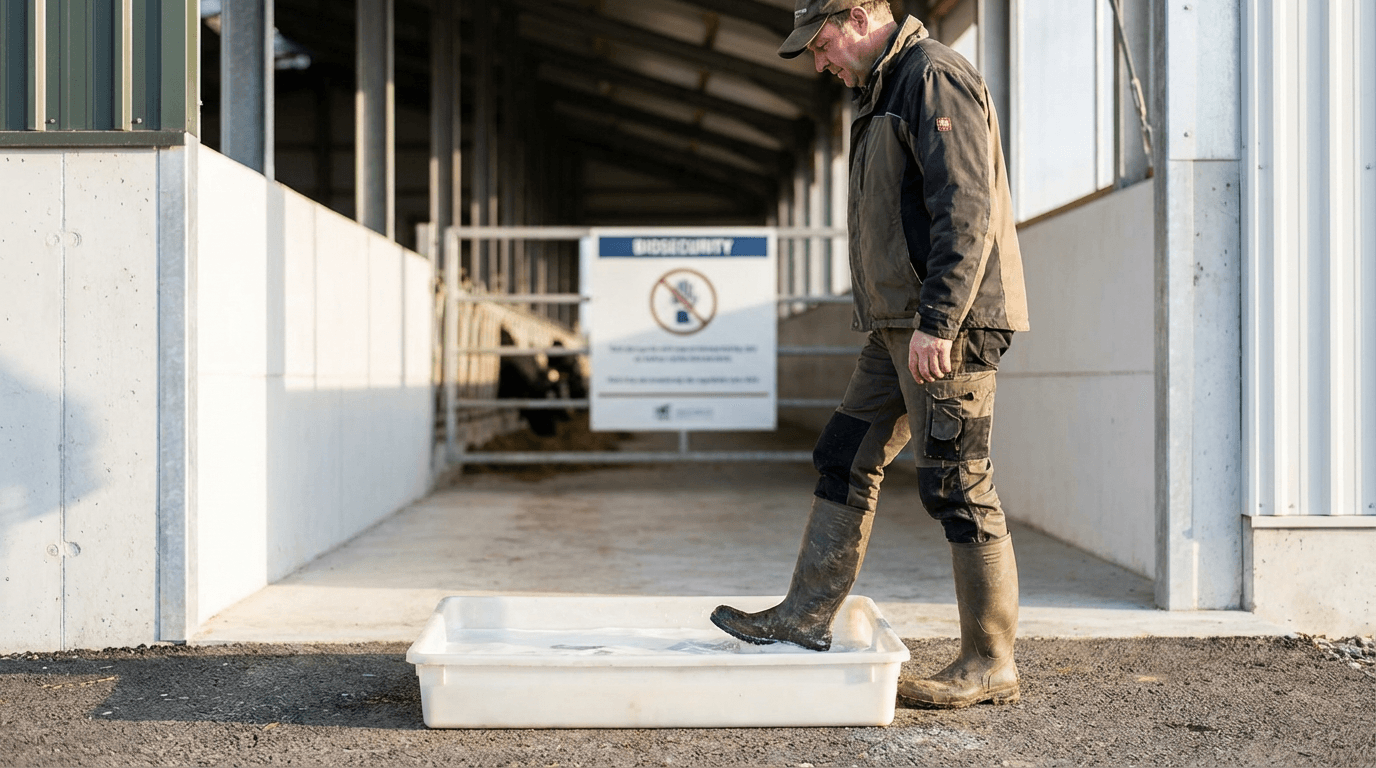
Foot baths are a practical and effective tool for reducing pathogen transmission between areas via boots and hooves. However, a dirty, over-diluted, or improperly designed foot bath can actually spread disease rather than prevent it. Key principles:
- The foot bath must be long enough that both feet contact the solution with at least one full step — minimum 6 to 8 feet for cattle, shorter for people
- Pre-cleaning step: a clean water rinse mat or brush should remove gross contamination before the disinfectant bath
- Change disinfectant solution at least daily, or whenever it becomes visibly contaminated with manure
- For bovine foot rot prevention, copper sulfate solution (4 to 5%) is effective and practical for herd foot baths
- For human footwear, 2% chlorine solution or commercial boot disinfectant products work well
Visitor and Personnel Biosecurity
People are one of the most underappreciated vectors for disease transmission on livestock farms. Veterinarians, nutritionists, sales representatives, farriers, shearers, AI technicians, custom operators, and even family members who have been around other livestock can carry pathogens on their clothing, boots, hands, and equipment. A documented visitor policy is an essential part of any farm biosecurity program.
Visitor Protocol Elements
- Visitor log: Record the name, company, date, time, and purpose of every visit. Note any recent livestock contact. This is invaluable for disease investigation if an outbreak occurs.
- Boot covers or boot wash: All visitors should either wear disposable boot covers over their footwear or use your farm's disinfectant foot bath before entering animal areas. Dedicated farm boots that visitors put on are even better.
- Coveralls: Visitors who will be in close contact with animals (vet exams, pregnancy checking, AI technicians) should wear disposable coveralls or farm-provided coveralls.
- Hand hygiene: Provide hand sanitizer stations at barn entrances. Handwashing with soap and water before and after animal contact is the baseline minimum.
- 48-hour rule: Ask visitors if they have been in contact with other livestock farms, processing plants, or livestock shows in the past 48 to 72 hours. For high-risk situations (swine PRRS, AI outbreaks in the region), extend this to 72 hours or restrict access entirely.
- Equipment: Any equipment brought to the farm (syringes, pregnancy detectors, AI equipment, farrier tools, shearing equipment) should be disinfected before use on your animals.
Biosecurity for Shows and Sales
Livestock shows, county and state fairs, and sale barns are high-risk environments for disease exposure. Animals are commingled from dozens or hundreds of farms, stressed by transportation, and exposed to concentrated pathogen loads in shared facilities. Animals that attend shows should be considered high biosecurity risk animals upon return to the farm.
- Quarantine show and sale animals upon return for a minimum of 14 to 21 days before re-entry to the main herd
- Take the animal's rectal temperature daily during the quarantine period — fever is often the first sign of a communicable disease picked up at a show
- Clean and disinfect all equipment (halters, show blankets, feeders, water buckets) that was used at the show before returning it to general use
- Shower and change clothes before working with main herd animals after returning from a livestock show or sale barn
- Check your state's mandatory entry requirements before transporting animals across state lines for shows — health certificates and some testing may be required
Feed and Water Biosecurity
Contaminated feed and water are significant but often overlooked routes of disease transmission on livestock farms. Salmonella, Listeria, Campylobacter, and many other pathogens can survive in feed and water for extended periods, infecting entire herds through a single contaminated source. Mycotoxins from mold contamination of feed, while not infectious, can severely suppress immune function and make animals more susceptible to disease.
Feed Storage and Safety
- Store all feed in rodent-proof containers or buildings. Rodents are a major reservoir for Salmonella, leptospirosis, and other zoonotic pathogens. A single rodent-contaminated feed bag can cause a herd outbreak.
- Inspect all feed deliveries for evidence of moisture intrusion, mold, unusual odor, or foreign material (rodent droppings, insect infestation). Reject and return contaminated feed.
- Rotate feed stock on a first-in, first-out basis to minimize storage time and reduce mold risk.
- Clean feed bunks, troughs, and feeders regularly. Old, wet feed accumulates in feeder corners and becomes a mold and bacterial culture medium. Clean feeders before each refilling if possible.
- Test silage and fermented feeds for pH, dry matter, and mycotoxin content if you observe health or production issues that could be feed-related.
- Do not feed spoiled silage, moldy hay, or wet grain even if it appears to be "only a little" moldy — mycotoxin concentrations can be extremely high in localized areas of visually clean feed.
Water Quality and Biosecurity
| Water Source | Primary Risks | Management Practices | Testing Recommendation |
|---|---|---|---|
| Municipal water | Low — treated and regulated | Check backflow prevention on waterer lines | Annually or if problems arise |
| Private well | Bacterial contamination, nitrates | Protect well casing from runoff; test regularly | Annually for bacteria; nitrates every 3 years |
| Pond or stream (surface water) | Cyanobacteria, Leptospira, nitrates, E. coli, Giardia, BVD virus | Fence livestock out of banks; provide alternative water source; monitor for algae blooms | Seasonally; always if health issues |
| Rain-collected water | Avian fecal contamination (AI risk for poultry), general bacterial contamination | Keep collection areas clean; cover storage tanks | Quarterly if used routinely |
| Recirculated water | Biofilm formation, bacterial accumulation | Regular line flushing; disinfect system annually | Before each poultry placement (commercial) |
Zoonotic Disease Considerations
Many livestock diseases can infect humans. This is called zoonotic disease transmission, and it is an important consideration both for farm worker health and for biosecurity planning. People who are infected with a zoonotic pathogen may carry it to and from farms, and vice versa. Major zoonotic diseases of livestock concern in the United States include:
Major Zoonotic Diseases in US Livestock Operations
| Disease | Pathogen | Animal Species | Human Risk | Prevention |
|---|---|---|---|---|
| Salmonellosis | Salmonella spp. | All species; cattle, poultry highest risk | Gastrointestinal illness; serious in immunocompromised | Hand hygiene, avoid manure contact, cook food products |
| E. coli O157:H7 | STEC E. coli | Cattle (main reservoir) | Severe gastrointestinal illness; HUS in children | Hand hygiene; keep children from manure areas; supervise animal contact |
| Leptospirosis | Leptospira spp. | Cattle, pigs, horses, wildlife | Flu-like; can cause kidney/liver failure | Rubber boots in wet areas; avoid contact with urine; vaccination of animals |
| Q fever | Coxiella burnetii | Cattle, sheep, goats | Flu-like; endocarditis risk; occupational hazard for farm workers | Protective mask at calving/lambing; avoid birthing areas if immunocompromised |
| Brucellosis | Brucella spp. | Cattle, swine, goats, bison | Undulant fever; arthritis; serious systemic disease | Vaccinate cattle; test before purchase; gloves and mask for birthing |
| Ringworm | Trichophyton verrucosum | Cattle most common; others | Skin lesions | Gloves when handling infected animals; antifungal treatment of animals |
| Cryptosporidiosis | Cryptosporidium parvum | Calves, lambs (main source) | Diarrheal illness; severe in immunocompromised | Hand hygiene; avoid contact with young animal manure especially for children |
Building a Written Biosecurity Plan
A biosecurity plan that exists only in someone's head is not a biosecurity plan — it is a collection of habits that will fail when that person is absent, distracted, or replaced. A written biosecurity plan documents your farm's protocols, assigns responsibilities, establishes monitoring and record-keeping requirements, and provides a baseline for improvement over time. Many agricultural lenders, breed associations, and integrated livestock companies now require a documented biosecurity plan as a condition of financing or partnership.
Components of a Written Farm Biosecurity Plan
- Farm description: Species, production system, herd/flock size, facilities, personnel
- Disease risk assessment: Identified risk factors ranked by priority
- Traffic control map: A farm map showing clean vs. dirty zones, designated parking, visitor entry points, and movement patterns
- Animal introduction protocol: Sourcing criteria, quarantine procedures, required testing, vaccination on arrival
- Visitor policy: Who may enter, under what conditions, required PPE, visitor log requirements
- Cleaning and disinfection protocol: Frequency, products, procedures for each area
- Vaccination program: Species-specific schedules, products used, record-keeping system
- Pest control program: Rodent, fly, and wildlife management
- Feed and water management: Storage, testing, disposal of contaminated feed
- Surveillance and monitoring: Daily observation requirements, testing schedule, diagnostic response protocol
- Emergency response plan: Steps to take if a reportable or unusual disease is suspected; contact list including state veterinarian, USDA APHIS, and local large animal vet
- Record-keeping system: What records are kept, where, for how long
Costs of Implementing a Biosecurity Program
| Biosecurity Investment | Estimated Annual Cost (per 100 animal units) | Notes |
|---|---|---|
| Vaccines (core program) | $500-$2,000 | Varies widely by species and products used |
| Diagnostic testing (quarantine) | $300-$1,500 | Depends on number of animals introduced |
| Disinfectants and footbaths | $200-$800 | Higher for commercial poultry/swine |
| PPE (gloves, coveralls, masks) | $200-$600 | Depends on labor and visitor frequency |
| Rodent control program | $300-$1,200 | Professional service vs. DIY bait stations |
| Facility maintenance (sealing gaps, etc.) | $200-$1,000 | Initial investment; lower ongoing cost |
| Veterinary biosecurity consultation | $200-$600 | One-time or periodic review |
| Total estimated annual investment | $1,900-$7,700 | Per 100 animal units across species |
Compare this to the cost of a single BVD outbreak ($3,000-$25,000), a PRRS break ($50,000-$300,000 for a 1,000-sow operation), or an HPAI depopulation event (tens of thousands to millions of dollars) — the return on biosecurity investment is clear.
Biosecurity During Disease Outbreaks: Responding and Containing
Even with excellent biosecurity, disease can enter a farm. When it does, the speed and effectiveness of your response determines whether you contain the outbreak or face a herd-wide catastrophe. The key principles of outbreak response are: isolate early, diagnose quickly, communicate promptly, and decontaminate aggressively.
Steps When You Suspect a Disease Outbreak
- Isolate affected animals immediately. Move sick animals to a separate area with dedicated equipment. Do not wait for a diagnosis before isolating — isolate first, diagnose second.
- Call your veterinarian. Do not rely on internet diagnoses for serious illness. Your vet can examine animals, collect appropriate samples, and guide your response. If you suspect a foreign animal disease (FMD, HPAI, African swine fever), call your state veterinarian or USDA APHIS immediately.
- Stop all animal movement on and off the farm until you have a diagnosis and a plan. Do not sell, move, or transport any animals from your farm until you understand what you are dealing with.
- Implement heightened biosecurity: Increase disinfection frequency, restrict visitor access to zero, and ensure all personnel use full PPE when working with sick animals.
- Collect samples for diagnosis per your veterinarian's guidance. Fresh dead animals are often the most diagnostically valuable source. Refrigerate but do not freeze samples unless instructed.
- Document everything: Number of affected animals, clinical signs, onset dates, treatments given, mortality. This information is essential for your vet, for insurance claims, and for regulatory reporting if required.
- Review your biosecurity protocols for the likely point of entry once a diagnosis is established. Outbreak response is an opportunity to strengthen your program.
Reportable Disease Obligations
Many livestock diseases are legally required to be reported to your state veterinarian or USDA APHIS. Failure to report can result in legal penalties and, more importantly, delays the response that could prevent spread to neighboring farms. US producers are required to report any suspicion of a foreign animal disease — a disease not known to be established in the United States, such as foot-and-mouth disease, African swine fever, or highly pathogenic avian influenza of exotic origin. Report immediately and do not wait for laboratory confirmation. Your state veterinarian and USDA APHIS SAHO have 24-hour emergency lines.
FAQ: Livestock Biosecurity Questions
How long should I quarantine newly purchased animals?
The minimum recommended quarantine period varies by species: 21 to 30 days for cattle, 30 to 60 days for swine, 21 to 30 days for small ruminants, and 14 to 21 days for horses. Longer is generally better. The quarantine period should be used productively — test animals for relevant diseases, observe them daily for illness, vaccinate them to your farm's protocol, and treat for parasites as appropriate. A quarantine area that is merely a different location with no testing or observation provides limited biosecurity benefit.
What is the most important biosecurity practice for cattle producers?
Most large animal veterinarians and cattle health specialists would point to two practices as the most impactful for cattle operations: (1) testing all incoming bulls and cows for BVD PI status before or immediately upon arrival, and (2) maintaining strict quarantine for all incoming animals. A single BVD persistently infected animal introduced to a naive herd can cause widespread reproductive failure, increased susceptibility to respiratory disease, and months of diagnostic confusion before the source is identified.
Do I need biosecurity if I have a small farm or backyard flock?
Yes, absolutely. Disease does not discriminate based on farm size. In fact, small farms often face higher disease risk because they tend to have less rigorous biosecurity, purchase animals from multiple sources (shows, flea markets, neighbors), and may not have established veterinary relationships. The core principles — quarantine new animals, maintain visitor protocols, keep equipment clean, vaccinate appropriately, and monitor animal health daily — apply regardless of whether you have 5 animals or 5,000.
Can my veterinarian spread disease between farms?
In theory, yes — and responsible large animal veterinarians take this risk seriously. Most large animal practices have protocols to minimize the risk of transmitting disease between client farms, including cleaning and disinfecting equipment between farms, changing coveralls and boot covers between visits, and scheduling high-risk visits (such as to farms with known disease outbreaks) at the end of the day. If you are concerned about disease introduction via veterinary visits, discuss your concerns with your vet — they will appreciate the conversation and can explain their biosecurity protocols.
What should I do if I find dead animals unexpectedly?
Unexpected livestock mortality should always prompt investigation. Begin by calling your large animal veterinarian — a fresh carcass submitted to a state diagnostic laboratory within 12 to 24 hours of death is the best source of diagnostic information. Document the number of deaths, clinical signs observed before death if any, vaccination history, and any recent changes on the farm (new animals, new feed sources, new personnel, new equipment). If you find more than one animal dead with similar or unexplained signs, implement heightened biosecurity and contact your veterinarian immediately. If you suspect a foreign animal disease, call the USDA APHIS emergency line.
How do I control flies on my livestock farm?
Integrated fly management on a livestock farm involves four components working together: manure management (removing manure and reducing fly breeding habitat is the most effective single measure), biological control (introducing natural fly predators such as parasitic wasps in and around manure piles), chemical control (adulticide sprays, pour-on insecticides, and feed-through IGRs that prevent larval development in manure), and physical control (fans that reduce landing opportunities, sticky traps, fly baits). No single method is sufficient. Rotate chemical classes to prevent resistance. Fly pressure is highest in summer and fall; begin your fly management program in spring before populations build.
What vaccines should every livestock farm use?
Core vaccines vary by species, but every farm should work with its veterinarian to establish a species-appropriate vaccination protocol. General core recommendations: for cattle — IBR, BVD type 1 and 2, PI3, BRSV (bovine respiratory complex), and Clostridial 7-way or 8-way; for goats and sheep — CD/T (enterotoxemia and tetanus) at minimum; for swine — circovirus, erysipelas, Mycoplasma hyopneumoniae in most commercial settings; for horses — EWT (Eastern/Western encephalitis and tetanus), West Nile virus, rabies, and influenza/rhinopneumonitis at minimum. Regional diseases require additional vaccines — discuss with your vet what is most relevant in your area.
Conclusion: Biosecurity as a Management System, Not a Checklist
The most effective farm biosecurity programs are not rigid checklists that get checked once and forgotten — they are dynamic management systems that are regularly reviewed, updated based on new information and disease threats, and embedded in the culture of how the farm operates. Disease threats change over time. New pathogens emerge (PEDv and PRRS variants are examples from recent decades). Your farm's risk profile changes as you add new species, expand production, or change your marketing channels. Your biosecurity program needs to evolve in parallel.
The foundation of this dynamic approach is a strong relationship with a knowledgeable large animal veterinarian who knows your farm, your animals, and your regional disease landscape. A veterinarian who visits your farm regularly — not just when animals are sick — is your most valuable partner in biosecurity. Schedule an annual biosecurity review visit with your vet. Walk the farm together. Identify gaps. Make a plan. That investment pays for itself many times over the first time it prevents an outbreak.
Find a Large Animal Vet Near You
A local large animal veterinarian is your most important partner in building and maintaining an effective farm biosecurity program. They know the regional disease risks in your area, the pathogens circulating in your county, the vaccination products that work best in your climate, and the diagnostic laboratories closest to you. They can conduct biosecurity consultations, perform herd health evaluations, design vaccination programs, and be on call when disease strikes.
FarmVetGuide is the most complete directory of large animal veterinarians in the United States, with over 9,500 verified practices listed across all 50 states. Search by state and county, filter for species (cattle, equine, swine, goats, sheep, poultry), and find practices with emergency availability. Whether you raise one species or several, and whether your farm is 10 acres or 10,000, having a trusted large animal vet's number on your wall is one of the best biosecurity investments you can make.
Visit FarmVetGuide.com to find a large animal veterinarian in your county — searchable by state, county, species treated, and emergency availability.
Related Articles & Resources
📖 Related Guides
Sources & Further Reading
We cross-check the animal-health information in this guide against these recognized veterinary and government sources. For clinical guidance, consult them directly or speak with a licensed veterinarian.
How this guide is maintained
Animal-health guides on FarmVetGuide are written and maintained by the FarmVetGuide Editorial Team and cross-checked against authoritative veterinary sources, including the AVMA, USDA APHIS, and the Merck Veterinary Manual. This guide is general educational information, not a substitute for professional veterinary diagnosis or treatment. For a sick or injured animal, contact a licensed veterinarian directly.