
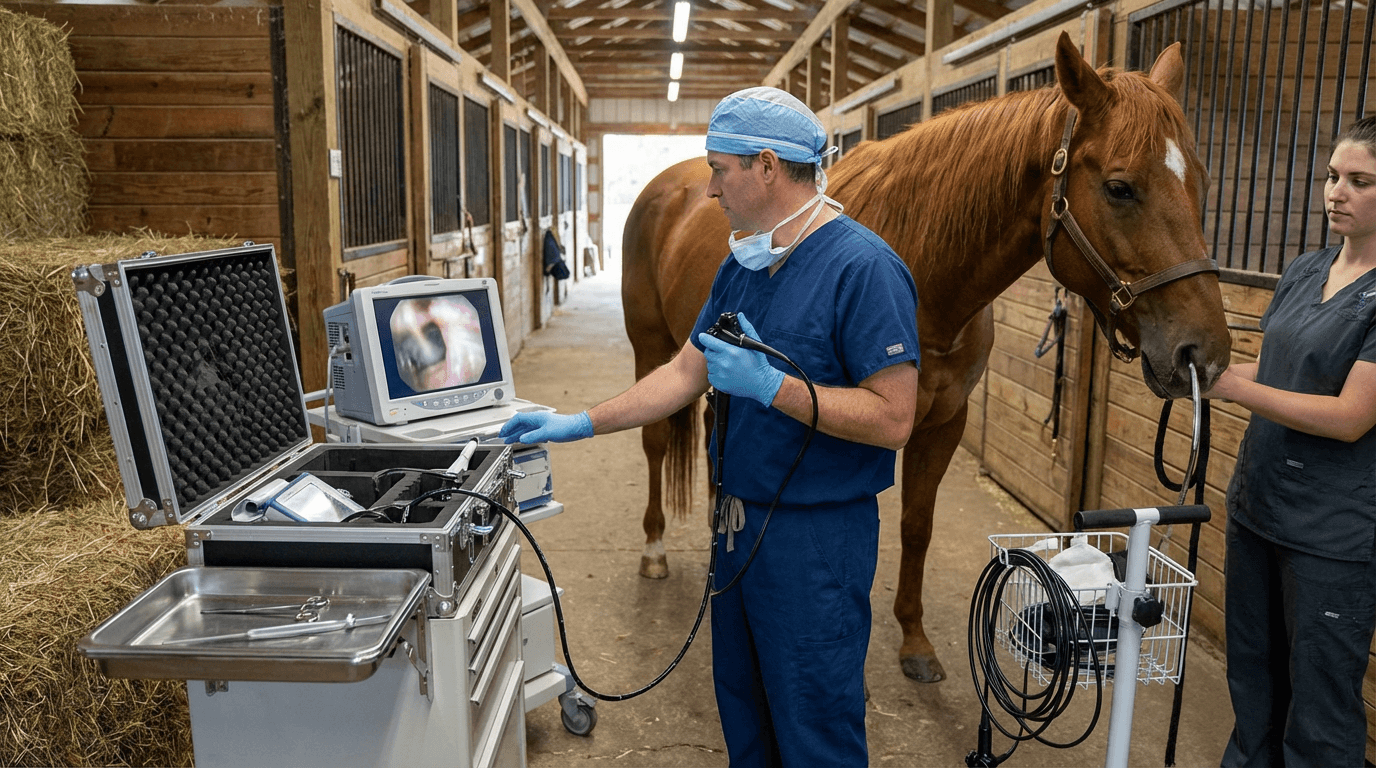
Equine Respiratory Disease: Heaves, Strangles, Influenza & When to Call the Vet
By FarmVetGuide Editorial Team · Published April 2026 · Updated March 2026 · Based on verified data from our directory of 9,500+ practices
Respiratory disease is one of the most common and costly health challenges facing horse owners and equine managers across the United States. From the barn cough that lingers through winter to the high fever that shuts down a show string overnight, respiratory problems demand quick thinking, sound judgment, and often an immediate call to your large animal veterinarian. This comprehensive guide covers the four major equine respiratory conditions — heaves (Equine Asthma), strangles, equine influenza, and equine herpesvirus — along with practical treatment protocols, cost breakdowns, regional considerations, and a clear framework for deciding when to pick up the phone.
Understanding the Equine Respiratory Tract
A horse's respiratory system is elegantly designed for high-performance aerobic work, but that same design makes it vulnerable. Adult horses breathe exclusively through their nostrils — they cannot mouth-breathe — so any compromise to nasal passages, the pharynx, trachea, or lungs directly impacts both health and performance. At rest, a horse takes about 8–16 breaths per minute. During hard work, that rate can surge past 120 breaths per minute as the respiratory and locomotor systems synchronize in a phenomenon called respiratory-locomotor coupling.
The equine lung has roughly 10 million alveoli — the tiny air sacs where gas exchange occurs. Inflammation, mucus accumulation, bronchospasm, or infectious infiltrates in these structures reduce oxygen delivery to working muscles, cause discomfort at rest, and in severe cases become life-threatening. Understanding the anatomy helps you assess severity: upper respiratory signs (nasal discharge, swollen lymph nodes, cough without increased respiratory effort) are usually less immediately dangerous than lower respiratory signs (increased respiratory rate at rest, labored breathing, flared nostrils, use of abdominal muscles to exhale).
Heaves (Equine Asthma / Recurrent Airway Obstruction)
What Is Heaves?
Heaves — formally called Equine Asthma (EA) or Recurrent Airway Obstruction (RAO) — is a chronic, non-infectious inflammatory lung disease driven by hypersensitivity to inhaled organic particles: dust, mold spores, endotoxins, and plant debris found in hay, bedding, and the barn environment. It is the equine equivalent of human asthma and COPD combined. Mild to moderate forms, sometimes called Inflammatory Airway Disease (IAD), affect performance horses without obvious signs at rest. Severe heaves causes visible breathing difficulty even when the horse is standing quietly in its stall.
The disease is most prevalent in horses over seven years of age living in stabled environments in northern and eastern states where horses spend long winters indoors eating dry hay. However, a warm-weather variant — Summer Pasture-Associated Obstructive Pulmonary Disease (SPAOPD) — affects horses in the humid Southeast, triggered by pasture molds and pollens rather than barn dust.
Recognizing Heaves
Classic signs of moderate to severe heaves include:
- Chronic cough — often productive, triggered by exercise or dusty environments
- Increased respiratory effort at rest — you can see the chest and flanks working harder than normal
- Heave line — hypertrophy of the external abdominal oblique muscle from months of forced exhalation, creating a visible line along the lower abdomen
- Nasal discharge — typically bilateral and mucoid to mucopurulent
- Exercise intolerance — horse tires quickly or refuses work
- Nostril flaring — even at rest in severe cases
- Weight loss — chronic cases expend enormous energy on breathing
IAD in performance horses may present more subtly: a drop in performance, a post-exercise cough, or slightly elevated resting respiratory rate. Endoscopy and bronchoalveolar lavage (BAL) are often needed to confirm IAD in these cases.
Diagnosis
Your veterinarian will perform a thorough physical examination including thoracic auscultation (listening to the lungs). In heaves horses, lung sounds are abnormal — wheezes, crackles, and increased breath sounds. Rebreathing examination (holding a bag over the nostrils briefly to increase respiratory effort) accentuates these sounds. Definitive diagnosis often requires:
- Bronchoalveolar lavage (BAL) — a small tube passed into the lower airways, fluid instilled and retrieved for cytology. In heaves horses, neutrophils dominate. In IAD, mast cells or eosinophils may predominate.
- Tracheal wash — similar but samples the trachea; less specific for lower airway disease
- Thoracic ultrasound — assesses pleural surfaces; not diagnostic for heaves alone but rules out pleural effusion or consolidation
- Thoracic radiography — may show interstitial pattern; requires digital equipment or referral to a clinic
- Pulmonary function testing — available at academic centers; measures airway resistance and lung compliance
Treatment: Environmental Management (Most Important)
No medication will control heaves long-term without reducing antigen exposure. Environmental management is the cornerstone of treatment:
- Maximize turnout — horses with heaves do dramatically better outside. If turnout is impossible, open all barn doors and windows.
- Switch to hay alternatives — soaked hay (soak 30–60 minutes, dump water before feeding) reduces respirable particles by over 90%. Haylage, hay cubes, and complete pelleted feeds are alternatives.
- Change bedding — replace straw (very dusty) with rubber mats, shredded paper, or cardboard. Wood pellet bedding is a good low-dust option.
- Feed at ground level — eliminates inhalation of particles falling from hay nets or overhead hay racks.
- Remove horse during stall cleaning — dust levels spike 10-fold during mucking.
- Neighbor horses matter — dusty hay in the stall next door affects your horse through shared airspace.
Treatment: Medications
When environmental management alone is insufficient to control signs — especially during acute exacerbations — your veterinarian may prescribe:
- Corticosteroids — the most effective anti-inflammatory agents. Dexamethasone (systemic) provides rapid relief. Inhaled fluticasone propionate (via equine aerosol mask) controls inflammation with less systemic immunosuppression for long-term use. Prednisolone tablets are an oral option.
- Bronchodilators — albuterol (inhaled) or clenbuterol (oral/IV) relax bronchial smooth muscle, opening airways. These treat the symptom (bronchospasm), not the cause.
- Combination inhalers — some equine-specific metered-dose inhalers combine corticosteroid + bronchodilator. The AeroHippus or Equine Aeromask devices adapt human MDIs for horses.
Heaves Cost Estimates
| Item | Estimated Cost | Notes |
|---|---|---|
| Initial exam + diagnosis (BAL) | $300–$700 | Depending on region and referral |
| Dexamethasone (injectable, 10-day course) | $30–$80 | Veterinarian dispensed |
| Clenbuterol syrup (30-day supply) | $80–$150 | Compounded or brand |
| Inhaled fluticasone (MDI + mask) | $150–$400/month | MDI from human pharmacy; mask ~$200 one-time |
| Hay soaking labor (annual estimate) | $500–$1,500 | Time + water/drainage infrastructure |
| Haylage or hay cubes (premium) | $4–$8/day more than dry hay | Regional variation significant |
Strangles (Streptococcus equi subsp. equi)
What Is Strangles?
Strangles is one of the most frequently diagnosed infectious diseases of horses worldwide, caused by the bacterium Streptococcus equi subspecies equi (S. equi). It predominantly affects young horses (weanlings to 5-year-olds) but can strike horses of any age, especially those with no prior exposure or vaccination history. The disease is highly contagious and can spread rapidly through a barn or show circuit. Its name comes from the swelling of lymph nodes in the throatlatch and jaw region that can become so severe they interfere with swallowing and breathing — literally "strangling" the horse.
Transmission and Spread
S. equi spreads through direct horse-to-horse contact, contaminated water sources and troughs, shared feed buckets, grooming tools, tack, and human hands and clothing. The bacterium can survive in water for weeks and on fomites (inanimate objects) for shorter periods. Horses can become "carriers" — shedding bacteria for months or years without showing signs — particularly if bacteria establish in the guttural pouches (air-filled extensions of the Eustachian tubes unique to horses). These silent shedders are a major source of outbreaks.
Clinical Signs and Stages
Strangles follows a fairly predictable progression:
- Incubation (3–14 days) — horse is exposed but shows no signs; already potentially shedding
- Early signs (days 1–3) — fever (102–106°F), depression, loss of appetite, clear nasal discharge
- Classic signs (days 4–14) — nasal discharge becomes thick and yellow-white; submandibular and retropharyngeal lymph nodes enlarge, become painful, and eventually abscess
- Abscess rupture and recovery — abscesses rupture internally or externally, releasing large volumes of purulent material; most horses begin to improve after rupture
Complications occur in 10–20% of cases:
- Bastard strangles — bacteria spread via bloodstream to internal lymph nodes (mesenteric, mediastinal) causing internal abscesses that may go undetected for months
- Purpura hemorrhagica — immune-mediated vasculitis causing edema of the limbs, ventral abdomen, and face; can be fatal
- Guttural pouch empyema — pus accumulates in guttural pouches; requires endoscopic treatment
- Guttural pouch chondroids — dried pus hardens into calcified masses requiring surgical removal
Diagnosis
Culture of nasal swabs or abscess material remains the gold standard, but sensitivity is imperfect (especially early in disease). PCR (polymerase chain reaction) testing offers higher sensitivity for detecting S. equi DNA — useful for identifying carrier horses. Bloodwork often shows elevated white blood cell count and fibrinogen. Endoscopy with guttural pouch lavage and culture or PCR is essential for identifying carrier horses before they are returned to a herd.
Treatment
Treatment of strangles is controversial and requires veterinary guidance:
- Early (pre-abscess) cases — penicillin or penicillin-based antibiotics may abort the disease if given immediately. However, antibiotics given after abscess formation has begun may delay abscess maturation and resolution, prolonging the disease course.
- Established abscesses — supportive care is often preferred. Hot-pack the lymph nodes to encourage maturation and rupture. NSAIDs (phenylbutazone or flunixin meglumine) reduce fever and pain.
- Guttural pouch involvement — requires endoscopic lavage with penicillin solution; chondroids may require surgical removal
- Purpura hemorrhagica — requires aggressive corticosteroid therapy and often IV penicillin; intensive nursing care
- Airway obstruction — in rare severe cases, tracheotomy may be needed to maintain airway patency
Vaccination
Two types of strangles vaccines are available in the US:
- Intramuscular (IM) vaccines — killed or modified-live injectable; stimulate systemic immunity but provide limited local (mucosal) protection. May cause injection site reactions.
- Intranasal (IN) modified-live vaccine — administered directly into one nostril; stimulates mucosal IgA at the site of infection; generally considered more protective but must never be given IM (risk of abscess formation)
Vaccination does not guarantee immunity and does not protect all horses in all situations. Vaccinated horses should still be quarantined when introduced to new premises. Annual or semi-annual boosters are recommended depending on exposure risk.
Biosecurity During an Outbreak
- Isolate all horses with fever or nasal discharge immediately
- Designate "dirty" and "clean" zones on the property; assign separate staff to each if possible
- Use separate water buckets, feed tubs, grooming tools — no sharing
- Disinfect high-touch surfaces daily with appropriate disinfectants (bleach solution, Virkon-S)
- Do not move horses on or off property during outbreak
- Notify your state veterinarian — strangles is reportable in some states
- Before declaring the barn "clear," test all horses with nasal swab PCR or guttural pouch endoscopy — three negative weekly tests recommended
Strangles Cost Estimates
| Item | Estimated Cost |
|---|---|
| Veterinary exam + nasal swab culture | $100–$250/horse |
| PCR testing (per horse) | $50–$100 |
| Penicillin treatment (7–10 days) | $50–$120/horse |
| NSAID treatment (phenylbutazone) | $20–$50 for a course |
| Guttural pouch endoscopy + lavage | $400–$900/horse |
| Intranasal vaccine | $25–$50/dose + administration fee |
| Outbreak losses (quarantine, show cancellations) | Hundreds to tens of thousands |
Equine Influenza
What Is Equine Influenza?
Equine influenza (EI) is caused by influenza A viruses in the H3N8 subtype — distinct from human flu viruses but related enough that mutations are monitored carefully by public health authorities. EI is one of the most contagious respiratory diseases of horses. A single cough can project virus-laden droplets up to 30 meters. The disease spreads explosively through groups of horses that share airspace — competition venues, racetracks, sales, trail ride gatherings, and training barns are all high-risk settings.
Influenza viruses mutate constantly, which is why vaccine manufacturers update formulations regularly and why horses that were vaccinated years ago may not be protected against current circulating strains.
Clinical Signs
EI presents rapidly and often dramatically:
- Sudden high fever — 102–106°F, often the first sign
- Dry, harsh, nonproductive cough — the hallmark; can persist for weeks
- Serous (watery) nasal discharge early, becoming mucopurulent with secondary bacterial infection
- Lethargy and depression — marked; horse may not want to move or eat
- Anorexia
- Muscle stiffness and pain — similar to myalgia in human flu
- Limb and ventral edema — in some cases
Uncomplicated EI in healthy, vaccinated horses typically resolves in 1–3 weeks. Unvaccinated horses, very young horses, or those with underlying disease may develop severe pneumonia, pleuropneumonia, or myocarditis. Death from uncomplicated EI is rare in adult horses but has occurred in severe outbreaks in naive populations.
The "Hand Rule" for Rest After Influenza
A widely cited guideline among equine practitioners: for every day of fever, allow one week of rest before returning to full work. A horse with 3 days of fever should rest for 3 weeks minimum before resuming training. Respiratory epithelium (the protective lining of the airways) takes time to regenerate after viral damage. Premature return to work — especially hard aerobic exercise — risks secondary bacterial pneumonia, myocarditis (inflammation of the heart muscle), and chronic airway inflammation.
Treatment
There is no antiviral medication specifically approved for equine influenza in the US. Treatment is supportive:
- Rest — the most important treatment. Full stall rest during the febrile period.
- NSAIDs — phenylbutazone (bute) or flunixin meglumine (Banamine) reduce fever and improve comfort. Do not mask fever without veterinary guidance — fever is a useful monitoring tool.
- Broad-spectrum antibiotics — not effective against the virus itself, but prescribed when secondary bacterial pneumonia develops (evidenced by persistent or worsening fever, mucopurulent discharge, abnormal lung sounds)
- Good nursing care — fresh water, good ventilation, palatable highly digestible feed, clean bedding
- Monitoring for complications — rectal temperature twice daily; call your vet if fever rebounds after initial improvement
Vaccination Against Equine Influenza
EI vaccination is recommended for virtually all horses in contact with other horses. Vaccines are available in several formulations:
- Modified-live intranasal (FLUVAC Innovator, Flu Avert I.N.) — stimulates rapid local mucosal immunity; one dose provides protection within days; good choice pre-event
- Killed IM vaccines — combined with other respiratory antigens (rhino, strangles); require 2 doses initially, then boosters every 6 months for high-risk horses
- Canary pox-vectored (ALVAC) vaccine — proprietary technology used in some premium formulations; DIVA-capable (differentiates infected from vaccinated animals)
High-risk horses (show horses, racehorses, lesson horses, horses attending trail rides or events) should be vaccinated every 6 months. Breeding farms, pleasure horses with limited outside exposure may do well with annual vaccination. Consult your veterinarian about the schedule best suited to your horses and local disease pressure.
Equine Influenza Cost Estimates
| Item | Estimated Cost |
|---|---|
| Veterinary exam | $60–$200 (farm call + exam) |
| Influenza PCR/antigen test | $50–$120 |
| NSAID treatment (5–7 days) | $20–$60 |
| Antibiotic course (secondary pneumonia) | $150–$500+ |
| Annual EI vaccine (combined) | $30–$75/dose |
| Lost training/competition days (show horse) | $200–$2,000+/week |
Equine Herpesvirus (EHV-1 and EHV-4)
Overview
Equine herpesviruses are ubiquitous in horse populations worldwide. The two most clinically important strains are EHV-1 and EHV-4. Like all herpesviruses, they establish lifelong latency in infected horses — the horse never truly clears the virus. Stress, transport, illness, or corticosteroid administration can reactivate latent infection and cause shedding, even in horses that appear perfectly healthy.
- EHV-4 — the most common cause of equine viral rhinopneumonitis (rhinopneumonitis = nose-lung inflammation); primarily upper respiratory tract; occasional neurological complications; major cause of abortion in broodmares when contracted during first two-thirds of pregnancy
- EHV-1 — causes respiratory disease, abortion storms (multiple mares aborting in rapid succession), and Equine Herpesvirus Myeloencephalopathy (EHM) — the neurological form
Equine Herpesvirus Myeloencephalopathy (EHM)
EHM is the most feared complication of EHV-1 infection. A specific neuropathogenic strain of EHV-1 (distinguished by a single mutation at nucleotide position 2254 resulting in asparagine at amino acid 752) causes vasculitis in the blood vessels supplying the spinal cord and brain, leading to:
- Hindlimb ataxia (wobbliness) — the classic presentation
- Urinary incontinence
- Tail and perineal weakness
- Inability to rise in severe cases
- Facial nerve deficits (drooping lip, ear)
EHM outbreaks at competition venues have made national news. The 2011 Ogden, Utah cutting horse event resulted in 90+ horses affected across multiple states. Case fatality rates range from 30–50% in horses that become recumbent (unable to rise). EHM is reportable in many states, and an outbreak can trigger mandatory quarantine of entire facilities.
Respiratory Signs of EHV
Before neurological signs emerge (if they do), EHV-1 and EHV-4 cause respiratory disease that resembles influenza:
- Fever (often biphasic — two fever spikes)
- Clear then mucopurulent nasal discharge
- Submandibular lymph node enlargement
- Mild to moderate cough
- Depression and anorexia
Without PCR testing, EHV respiratory disease is clinically indistinguishable from influenza. PCR on nasal swabs — ideally during the first 24–48 hours of illness — is the fastest way to confirm EHV and differentiate it from influenza.
Management of EHV Outbreaks
- Immediate isolation of all horses with fever, nasal discharge, or neurological signs
- Temperature monitoring of all in-contact horses twice daily (rectal temperature over 101.5°F = report to vet immediately)
- Notify your state veterinarian — EHV-1 (especially neuropathogenic strain) is reportable in most states
- Biosecurity — same principles as strangles: separate equipment, designated staff, disinfection
- Movement restrictions — do not move horses off property during outbreak; competition organizers should be notified if a competing horse develops EHM
EHV Vaccination
Vaccines against EHV are widely available (often combined in "rhino" products) and reduce respiratory disease and abortion risk. However, currently available vaccines are not reliably protective against the neurological form (EHM). This is a critical point that frustrates horse owners and veterinarians alike. Vaccination is still recommended because it may reduce viral shedding and the severity of respiratory disease. Pregnant mares should receive EHV vaccination at months 5, 7, and 9 of gestation (herpesvirus abortion series).
Comparison: Key Equine Respiratory Diseases at a Glance
| Feature | Heaves (RAO/EA) | Strangles | Equine Influenza | EHV-1/4 |
|---|---|---|---|---|
| Cause | Allergic/inflammatory | S. equi bacteria | Influenza A virus | Herpesvirus |
| Contagious? | No | Highly contagious | Extremely contagious | Contagious |
| Fever? | No | Yes (103–106°F) | Yes (102–106°F) | Yes (often biphasic) |
| Nasal discharge | Mucoid/mucopurulent | Copious purulent | Serous then mucopurulent | Serous to mucopurulent |
| Lymph node swelling | No | Yes — hallmark | Mild | Mild to moderate |
| Cough type | Chronic, productive | Variable | Dry, harsh | Variable |
| Worst complication | Respiratory failure | Internal abscesses, purpura | Bacterial pneumonia | Neurological (EHM), abortion |
| Vaccine available? | No | Yes (limited efficacy) | Yes (good efficacy) | Yes (not protective for EHM) |
| Typical age affected | 7+ years | Weanlings to 5 yrs | Any age | Any age |
| Reportable? | No | Some states | No (monitor) | EHM: most states |
Other Common Equine Respiratory Conditions
Bacterial Pneumonia and Pleuropneumonia
Bacterial pneumonia in adult horses is most often secondary to viral respiratory infection, aspiration, or immune compromise from stress (particularly long-distance transport — "shipping fever"). Common bacteria include Streptococcus equi subsp. zooepidemicus, Pasteurella spp., and Rhodococcus equi (the last primarily in foals). Signs include high fever, rapid and labored breathing, reluctance to move, and on auscultation — absent lung sounds over areas of consolidation.
Pleuropneumonia (bacterial infection of the pleural space surrounding the lungs) is a serious, life-threatening complication with a guarded prognosis. Treatment requires hospitalization, IV antibiotics, and often chest drainage. Costs can exceed $10,000–$30,000 for intensive cases.
Guttural Pouch Disease
The guttural pouches (one on each side) are large air-filled diverticula of the auditory tube, positioned behind the pharynx and above the throat. They are unique to horses and a few related species. Guttural pouch diseases include:
- Guttural pouch empyema — pus accumulation, usually after strangles; causes nasal discharge (often only one-sided) and head shyness
- Guttural pouch tympany — air accumulates, causing visible swelling; primarily in fillies; often requires surgery
- Guttural pouch mycosis — fungal infection of the pouch walls; erodes major blood vessels (carotid, maxillary arteries) causing potentially fatal hemorrhage; requires urgent surgical intervention
Exercise-Induced Pulmonary Hemorrhage (EIPH)
EIPH — bleeding from the lungs into the airways during intense exercise — affects a large proportion of racehorses and some other performance horses. Most cases are subclinical (blood visible only on endoscopy), but severe cases cause epistaxis (nosebleed). Furosemide (Lasix) is approved in the US for EIPH management in racehorses. EIPH does not typically cause respiratory signs at rest.
Regional Considerations Across the United States
Northeast and Midwest
Long winters and high stabling rates make heaves (RAO) particularly common. Horses spend 4–6 months indoors breathing dusty hay. Strangles spreads efficiently in boarding barns and during early spring sales season when young horses from multiple sources mix. Influenza is endemic year-round but peaks in fall and early spring as show seasons start.
Southeast (Florida, Kentucky, Texas Gulf Coast)
Summer Pasture-Associated Heaves (SPAOPD) is more prevalent in the humid Southeast. EHV activity tends to be higher in areas with large broodmare populations (Kentucky). Florida winters attract large numbers of competition horses from across the country, creating ideal conditions for influenza and strangles to spread. Horse shows in the Florida winter circuit (Wellington, Ocala) are historically high-risk biosecurity environments.
West and Mountain States
Drier climates and more outdoor management patterns mean heaves is less common in horses on the Pacific coast and intermountain West. However, fire smoke from seasonal wildfires can trigger heaves exacerbations and lower airway inflammation even in horses with no prior respiratory history. Nevada and adjacent states have seen increased wildfire smoke events linked to respiratory presentations in horses and livestock.
Plains States
Pasture-based management during most of the year reduces dust exposure for heaves. Strangles can spread at large spring and fall sales in Oklahoma, Kansas, and Missouri. Feedlot-adjacent equine operations in Texas and Colorado occasionally see higher exposure to respiratory pathogens from cattle.
When to Call Your Large Animal Veterinarian
Not every cough requires an emergency call, but certain signs demand immediate veterinary attention. Use this guide to make the right decision:
Call Immediately (Within the Hour)
- Respiratory rate over 30 breaths/minute at rest
- Open-mouth breathing or severe nostril flaring at rest
- Blue or pale mucous membranes (gums, eye membranes)
- Marked abdominal effort to breathe ("belly breathing") or flehmen response (lip curl) with labored breathing
- Sudden onset of neurological signs (wobbliness, incoordination, inability to rise) in any horse, especially with fever
- Epistaxis (fresh blood from nostril) — especially bilateral
- Fever over 104°F
- Rapid spread of fever/respiratory signs to multiple horses in a herd — outbreak scenario
Call Same Day (Within 12–24 Hours)
- Fever between 101.5–104°F that doesn't come down with NSAID within 8 hours
- Nasal discharge that becomes thick and green/yellow (suggests secondary bacterial infection)
- New cough persisting more than 48 hours
- Swollen, painful lymph nodes in jaw or throatlatch area (possible strangles)
- Horse refusing feed or water for more than 12 hours combined with any respiratory sign
- Known exposure to a horse diagnosed with strangles, influenza, or EHV in the past 14 days, especially if your horse is now febrile
Schedule a Non-Emergency Appointment
- Chronic cough (more than 2 weeks) — to diagnose and manage heaves or IAD
- Gradual decline in exercise tolerance
- Mild chronic nasal discharge without fever
- Planning vaccination program updates
Monitor at Home (Temporary)
- Occasional single cough in a horse that is bright, alert, eating, and has no fever — likely minor irritation
- Very mild serous discharge in cold weather with no other signs — monitor for 48 hours
Preventive Respiratory Health Program
The best respiratory disease management is proactive rather than reactive. Build these practices into your annual horse management calendar:
Vaccination Schedule (Annual Minimums)
- Equine influenza — every 6 months for high-risk horses; annually for low-risk
- EHV-1/4 — every 6 months for performance horses; broodmares every 2 months (5, 7, 9 gestation)
- Strangles — annual intranasal; more often for horses with high exposure risk
- Work with your veterinarian to customize schedules — the American Association of Equine Practitioners (AAEP) publishes core and risk-based guidelines updated regularly
Quarantine New Horses
Every new horse arriving at your farm should be quarantined for a minimum of 14–21 days, ideally 30 days. Monitor temperature twice daily. House new arrivals at least 10 feet from resident horses — influenza virus can travel on airborne particles at that distance. Provide separate water, feed, and grooming equipment during quarantine.
Biosecurity for Shows and Events
- Avoid letting your horse touch noses with unknown horses
- Bring your own water buckets, feed tubs, and grooming supplies
- Avoid communal water troughs
- Monitor temperature on returning show horses for 7–10 days post-event
- Have your veterinarian's number saved — and know the nearest equine emergency clinic
Environmental Management for Respiratory Health
- Maximize ventilation — horses need fresh air movement, not warmth-sealed barn environments
- Minimize dust at all times — dust from hay, bedding, and arena footing is cumulative airway irritant
- Manage pasture mold exposure in humid climates
- Consider air quality on wildfire smoke days — bring horses in only if barn is better ventilated than outdoor air, or use N95-equivalent equine masks in severe events
Treatment Cost Comparison: What to Budget
| Condition | Mild Case Cost | Moderate Case Cost | Severe/Complicated Cost |
|---|---|---|---|
| Heaves (RAO) | $300–$600 (diagnosis + initial meds) | $100–$400/month ongoing | $800–$2,000+ if referral needed |
| Strangles | $100–$300/horse (supportive care) | $500–$1,500 (multiple horses) | $2,000–$10,000+ (bastard strangles, purpura) |
| Equine Influenza | $100–$300 (exam, NSAIDs, rest) | $300–$800 (antibiotics for secondary infection) | $2,000–$15,000 (pneumonia, hospitalization) |
| EHV (respiratory) | $150–$400 | $500–$2,000 | $5,000–$30,000+ (EHM, pleuropneumonia) |
Working With Your Veterinarian: Getting the Most From Each Visit
Equine veterinary care is a partnership. Being a good client — observant, organized, and communicative — makes every farm visit more productive. Before your vet arrives:
- Record the horse's temperature (rectal) at least twice: once when signs started and again just before the vet arrives
- Note when signs first appeared and how they have progressed
- Have your horse's vaccination history available (ideally written or photographed)
- Note any other horses on the property with similar signs
- Prepare a list of questions — ask about diagnostic options at different price points if budget is a concern
If your primary care equine vet is unavailable and your horse has emergency respiratory signs, don't hesitate to contact the nearest equine referral hospital or veterinary school teaching hospital. Most have 24/7 emergency services and are equipped for advanced diagnostics and intensive care.
Frequently Asked Questions About Equine Respiratory Disease
Can my horse recover from heaves completely?
Heaves (equine asthma/RAO) is a chronic condition that cannot be "cured," but it can be very well managed. Horses on strict environmental management — maximum turnout, dust-free feed, clean bedding — often show dramatic improvement and can return to full athletic work. Without environmental management, medications alone provide incomplete and temporary control. Many horses maintain excellent quality of life for years with a committed owner.
Is strangles fatal?
The large majority of horses recover from classic strangles, though it takes weeks and leaves a farm under biosecurity restrictions. Fatalities are uncommon but do occur, primarily from complications: severe airway obstruction before abscesses rupture, bastard strangles (internal abscesses), or purpura hemorrhagica. The case fatality rate for uncomplicated strangles is estimated at 1–2%, but bastard strangles and purpura are more serious with fatality rates of 10–40%.
My horse is vaccinated for influenza but still got sick. Why?
Equine influenza viruses mutate rapidly. The vaccine strains in commercial products may not perfectly match currently circulating strains — similar to the annual mismatch problem in human flu vaccines. Additionally, vaccine immunity wanes, particularly in high-risk horses competing frequently. A horse vaccinated 8 months ago may have waning immunity. Semi-annual vaccination and using updated formulations recommended by the AAEP and OIE international surveillance network helps reduce this gap.
How do I know if my horse has EHM (neurological herpesvirus) or just a colic or lameness issue?
EHM presents as ataxia (incoordination) that is typically symmetric and worse in the hindquarters, often combined with urinary incontinence and a history of recent fever or respiratory signs. Colic causes abdominal pain behaviors (looking at flanks, pawing, rolling). Lameness is usually asymmetric and associated with a specific limb. If you observe hindlimb wobbliness after a fever in a horse that had been in contact with other horses at a show or sale — call your vet immediately and mention possible EHM.
Can humans catch equine influenza or strangles from horses?
Equine influenza (H3N8) does not pose a significant human health risk — there are only extremely rare documented cases of horses transmitting equine influenza to humans. Streptococcus equi (strangles) is extremely rarely transmitted to humans but has caused lymphadenopathy in immunocompromised individuals. Practice good hand hygiene when handling sick horses regardless. EHV is not known to infect humans.
Should I keep my horse inside or outside during a respiratory illness?
For most respiratory conditions, outdoor or semi-outdoor housing is preferable to a closed stall. Fresh air circulation dilutes airborne pathogens and reduces antigen exposure for heaves horses. The exception is extremely cold weather where outdoor conditions are harsh for a horse with compromised respiratory function. For heaves specifically: if outdoor air quality is good (no wildfire smoke), turnout is therapeutic. For infectious diseases: isolate the sick horse away from other horses, but ensure good ventilation.
At what temperature should I call the vet for an equine respiratory issue?
Normal equine rectal temperature is 99–101.5°F. A temperature of 101.5–102°F with mild clinical signs warrants monitoring every few hours and a call to your vet's office for advice. A temperature of 102–104°F with any clinical signs warrants a same-day veterinary call. A temperature over 104°F or any temperature combined with labored breathing, neurological signs, or rapid spread among herd members warrants an immediate emergency call.
Find a Large Animal Vet Near You
Equine respiratory emergencies don't follow business hours. Whether you're facing a potential strangles outbreak in your boarding barn, managing a horse with chronic heaves, or watching a horse show string suddenly come down with flu, having an established relationship with a knowledgeable large animal veterinarian before the emergency occurs is your best protection.
FarmVetGuide connects horse owners, boarding operators, and equine facility managers with large animal veterinarians across all 50 states — including equine-exclusive practices, mixed-animal practices with strong equine expertise, mobile/ambulatory practitioners, and equine emergency hospitals. Search by state and county to find vets with the specific services you need: farm call capability, emergency availability, guttural pouch endoscopy, and more.
Use FarmVetGuide to:
- Find equine vets with emergency availability in your county
- Filter for equine-exclusive or mixed-animal practices
- Identify vets with mobile/ambulatory service for farm calls
- Locate USDA-accredited equine vets for interstate health certificates
- Read practice information and contact vets directly
Don't wait until your horse is sick and you're searching frantically at 2 AM. Find your equine veterinarian today at FarmVetGuide — and keep that number in your phone, your barn, and your trailer.
Related Articles & Resources
Sources & Further Reading
We cross-check the animal-health information in this guide against these recognized veterinary and government sources. For clinical guidance, consult them directly or speak with a licensed veterinarian.
How this guide is maintained
Animal-health guides on FarmVetGuide are written and maintained by the FarmVetGuide Editorial Team and cross-checked against authoritative veterinary sources, including the AVMA, USDA APHIS, and the Merck Veterinary Manual. This guide is general educational information, not a substitute for professional veterinary diagnosis or treatment. For a sick or injured animal, contact a licensed veterinarian directly.