Equine Dentistry: Complete Guide to Horse Dental Care, Floating & Signs of Problems
By FarmVetGuide Editorial Team · Published March 2026 · Updated March 2026 · Based on verified data from our directory of 9,500+ practices
Dental health is one of the most overlooked aspects of equine care in the United States, yet it directly influences a horse's ability to eat, maintain weight, perform athletically, and stay comfortable throughout their life. Unlike human teeth, which stop growing once you reach adulthood, horse teeth erupt continuously throughout the animal's life — a process that creates uneven wear patterns, sharp edges, and a host of problems if not managed through routine professional care. Whether you own a single pleasure horse, manage a show string, or raise horses on a working ranch, understanding equine dentistry is essential to responsible ownership. This guide covers everything you need to know: how horse teeth work, what routine floating involves, how to recognize early warning signs of dental disease, what to expect during a vet visit, regional and seasonal considerations, and realistic cost estimates for dental procedures across the United States.
How Horse Teeth Work: An Owner's Overview
To understand why equine dentistry matters so much, it helps to understand the basic mechanics of a horse's mouth. Horses are hypsodont animals, meaning their teeth have long crowns that erupt slowly over decades. A horse has a full set of teeth — incisors in the front for grazing and molars and premolars in the back (called cheek teeth) for grinding feed. The cheek teeth are arranged in a curved arcade, and because the upper jaw is slightly wider than the lower jaw, horses chew in an elliptical motion. This asymmetry is normal and efficient, but it means the outer edges of the upper cheek teeth and the inner edges of the lower cheek teeth never receive full wear — leading to the formation of sharp enamel points over time.
The Continuous Eruption Problem
Throughout a horse's life — typically from age 2 to about 25 or 30 — teeth continue to erupt from the jaw at a rate of roughly 2–3 mm per year. This continuous eruption is designed to compensate for the gradual grinding-down of enamel through grazing. In the wild, horses spend 16–18 hours per day grazing on abrasive grasses, which naturally wears their teeth in a relatively even pattern. Domesticated horses, by contrast, are often fed concentrated feeds, hay, or grain in set meals rather than continuous grazing — and the reduced chewing time leads to uneven wear.
Primary Dental Problems in Domestic Horses
The most common dental issues seen by equine vets in the US include:
- Sharp enamel points: The single most common finding. Points on the outer edge of upper cheek teeth and inner edge of lower cheek teeth cut the cheeks and tongue, causing pain, dropping feed (quidding), and resistance to the bit.
- Wave mouth: An undulating cheek tooth arcade where some teeth are taller or shorter than neighbors — often seen in older horses or those with a history of dental neglect.
- Step mouth: A single tooth or pair that is dramatically taller than adjacent teeth, usually because the opposing tooth is missing or severely worn.
- Hooks: Overgrowths at the front or back of the cheek tooth arcades, typically on the first upper premolar (106/206) or the last lower molar (311/411).
- Ramps: Overgrowths on the last lower molar that angle upward toward the back of the mouth, restricting jaw movement.
- Periodontal disease: Infection and inflammation of the gum tissue around teeth — more common in older horses and horses with misaligned teeth.
- Fractured or loose teeth: Can cause severe pain, sinus infections (when upper cheek teeth are involved), and difficulty eating.
- Wolf teeth: Small vestigial premolars (PM1) that erupt just in front of the first large premolar — often removed in performance horses because they can interfere with bit placement.
Baby Teeth and Caps
Young horses between ages 2 and 5 are going through a dramatic dental transition: they are shedding all 24 deciduous (baby) teeth and erupting 36–44 permanent teeth. Baby teeth that fail to shed normally are called caps. Retained caps sit atop erupting permanent teeth and can cause significant pain, tilted permanent teeth, and behavioral problems under saddle. Most horses shed caps naturally with a little help from chewing, but retained caps sometimes need to be removed manually by a vet.
What Is Equine Dental Floating?
Floating is the most common equine dental procedure — the manual filing or grinding of sharp enamel points and overgrowths on the cheek teeth to create a smoother, more functional chewing surface. The term "floating" comes from the masonry trade, where a float is a tool used to smooth plaster or concrete. Historically, equine dentists used hand floats — long-handled rasps with abrasive metal heads — but modern equine dentistry increasingly relies on motorized power floats (also called electric floats or power tools), which are faster, more consistent, and allow the practitioner to reach the back of the mouth more effectively.
Manual vs. Power Floating
Both manual and power floating can produce excellent results in skilled hands. The choice often comes down to practitioner preference, the severity of the horse's dental issues, and whether sedation is used:
| Method | Pros | Cons |
|---|---|---|
| Manual floating | No electrical equipment needed; works in remote settings; good tactile feedback | Physically demanding; harder to reach back molars; slower |
| Power floating | Faster; more consistent; reaches back teeth more easily; better for severe corrections | Requires electricity or battery pack; risk of thermal injury if used incorrectly; requires more training |
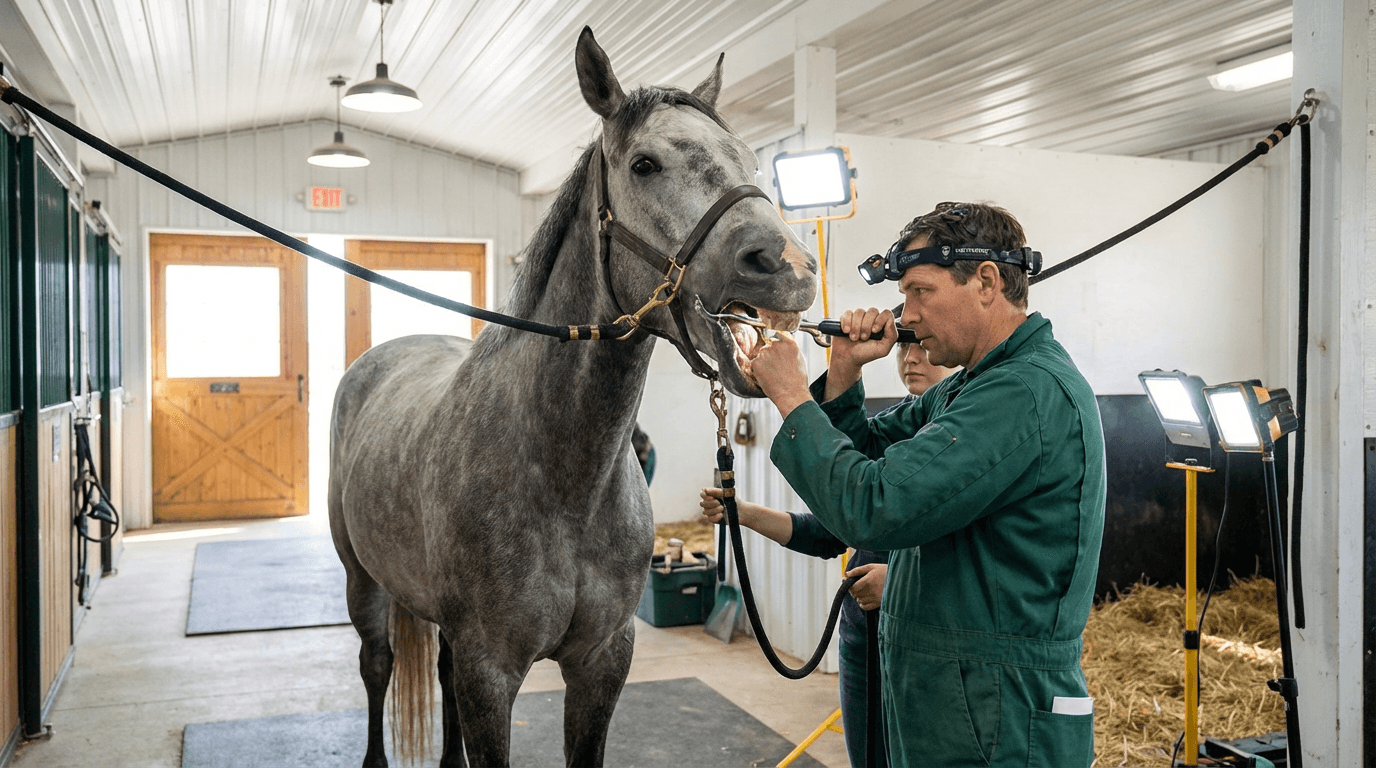
Most equine vets and equine dental technicians in the US now use power floats for routine maintenance, often combined with a full oral speculum to hold the mouth open and a good light source or endoscope camera to visualize the back of the mouth.
Sedation During Dental Work
The vast majority of equine dental procedures in the US are performed under light to moderate sedation — typically a combination of detomidine (Dormosedan) or xylazine with butorphanol. Sedation has multiple benefits: it relaxes the horse and reduces the risk of injury to the horse, the practitioner, and handlers; it allows the horse's head to drop to a comfortable working height; and it enables a thorough oral examination that simply isn't possible in an unsedated, head-tossing horse. Some practitioners use a standing sedation protocol that keeps the horse on its feet throughout; others use a lip chain or stocks for additional restraint.
It is important to note that in most US states, only licensed veterinarians are legally permitted to sedate horses. Some states allow certified equine dental technicians (CEDTs) to perform basic floating without sedation, but the laws vary considerably by state. When in doubt, use a licensed equine vet for all dental work that requires sedation.
What Happens During a Floating Appointment
A typical equine dental appointment follows this sequence:
- History and visual assessment: The vet reviews the horse's age, diet, use, and any reported concerns (dropping feed, weight loss, bit resistance).
- Sedation: The horse is sedated and a full-mouth speculum is placed to hold the mouth open safely.
- Oral examination: The vet uses a dental mirror, light, and often a mirror or endoscope to examine all surfaces of every tooth, the gums, the soft palate, and the tongue.
- Floating: Sharp enamel points, hooks, ramps, and other overgrowths are reduced using hand or power floats.
- Extraction (if needed): Wolf teeth, caps, or fractured/diseased teeth may be removed at this time.
- Post-procedure assessment: The vet evaluates the final result, records findings, and makes recommendations for the next visit.
A routine floating appointment for a healthy adult horse typically takes 30–60 minutes from sedation to recovery.
How Often Should You Float Your Horse's Teeth?
The standard recommendation among equine veterinarians is annual dental examination and floating for most adult horses. However, the actual frequency depends heavily on the individual horse:
| Horse Category | Recommended Frequency | Reason |
|---|---|---|
| Young horses (2–5 years) | Every 6 months | Rapid dental change; shedding caps; erupting permanent teeth |
| Prime adults (6–15 years) | Annually | Routine maintenance; sharp points develop at predictable rate |
| Performance horses | Every 6–12 months | Bit contact; head carriage; athletic demands require comfort |
| Senior horses (16+ years) | Every 6 months | Teeth wear irregularly; wave mouth; periodontal disease; weight loss risk |
| Senior horses (25+) | Every 4–6 months | Severe wear; tooth loss; soft diet may be needed |
| Horses with known dental problems | As directed by vet | Depends on severity; may require 3–4 month intervals |
Never wait for obvious symptoms to develop before scheduling dental care. By the time a horse shows visible signs of mouth pain — significant weight loss, dropping feed, head tossing — dental problems are often quite advanced. Preventive care is always cheaper and less stressful than corrective procedures.
Age Matters: Young Horses
The 2-to-5-year window is arguably the most important period of equine dental development. During these years, horses shed 24 deciduous teeth and erupt 36 permanent teeth — all while being started under saddle, fitted with a bit, and asked to accept contact. Retained caps, erupting wolf teeth, and sharp points on permanent teeth all contribute to bit resistance, head tilting, difficulty bending, and behavioral issues that owners often mistakenly attribute to training problems. A 6-month dental exam schedule during these formative years pays enormous dividends in training responsiveness and long-term soundness.
Age Matters: Senior Horses
Senior horses face the opposite problem: their teeth are wearing down and eventually running out of reserve crown. As horses age past 20, teeth may become loose, fall out, or develop severe wave mouth or smooth mouth (where enamel ridges are completely worn away). Senior horses with poor dentition have difficulty chewing hay, lose weight rapidly in cold weather, and are at elevated risk for esophageal choke and digestive impaction. Twice-yearly exams allow the vet to track dental decline and adjust the horse's diet proactively — adding soaked hay cubes, senior feeds, or complete pelleted rations before a crisis develops.
Signs Your Horse Needs Dental Attention
Horses are stoic animals. Most will continue eating and working even with significant oral pain, making it easy to miss early warning signs. Learning to recognize the subtle and not-so-subtle indicators of dental problems can help you catch issues before they escalate.
Behavioral and Performance Signs
- Bit resistance or evasion: Head tossing, gaping, leaning on the bit, or refusing contact may indicate mouth pain exacerbated by bit pressure.
- Head tilting: Tilting the head to one side during work or eating often means a horse is trying to favor one side of the mouth.
- Difficulty bending or flexing: Pain in the temporomandibular joint (TMJ) or cheek teeth can restrict lateral jaw movement, which affects lateral bend and collection.
- Reluctance to accept the bridle: A horse that suddenly becomes difficult to bridle or resists the bit going in may be protecting a sore mouth.
- Changes in attitude or performance: Increased irritability, reluctance to work, or unexplained decline in athletic performance sometimes trace back to dental discomfort.
Eating-Related Signs
- Quidding: Dropping partially chewed balls of hay or grain from the mouth is one of the most classic signs of dental pain. The horse chews, hits a sharp point or sore spot, and drops the food rather than swallowing it.
- Slow eating: A horse that takes much longer than usual to finish a meal may be working around mouth pain.
- Grain in the water bucket: Horses sometimes submerge food in water to soften it when chewing is painful — you'll find hay or grain floating in the water.
- Preferring soft feeds: A sudden preference for pellets or mash over hay can signal that chewing long-stemmed forage has become uncomfortable.
- Whole grains in manure: Undigested whole oats, corn, or other grains in the manure indicate inefficient chewing, which is often dental in origin.
Physical Signs
- Weight loss: Unexplained weight loss in a horse receiving adequate feed is a red flag for poor digestion, and poor digestion often starts with inadequate chewing.
- Bad breath or nasal discharge: A foul odor from the mouth or unilateral (one-sided) nasal discharge can indicate infected or abscessed upper cheek teeth — the roots of which lie directly below the sinuses.
- Facial swelling: Swelling on the cheek, jaw, or below the eye can indicate an abscess, fractured tooth, or impacted wolf tooth.
- Salivating excessively: While some salivation during eating is normal, drooling or excessive salivation can indicate oral pain or a foreign object stuck between teeth.
- Visible asymmetry of the jaw: In severe cases of malocclusion or missing teeth, the lower jaw may appear to deviate to one side.
Equine Dental Costs Across the US
The cost of equine dental care varies significantly by region, practitioner type (equine-only vet vs. mixed-practice vet vs. equine dental technician), and the scope of work needed. The following tables provide realistic cost ranges based on surveys of equine practitioners across the United States as of 2025–2026.
Routine Floating Costs by Region
| Region | Routine Float (including sedation) | Farm Call Fee | Total Typical Visit |
|---|---|---|---|
| Northeast (NY, MA, CT, NJ, PA) | $150–$250 | $55–$100 | $205–$350 |
| Mid-Atlantic (VA, MD, NC) | $120–$200 | $45–$80 | $165–$280 |
| Southeast (FL, GA, AL, TN) | $100–$175 | $40–$75 | $140–$250 |
| Midwest (OH, IN, IL, WI, MN, IA) | $100–$180 | $40–$70 | $140–$250 |
| Great Plains (KS, NE, SD, ND, OK) | $90–$160 | $35–$65 | $125–$225 |
| Southwest (TX, NM, AZ) | $95–$170 | $40–$75 | $135–$245 |
| Mountain West (CO, WY, MT, ID, UT) | $100–$185 | $45–$80 | $145–$265 |
| Pacific Coast (CA, OR, WA) | $140–$250 | $55–$100 | $195–$350 |
Additional Procedure Costs
| Procedure | Typical Cost Range | Notes |
|---|---|---|
| Wolf tooth extraction (per tooth) | $25–$75 | Often done at first dental visit for young performance horses |
| Cap removal (per tooth) | $20–$50 | Young horses 2–5 years; may include multiple caps |
| Molar extraction (simple) | $150–$400 | Standing extraction under heavy sedation |
| Molar extraction (surgical/referral) | $500–$1,500+ | Fractured, impacted, or infected teeth; may require repulsion |
| Oral endoscopy | $75–$150 | Diagnostic; often added to floating for senior horses |
| Dental radiographs (per jaw) | $100–$250 | Used for suspected fractures, abscesses, impacted teeth |
| Sedation (if billed separately) | $40–$85 | Some vets bundle sedation into the float fee, others bill separately |
| Wave mouth correction | $200–$600+ | Multiple sessions often required; depends on severity |
Factors That Affect Your Total Bill
Several variables can push your dental costs higher or lower than the regional averages above:
- Distance from the clinic: Rural locations often pay higher farm call fees because vets must travel farther. Some vets charge per mile beyond a base radius.
- Number of horses per visit: Many equine vets offer reduced per-horse rates when floating multiple horses in the same visit — if you have 3+ horses, always ask about a multi-horse discount.
- Time since last float: A horse that hasn't been floated in 3+ years will need more extensive work than one on a regular annual schedule — expect the first float to cost 30–50% more.
- Specialist vs. generalist: Board-certified equine dentists or equine-only practices may charge 15–25% more than general mixed-animal vets, but often bring more advanced equipment and expertise.
- Emergency or after-hours: Dental emergencies (severe tooth fractures, jaw fractures, choke related to dental impaction) billed at after-hours rates can be 50–100% more than scheduled visits.
Equine Dental Veterinarians: Who Should You Call?
Equine dental care in the United States is provided by two main categories of practitioners: licensed veterinarians and equine dental technicians (EDTs). Understanding the differences helps you make the right choice for your horse and ensures you're complying with your state's regulations.
Licensed Equine Veterinarians
A licensed doctor of veterinary medicine (DVM) is legally qualified in all 50 US states to perform any equine dental procedure, including sedation, extractions, dental radiography, and surgical interventions. Some equine vets pursue additional training or certification in advanced equine dentistry through organizations like the American Veterinary Dental Society (AVDS) or the American College of Veterinary Dentistry (ACVD). For most horse owners, a licensed equine vet is the appropriate first point of contact for dental care — they can diagnose oral disease, manage complications, prescribe medications, and provide sedation safely.
Equine Dental Technicians (EDTs)
EDTs are non-veterinarians who specialize exclusively in equine dentistry. In many states, they can legally perform basic unsedated dental work (manual floating of minor sharp points), but the legal scope of their practice varies significantly by state. The International Association of Equine Dentistry (IAED) and the World Equine Dental Society (WEDS) offer certification programs for EDTs. Key considerations when using an EDT:
- Verify their certification and ask specifically what procedures they are legally permitted to perform in your state.
- Confirm that they do NOT administer sedation unless they are also a licensed vet — in most states, this is illegal and dangerous without veterinary oversight.
- EDTs cannot diagnose and treat oral disease, prescribe antibiotics for dental infections, or perform extractions in most jurisdictions.
- For young horses, senior horses, or any horse with suspected dental pathology, always use a licensed veterinarian.
When to Refer to a Specialist
Most routine equine dental care can be handled by your regular large animal vet. However, certain situations warrant referral to an equine dental specialist or equine hospital:
- Fractured teeth requiring surgical extraction (repulsion or buccotomy)
- Sinus involvement from infected upper cheek teeth
- Jaw fractures
- Severe wave mouth or step mouth requiring multi-session correction
- Young horses with severely impacted or abnormally erupting teeth
- Oral tumors or masses
- Horses that have not responded to routine dental care
Regional and Seasonal Considerations for US Horse Owners
Where you live and what time of year it is affect both the availability of equine dental care and the dental health challenges your horses face.
Regional Differences in Vet Availability
Access to equine veterinary care — including dental services — is not evenly distributed across the United States. The USDA's Veterinary Shortage Area (VSA) program has identified hundreds of counties in rural states like Montana, Wyoming, North Dakota, South Dakota, Nebraska, and parts of the Deep South where large animal vets are severely underrepresented relative to horse and livestock populations. If you live in one of these areas:
- Schedule annual dental care well in advance — popular equine vets in rural areas book up months ahead, especially in spring and fall.
- Ask about mobile vet services — some equine vets cover very large geographic areas with a fully equipped mobile unit.
- Consider coordinating with neighboring horse owners to share farm call fees when the vet visits your area.
- Build a relationship with your vet before an emergency — vets are more likely to prioritize clients they know when time is critical.
Seasonal Timing for Dental Appointments
While equine dental care can technically be scheduled any time of year, most experienced horse owners and equine vets agree that certain seasons are more practical than others:
| Season | Considerations | Best For |
|---|---|---|
| Spring (Mar–May) | Ideal weather; horses coming off winter hay; pre-competition season; high demand — book early | Annual float for performance horses; young horse caps |
| Summer (Jun–Aug) | Peak competition season; heat stress adds risk with sedation; vets busiest | Emergency/urgent dental work; semi-annual check for young/senior horses |
| Fall (Sep–Nov) | Excellent weather; pre-winter prep; lower demand than spring; great for bundling with annual vaccines | Annual float for all horses; senior horse 6-month check; pre-winter weight management |
| Winter (Dec–Feb) | Cold weather concerns with sedation; short days; reduced demand means easier scheduling | Senior horse emergencies; follow-up floating; horses losing weight on hay diet |
Many experienced owners schedule dental work in early fall — after the summer competition season and before the winter hay-feeding season — to ensure their horses are chewing efficiently when forage consumption increases. Senior horses losing weight in winter frequently have undiagnosed dental problems that a fall float could have prevented.
Climate and Dietary Influences on Dental Wear
The type of forage your horses eat is influenced by where you live, and forage type directly affects how quickly dental problems develop:
- High-silica grasses (Great Plains, Pacific Coast): Native prairie grasses and fescue-dominant pastures are more abrasive than tropical or improved pasture grasses — horses in these regions may wear teeth faster and develop slightly different wear patterns.
- Sandy soils (Florida, Arizona, coastal regions): Horses grazing low-growing forages in sandy areas ingest significant amounts of grit, which accelerates wear — these horses may need more frequent monitoring.
- Heavy grain feeding (performance horses, racetracks): Horses on high-concentrate diets chew less than pasture-grazed horses, potentially allowing sharp points to develop faster.
- Hay-only diets (northern states in winter): Dry hay is less abrasive than fresh pasture grass; horses maintained on hay over long winters may need more frequent floating to compensate for reduced natural wear.
Preparing for Your Horse's Dental Appointment
A little preparation on your end makes the dental appointment safer, more efficient, and more productive for everyone — including your horse.
Before the Vet Arrives
- Fast the horse for 2–3 hours before the appointment: An empty mouth makes visualization easier and reduces the risk of aspiration during sedation. Remove hay and grain but keep water available.
- Have a clean, safe work area ready: The vet needs room to work safely with a sedated, head-drooping horse. A clean stall, a solid hitching post, or a set of stocks works well. Good lighting is essential — an open barn aisle with natural light or a well-lit stall is ideal.
- Know your horse's history: Bring notes on any behavioral changes, performance issues, or eating anomalies you've noticed since the last dental visit. The more information you give the vet, the better the examination.
- Have an experienced handler available: Sedated horses can still startle, lean, and stumble. A calm, experienced handler helps keep the horse positioned safely throughout the procedure.
- Know the horse's medications: Tell the vet about any current medications, supplements, or recent health events. Some medications interact with sedation drugs.
After the Appointment
- Allow full recovery from sedation before returning to pasture: Most horses take 30–60 minutes to fully recover from routine dental sedation. Keep the horse in a quiet stall until they are fully steady on their feet.
- Offer hay and water promptly after recovery: Most horses eat and drink normally within 1–2 hours of a routine float. Watch for any signs of difficulty swallowing or unusual behavior.
- Expect mild mouth soreness for 1–2 days: Some horses are slightly reluctant to eat or chew hard immediately after floating — this is normal and typically resolves within 48 hours. If soreness persists beyond 3–4 days, call your vet.
- Rest performance horses for 24–48 hours: After significant dental work, especially extractions or wave mouth corrections, give performance horses a short rest before returning to work under bridle.
- Record the findings and next appointment: Keep a dental record for each horse with the date of service, the vet's findings, procedures performed, and the recommended next visit date.
Dental Care for Senior Horses: Special Considerations
Senior horses — generally those 15 and older — require a fundamentally different approach to dental care than young or middle-aged horses. As equine lifespans have extended with improved veterinary care and nutrition, managing the oral health of aging horses has become one of the most important skills for any equine owner.
What Changes as Horses Age
The most important change is the gradual depletion of reserve crown. A horse that has been chewing for 25+ years has used up most of the eruption reserve in its teeth. As reserve crown dwindles, the teeth become shorter, more mobile, and eventually fall out — leaving gaps in the arcade that cause neighboring teeth to tilt and overgrow. By age 25–30, many horses have lost one or more teeth, and the resulting wave mouth, step mouth, or smooth mouth can dramatically reduce chewing efficiency.
Diet Modifications for Senior Dental Patients
When a senior horse can no longer efficiently chew long-stemmed hay, dietary modifications become essential to maintaining body condition:
- Soaked hay cubes: Timothy or orchard grass cubes soaked in water for 15–20 minutes create a mash that most seniors can eat without difficulty. Alfalfa cubes are calorie-dense and useful for thin seniors.
- Senior complete feeds: Pelleted complete feeds are formulated to be the horse's entire diet, including forage fiber, and are soft enough for toothless horses to eat. Products from Purina, Triple Crown, Nutrena, and other major brands are widely available.
- Beet pulp (soaked): An excellent source of highly digestible fiber; soaked beet pulp shreds are easy to chew and can be used to stretch senior feed rations.
- Hay stretchers and mashes: Several commercial products are designed specifically to replace or supplement hay for horses with poor dentition.
The Weight Loss Warning
Weight loss in a senior horse is almost always a red flag. Before assuming the horse simply needs more feed, have the vet perform a thorough dental examination. A horse that drops 100+ pounds over the winter despite receiving adequate hay and grain rations may be failing to chew and digest that feed because of poor dental function. Treating the underlying dental problem — even partially — is nearly always more effective and less expensive than simply doubling the feed ration.
Frequently Asked Questions About Equine Dentistry
How do I know if my horse needs its teeth floated right now?
The surest way is to have a licensed equine vet examine the horse's mouth. However, warning signs to watch for include: dropping partially chewed hay (quidding), unexplained weight loss, whole grains in the manure, grain or hay floating in the water bucket, bad breath, nasal discharge from one nostril, head tilting while eating or working, bit resistance or evasion, and facial swelling near the jaw or cheek. Any of these signs warrants a prompt dental examination.
Can I float my horse's teeth myself?
In most US states, legally — no. Performing dental procedures on horses, including sedation, is restricted to licensed veterinarians. Even in states that allow non-vet equine dental technicians to perform basic manual floating, this work requires specialized training, equipment, and knowledge of equine oral anatomy. Attempting to float a horse's teeth without professional training and proper equipment is dangerous for both you and the horse, and could cause serious injury or worsen dental problems.
My horse is only used lightly and seems fine — does it really need annual dental care?
Yes. Sharp enamel points, hooks, and other dental abnormalities develop whether a horse is in heavy work or light use — they are a consequence of the continuous eruption process, not of bit use or workload. Horses that appear to be eating and behaving normally can still have significant oral pathology that a trained vet will find on examination. By the time symptoms are obvious, problems are usually well advanced.
What is a wolf tooth and should it be removed?
Wolf teeth are small, vestigial premolars (the first premolars, designated PM1) that typically erupt between 6 and 18 months of age just in front of the first large upper premolar. They vary in size, shape, and position. In many cases, wolf teeth are uneventful and cause no problems. However, in horses that carry a bit — particularly performance horses working in direct contact with bit pressure — wolf teeth can interfere with bit placement and cause pain when the bit moves against them. The standard recommendation for most performance horses is to have wolf teeth removed before bitting, typically at the first dental exam as a yearling or 2-year-old. The procedure is quick, inexpensive, and performed under sedation.
How do I find a good equine dentist or equine vet in my area?
Ask other horse owners, trainers, or barn managers for personal recommendations. Contact your local equine association or county extension office for referrals. Your state veterinary medical association may maintain a directory of equine practitioners. Online directories like FarmVetGuide allow you to search specifically for large animal and equine veterinarians by county and state, filtering for mobile services, emergency availability, and equine-exclusive practices.
My horse had a tooth extracted — what should I monitor for?
After an extraction, monitor for: excessive bleeding (mild oozing for 24 hours is normal; significant hemorrhage is not); difficulty eating or swallowing; fever (rectal temperature above 101.5°F); swelling at the extraction site; nasal discharge (especially from one nostril, which can indicate sinus involvement after upper molar extraction); and behavioral signs of pain. Follow your vet's post-extraction instructions carefully — they may include a soft diet, rinsing the extraction site, and a course of antibiotics and anti-inflammatories.
Is it safe to float a horse's teeth in hot weather?
Routine dental work under sedation in hot weather carries some additional risk — sedated horses are less able to thermoregulate and can become heat-stressed more quickly. Most equine vets in hot climates schedule dental work for early morning appointments in summer, and may recommend waiting for cooler temperatures for non-urgent cases. If dental work is urgent (painful dental disease, significant weight loss), the risk of proceeding with appropriate precautions is generally lower than the risk of delaying care.
Summary: A Proactive Approach Pays Off
Equine dentistry is not a luxury or an optional extra — it is a fundamental pillar of routine horse care, as important as vaccination, deworming, and hoof care. The evidence from decades of equine practice is clear: horses that receive regular professional dental attention maintain better body condition, perform more willingly under saddle, experience less digestive disease, and remain comfortable and productive later into their lives than horses whose dental care is neglected.
The good news is that routine dental care is affordable and accessible for most horse owners. An annual examination and float is one of the most cost-effective veterinary investments you can make for your horse. The key is not to wait for obvious symptoms — by the time a horse shows classic signs of dental disease, the problem has usually been developing for months or years.
Work with a licensed equine veterinarian you trust, establish a consistent dental schedule tailored to your individual horses' needs, and make dental examinations a standard part of every spring or fall wellness visit. Your horses will reward you with better health, better performance, and a longer, more comfortable life.
Find a Large Animal Vet Near You
Finding a qualified equine veterinarian for dental care can be challenging, especially in rural areas of the US where large animal vets are in short supply. FarmVetGuide is the largest online directory of large animal and equine veterinarians in the United States, with listings for over 9,500 veterinary practices across all 50 states.
Use FarmVetGuide to search for equine vets in your county, filter for mobile farm-call services, find emergency-available practices, and locate USDA-accredited practitioners near you. Whether you're in a well-served suburban horse country or a remote rural county, FarmVetGuide helps you find the dental and wellness care your horses deserve.
Browse our directory to find equine veterinarians near you — and get your horse's teeth on a regular professional schedule today.
Related Articles & Resources
📖 Related Guides
📍 Find a Vet
🔧 Free Tools
Sources & Further Reading
We cross-check the animal-health information in this guide against these recognized veterinary and government sources. For clinical guidance, consult them directly or speak with a licensed veterinarian.
How this guide is maintained
Animal-health guides on FarmVetGuide are written and maintained by the FarmVetGuide Editorial Team and cross-checked against authoritative veterinary sources, including the AVMA, USDA APHIS, and the Merck Veterinary Manual. This guide is general educational information, not a substitute for professional veterinary diagnosis or treatment. For a sick or injured animal, contact a licensed veterinarian directly.