
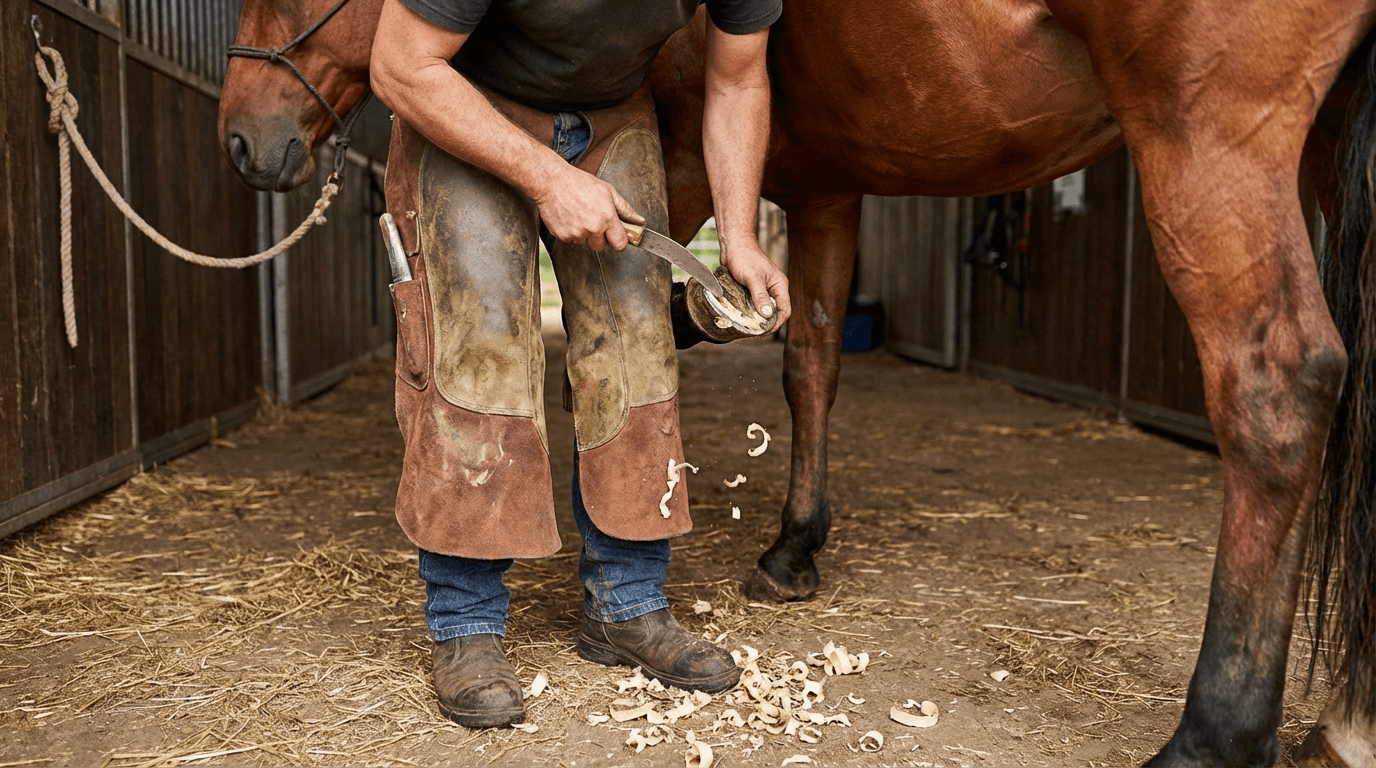
Horse Hoof Care: Farrier Schedule, Common Problems, Thrush, Abscesses & White Line Disease
By FarmVetGuide Editorial Team · Published May 2026 · Updated March 2026 · Based on verified data from our directory of 9,500+ practices
Why Hoof Care Is the Foundation of Horse Health
The old horseman's proverb — "No hoof, no horse" — has endured for centuries because it captures an undeniable truth. A horse's hooves are subject to enormous mechanical stress every single day. A 1,200-pound animal concentrates all of that weight onto four structures roughly the size of a dinner plate. When hooves are healthy, horses move freely, work comfortably, and live productive lives. When hooves break down, lameness follows, performance suffers, and veterinary bills mount rapidly.
Despite this reality, hoof care remains one of the most inconsistently managed aspects of horse ownership. Some owners follow a meticulous six-week farrier schedule and monitor daily for early warning signs. Others wait until a horse goes lame before making a call. The difference in outcomes between these two approaches is dramatic — and this guide is designed to move you firmly into the first category.
This comprehensive resource covers everything a horse owner, barn manager, or equine professional needs to know: hoof anatomy and why it matters, how often to schedule your farrier based on your horse's discipline and season, how to distinguish a quality trim from a dangerous one, the most common hoof pathologies and how to recognize them early, the ongoing debate between barefoot and shod horses, the evidence behind hoof supplements, when to call a farrier versus a veterinarian, and realistic cost expectations across different regions of the United States.
Understanding Hoof Anatomy: The Basics Every Owner Should Know
You do not need a veterinary degree to care for your horse's hooves intelligently, but you do need a working understanding of what those hooves contain and how they function. Many hoof problems are invisible to an untrained eye simply because owners do not know what they are looking at.
The Hoof Wall
The hoof wall is the hard, keratinized outer shell that most people think of when they picture a hoof. It is made of tubular and intertubular horn produced by specialized cells in the coronary band — the junction between the skin of the leg and the hoof itself. The wall grows downward from the coronary band at a rate of approximately one-quarter to three-eighths of an inch per month, meaning it takes roughly nine to twelve months for a full hoof wall to grow from the coronary band to the ground surface. This slow growth rate has important implications: damage at the coronary band can produce visible defects in the wall for a year or longer, and any wall defect you see today reflects damage that occurred months ago.
The wall is divided into three regions: the toe (front), the quarters (sides), and the heels (rear). Each region has different mechanical properties and different vulnerability to injury. The toe bears the brunt of breakover stress — the moment when the hoof pivots forward off the ground. The quarters flex slightly with each step, acting as a natural shock absorber. The heels bear initial weight contact and house the critically important bulbs of the heel.
The White Line
The white line (technically the zona alba) is the visible junction between the insensitive hoof wall and the sensitive inner structures. When you look at a freshly trimmed hoof from the ground surface, you can see it as a pale, slightly waxy zone just inside the dark outer wall. The white line is mechanically weaker than the surrounding wall, which makes it vulnerable to separation — a condition exploited by pathogens in white line disease. Proper trimming preserves the integrity of the white line. A stretched or irregular white line is a warning sign that deserves attention.
The Sole
The solar surface covers the bottom of the foot and provides protection for the sensitive structures above it. In a healthy hoof, the sole should be slightly concave (arched upward), not flat or convex. A flat or dropped sole indicates significant internal pressure — often associated with laminitis or chronic founder — and dramatically increases the horse's vulnerability to bruising and penetrating injuries. The sole also provides important diagnostic information: the depth of sole concavity, the presence of bruising (visible as reddish or purplish discoloration), and the quality of horn all tell a story about the horse's history and current metabolic health.
The Frog
The frog is the V-shaped, rubbery structure that extends from the heels toward the toe on the solar surface. It serves multiple functions: it acts as a traction device on soft ground, it helps pump blood back up the leg as it contacts the ground with each stride, and it provides sensory feedback that helps the horse navigate terrain. A healthy frog should be plump, firm but slightly yielding, and free of deep central sulcus grooves or ragged edges. A shrunken, atrophied frog is almost always a sign that the horse is not using its heels properly — often because of pain, improper shoeing, or contracted heels.
The Coffin Bone, Navicular Bone, and Digital Cushion
Inside the hoof capsule live three bones: the coffin bone (pedal bone or P3), the short pastern bone (P2, partly inside and partly above the hoof), and the navicular bone (distal sesamoid), which sits behind the coffin bone and above the heels. The coffin bone is suspended within the hoof capsule by interlocking tissue layers called laminae — the sensitive laminae attached to the bone and the insensitive laminae attached to the hoof wall. This lamellar bond is what keeps the coffin bone in place. When laminitis strikes, this bond weakens or fails, allowing the coffin bone to rotate or sink within the capsule — with devastating consequences.
The digital cushion sits above the frog and heels, acting as the primary shock-absorbing structure in the rear of the foot. In young or unfit horses, the digital cushion is relatively soft and fibrocartilaginous. With proper work, especially barefoot or in wide-heeled shoes, the digital cushion develops denser fibrocartilage and improves its shock-absorbing capacity. This is one reason many rehabilitation farriers prioritize frog contact with the ground — stimulating the digital cushion is essential for long-term hoof health.
The Coronary Band
The coronary band is, functionally, the hoof's factory. Injury or chronic pressure to the coronary band disrupts horn production and results in permanent ridges, grooves, or deformations in the wall below. Common causes of coronary band damage include wire cuts, pasture injuries, overreaching (when a hind foot strikes the heel of a front foot), and chronic laminitis (producing the characteristic growth rings that circle the hoof at the same angle as the coronary band). Keeping the coronary band healthy — moisturized, free from infection, and protected from repeated trauma — is one of the most important long-term investments you can make in your horse's hoof quality.
Farrier Schedule: How Often Does Your Horse Really Need Trimming?
One of the most common questions horse owners ask is: "How often should my horse see the farrier?" The honest answer is that it depends on multiple factors — discipline, season, individual hoof growth rate, whether the horse is shod or barefoot, and the horse's workload. What follows is a practical guide designed to help you establish the right interval for your specific situation.
The Standard Six-to-Eight Week Rule — and Its Limitations
The frequently cited six-to-eight week interval is a reasonable starting point for many horses, but it is not a universal law. Some horses — particularly those with fast-growing hooves, horses in active work on hard surfaces, or horses recovering from hoof pathologies — need attention every four to five weeks. Others, particularly easy-keeping horses with slow hoof growth kept in soft pasture, may go eight to ten weeks between visits without problems. Your farrier's professional judgment, based on direct observation of your individual horse, should always take precedence over any generic schedule.
Farrier Schedule by Discipline and Season
| Discipline / Situation | Recommended Interval | Key Considerations |
|---|---|---|
| Performance horses (barrel racing, cutting, reining, polo) | 4–6 weeks | High-stress maneuvers demand consistent hoof balance; shoe wear accelerates |
| Trail / recreational riding (shod) | 6–8 weeks | Monitor shoe fit; rocky terrain increases wear |
| Trail / recreational riding (barefoot) | 6–8 weeks | Natural wear may reduce need; check for flaring and chipping |
| Show horses (hunters, jumpers, dressage) | 4–6 weeks | Appearance matters; pulled shoes and bell boots affect schedule |
| Racehorses (Thoroughbred, Standardbred) | 3–4 weeks | Extreme stress; specialized shoeing by track farriers |
| Miniature horses / ponies | 6–8 weeks | Often neglected; prone to laminitis — do not skip |
| Breeding stock (pasture mares, stallions) | 8–10 weeks | Less wear; still essential to prevent overgrowth and flaring |
| Young horses (2–3 years, in training) | 4–6 weeks | Corrective trimming shapes developing hooves; critical window |
| Foals (first 6 months) | 4 weeks | Rapid growth; early correction of angular limb deformities |
| Senior horses (25+) | 6–8 weeks | May have chronic laminitis; do not skip — problems worsen fast |
| Winter (cold climate, reduced work) | +2 weeks above baseline | Growth slows; ice pads or traction devices needed if shod |
| Summer (warm climate, active work) | At or below baseline | Growth accelerates; wet/dry cycles stress wall integrity |
| Rehabilitation (laminitis, white line disease) | 3–4 weeks | Therapeutic shoeing requires frequent adjustment as foot heals |
| Horses in stalls (minimal turnout) | 6 weeks | Less natural wear; urine ammonia softens frogs — watch for thrush |
Signs That Your Interval Is Too Long
- Flaring: The wall bows outward at the quarters or toe instead of growing straight down — a sign of excessive growth and poor break-over mechanics.
- Long toe / low heel: The hoof takes on a sloping, wedge-like profile; the heel looks underrun. This puts the deep digital flexor tendon under chronic stress.
- Cracking: Vertical or horizontal cracks begin to appear, often at the quarters or toe.
- Chipping: Chunks of wall break away, particularly at the toe.
- Shoe rotation or looseness: A shoe that was fitted tightly has migrated or shifted — the foot has outgrown it.
- Behavior changes: The horse is reluctant to work, shortened in stride, or actively lame.
What Makes a Good Trim? Evaluating Your Farrier's Work
Not all farriery is equal. The difference between a competent, thoughtful farrier and a rushed or careless one is measured in the long-term soundness of your horse. Learning to evaluate the quality of a trim and shoeing job protects your investment and your horse's health.
Signs of a Quality Trim
- Balanced foot from front: When viewed from the front, the hoof should appear symmetric — equal height on both sides of the center of the frog. One quarter should not be noticeably higher than the other.
- Appropriate heel height: Heels should not be excessively low (underrun) or excessively high (creating a clubfoot-like profile). The palmar angle of the coffin bone should be approximately 3–5 degrees positive in a well-trimmed foot.
- Hoof-pastern axis: When viewed from the side, an imaginary line through the pastern should continue through the hoof wall without a break backward (broken-back axis, common with long toes) or break forward (broken-forward axis, common with clubfeet).
- Smooth, flat solar surface: The ground surface of the foot should sit flat on a level surface, with no rocking from heel to toe or side to side.
- Frog contact: In a properly trimmed barefoot horse, the frog should contact the ground. In a shod horse, the shoe should allow frog contact or near-contact.
- Clean white line: The white line should be tight and narrow, not stretched or widened — a widened white line suggests previous or ongoing mechanical stress or infection.
- Smooth finish: The exterior wall should be rasped smooth, without deep rasp marks across the wall (which damages the periople, the protective outer coating of the wall).
Red Flags in a Trim or Shoeing Job
- Excessive rasping of the hoof wall above the shoe (destroys the periople, increases moisture loss)
- Nails driven at an inconsistent angle or through the white line (risks sensitive tissue)
- Heels cut back beyond the widest part of the frog (destabilizes the rear of the foot)
- Clinches that stand proud of the wall rather than lying flat
- A shoe that is significantly smaller than the foot (a practice called "hot fitting down" that constricts growth)
- Leaving an excessively long toe to make up for a low heel rather than addressing the underlying imbalance
- Trimming the frog aggressively or removing healthy sole
- No post-trim assessment of the horse's movement
Choosing the Right Farrier
Certification matters. In the United States, the American Farrier's Association (AFA) offers the Certified Farrier (CF) and Certified Journeyman Farrier (CJF) credentials, which require demonstrated competency in both practical skills and written examinations. The CJF is the higher credential. For horses with complex pathologies, look for farriers with additional credentials such as the AFA Therapeutic Endorsement or those who have completed programs at the Guild of Professional Farriers or equivalent schools.
Beyond credentials, evaluate a farrier by asking for references from clients with horses similar to yours, observing their bedside manner with horses (does the horse seem calm or stressed?), and noting whether they communicate with your veterinarian when needed. A farrier who dismisses veterinary input — or vice versa — is a red flag. The best outcomes for complex hoof cases almost always involve close collaboration between the farrier and the attending veterinarian.
Common Hoof Problems: Recognition, Causes, and Treatment
Even with excellent management, horses develop hoof problems. Early recognition dramatically improves outcomes and reduces both treatment costs and the duration of lameness. Here is a comprehensive guide to the most prevalent hoof pathologies seen in the United States.
Thrush
Thrush is a bacterial infection of the frog and its central and collateral sulci (grooves). It is caused primarily by anaerobic bacteria — most commonly Fusobacterium necrophorum — that thrive in the oxygen-poor environment of a moist, packed frog sulcus. Thrush is overwhelmingly a management problem: it is almost always associated with prolonged exposure to wet or muddy conditions, infrequent hoof picking, or inadequate bedding in stalls.
Recognition: Black, foul-smelling discharge from the frog sulci is the hallmark sign. In early cases, the frog may simply appear darker and softer than normal. In advanced cases, the central sulcus may be deeply invaded, and the horse may show sensitivity or outright pain when the frog is pressed — particularly at the heels. Severe thrush can penetrate to the sensitive frog and digital cushion, causing significant lameness.
Treatment: Remove the horse from the wet environment. Pick and clean the hoof thoroughly. Debride (trim away) all ragged, necrotic frog tissue to expose the infection to air and treatment. Apply an antiseptic such as dilute bleach (1:10 with water), copper sulfate solution, commercial thrush treatments (CleanTrax, Thrushbuster, White Lightning), or iodine to the affected sulci. Repeat daily until resolved. In severe cases involving the sensitive frog, consult your veterinarian — systemic antibiotics may be necessary.
Prevention: The most effective prevention is management. Pick hooves daily, provide clean, dry bedding, rotate horses off muddy sacrifice areas, and ensure your farrier maintains healthy frog tissue at each visit. A horse with well-developed, plump frogs and good heel-first landing is far less susceptible to thrush than a horse with contracted, narrow frogs that pack debris into deep, narrow sulci.
White Line Disease (Seedy Toe)
White line disease (WLD), sometimes called seedy toe, is a fungal or polymicrobial infection that invades the white line zone and progressively destroys the horn connecting the hoof wall to the inner structures. Unlike thrush, which attacks the frog from the outside, WLD typically begins at the ground surface of the white line and tracks upward, creating hollow cavities within the wall that are often not visible until the farrier probes the area with a hoof knife.
Recognition: The farrier is often the first to identify WLD during a routine trim. Characteristic signs include a chalky, crumbling texture at the white line, hollow sounds when tapping the affected area of the wall, and visible black or gray powdery debris in the white line zone. In advanced cases, the entire wall over the affected area may feel loose or "float" slightly when pressed. The toe is the most commonly affected region, but WLD can occur anywhere along the white line.
Causes: WLD thrives when the white line is compromised — by mechanical stretching (long toes, laminitis), moisture fluctuations that cause repeated expansion and contraction of the wall, or pre-existing wall damage. Once the white line opens even slightly, fungal organisms colonize the pocket and the infection spreads.
Treatment: Resection — surgical removal of the overlying wall to expose the infected area to air — is the cornerstone of treatment. This sounds alarming but is generally well-tolerated by horses. Once exposed, the cavity is cleaned, debrided, and treated with antifungal agents. Common topical treatments include White Lightning (chlorine dioxide), copper sulfate, dilute bleach, or commercial WLD preparations. The foot is typically packed with medicated material and bandaged or fitted with a hospital plate shoe to protect the exposed area.
Healing time depends on the extent of involvement. A small, early WLD lesion may resolve in four to eight weeks. A severe case involving a large portion of the wall may take six to twelve months for the resected area to grow out fully. During this period, the horse typically remains serviceable but may need modified work.
Hoof Abscesses
A hoof abscess is a localized bacterial infection within the hoof capsule, typically in the sensitive laminae, sole, or white line zone. It is one of the most common causes of sudden, severe lameness in horses. Owners are often alarmed when a horse that was perfectly sound the previous evening is barely weight-bearing the next morning — an abscess is frequently the culprit.
Recognition: Acute, severe, often single-limb lameness. Digital pulse is almost always increased — you can feel a bounding, "hammering" pulse in the digital arteries just above the fetlock. The hoof itself may feel warm to the touch. The horse may point the affected foot (hold it forward) to relieve heel pressure, or may stand on the toe. Hoof testers applied by a veterinarian or experienced farrier will identify the painful zone.
Common entry points: White line defects are the most frequent portal of entry. Sole penetrations (gravel, nails, wire) are another common cause. Abscesses also form when bacteria are introduced during nail removal or improper farriery (a "hot nail" that approaches the sensitive tissue). Subsolar bruises can become infected and develop into abscesses days to weeks after the inciting trauma.
Treatment: Most abscesses are treated by creating a drain hole — your farrier or veterinarian locates the hot spot with hoof testers, then carefully excavates with a hoof knife to open the abscess and allow drainage. Immediate pain relief upon drainage is dramatic and deeply satisfying to witness. The foot is then soaked in warm water with Epsom salts and wrapped with an antiseptic poultice (Animalintex or ichthammol). Tetanus prophylaxis should be current — verify with your veterinarian.
If an abscess cannot be located or does not resolve within a few days of treatment, radiographs are warranted to rule out more serious pathology including pedal osteitis (infection of the coffin bone), foreign body penetration, or fracture.
Laminitis and Founder
Laminitis is inflammation of the sensitive laminae within the hoof capsule. It is one of the most serious and potentially devastating conditions in equine medicine. The terms "laminitis" and "founder" are often used interchangeably, but technically laminitis refers to the inflammatory process, while founder refers to the mechanical failure — rotation or sinking of the coffin bone — that can result from laminitis.
Causes: Laminitis can be triggered by numerous systemic events. The most common in the United States include:
- Carbohydrate overload: Grain overfeeding, pasture laminitis from lush grass (spring grass is particularly dangerous due to high non-structural carbohydrate content)
- Endocrine disorders: Equine Metabolic Syndrome (EMS) and Pituitary Pars Intermedia Dysfunction (PPID, also called Equine Cushing's Disease) are the most common predisposing conditions in horses over 15 years old
- Supporting limb laminitis: When a horse bears excessive weight on one limb due to pain in the opposite limb (post-fracture, post-surgery), the overloaded foot can develop laminitis
- Retained placenta: Mares that retain the placenta for more than 3 hours post-foaling are at significant risk
- Black walnut shaving exposure: Even a small percentage of black walnut shavings in bedding can trigger severe laminitis
- Excessive road work on hard surfaces (road founder)
Recognition of an acute episode: The horse stands in a characteristic "sawhorse" stance, shifting weight back onto the hindquarters to relieve pressure on the front feet (front feet are most commonly affected, though all four can be involved). Strong digital pulses. Reluctance to move or turn. Pain on hoof testers over the toe region. The coronary band may feel warm. In severe acute cases, the horse may be completely recumbent.
Treatment and farriery for laminitis: Acute laminitis is a veterinary emergency. Call your veterinarian immediately. While waiting, move the horse to deep, soft bedding (sand or shavings), remove access to pasture or grain, and apply cold therapy to the feet if possible (cold water hose or ice boots). Do not force the horse to walk.
Therapeutic farriery for laminitis focuses on supporting the coffin bone from below, reducing breakover stress at the toe, and redistributing weight toward the heels and frog. Common approaches include:
- Deep bedding (immediate relief, always the first step)
- Heart-bar shoes that provide frog support
- Rocker-toe or rolled-toe shoes to reduce breakover
- Foam or impression material pads to provide solar support
- Deep Digital Flexor Tendon (DDFT) tenotomy in cases of severe rotation
Radiographs are essential in any significant laminitis episode to quantify the degree of rotation and guide therapeutic shoeing. A farrier working on a laminitic horse without radiographs is working blind.
Contracted Heels
Contracted heels occur when the rear of the hoof narrows abnormally. Instead of the wide, open heel conformation associated with a healthy, well-functioning foot, the heels pinch inward, the frog atrophies, and the entire back of the foot loses its shock-absorbing capacity. Contracted heels are both a cause and an effect of pain — horses in pain unload their heels, the digital cushion stops being stimulated, and the heels narrow further.
Causes: Long-toe/low-heel conformation encourages a toe-first landing that bypasses heel loading. Narrow shoes that do not support the full width of the foot. Lack of frog contact with the ground (e.g., on a deeply bedded, soft stall surface). Chronic pain anywhere in the lower limb that causes the horse to unload the rear of the foot.
Treatment: Address the underlying cause. Correct the hoof balance (lower the heel angle is rarely indicated — instead, address the long toe that is mechanically dragging the heel down). Shoe with a wide-webbed shoe that supports the full width of the foot and allows frog contact. Encourage turnout on natural terrain. In some cases, bar shoes that stimulate the frog are beneficial. Expect a slow improvement — remodeling contracted heels takes months to years of consistent management.
Quarter Cracks and Toe Cracks
Hoof cracks are classified by location (toe, quarter, heel, bar) and depth (surface, incomplete, complete). Surface cracks that do not reach the sensitive tissue are cosmetic concerns and generally not painful. Complete cracks — those that extend from the coronary band to the ground surface and penetrate to the sensitive tissue — are significant and potentially career-threatening.
Causes: Imbalanced feet, flared quarters, dry and brittle hoof horn (particularly in arid climates), repeated impact on hard surfaces, and previous coronary band injuries that disrupt organized wall growth.
Treatment: Farriery is the cornerstone. The farrier will typically stabilize the crack with lacing, screws, or fiberglass/acrylic patches to prevent movement. The underlying balance issue must be corrected, or the crack will recur. Severe cracks involving the coronary band or causing lameness require veterinary assessment. Healing time ranges from six weeks (for small incomplete cracks) to twelve months or more (for full coronary-band-to-ground cracks) as the new wall grows down.
Barefoot vs. Shod: A Practical Comparison
Few topics in horse care generate more passionate debate than barefoot versus shod. The truth, as with most complex topics, is nuanced. Neither approach is universally superior — the right choice depends on the individual horse, the terrain, the workload, and the management system.
| Factor | Barefoot | Shod |
|---|---|---|
| Natural hoof mechanism (expansion/contraction) | Unrestricted; optimal shock absorption when done correctly | Partially restricted by nails; can be addressed with flexible shoe designs |
| Traction on varied terrain | Excellent on soft to moderate terrain; poor on ice | Variable; road studs, borium, or ice nails can be added for traction |
| Wear rate on hard/rocky ground | May exceed growth rate, causing soreness and shortened work intervals | Shoe protects wall from excessive wear |
| Cost | Lower (trim only, typically $40–$80) | Higher (shoes + application, typically $100–$250+ depending on type) |
| Farrier interval | 6–8 weeks typical | 4–8 weeks depending on discipline and wear |
| Transition period | Requires 6–12 months for hoof to adapt; horse may be sore temporarily | Can be applied at any time |
| Suitable disciplines | Trail riding (soft to moderate), breeding stock, light work | All disciplines; essential for high-performance work on hard surfaces |
| Sole protection | Relies on natural sole development; thin-soled horses may bruise | Pads can be added for thin-soled horses |
| Frog stimulation | Excellent when horse works on varied terrain | Depends on shoe fit; wide-web shoes can maintain good frog contact |
| Lost shoe risk | Zero (no shoe to lose) | Pulled shoes are a management and safety concern, especially for turned-out horses |
| Appropriate for laminitis rehab | Often recommended (Strasser, natural balance approaches) | Therapeutic shoes (heart bar, rocker toe) are the standard of care in most vet practices |
| Long-term hoof health | Can be excellent with proper management and terrain stimulation | Excellent with quality farriery; may develop weaker walls if shoes are nailed too frequently in same spots |
The Transition to Barefoot
If you are considering transitioning a previously shod horse to barefoot, plan for a transition period of six to twelve months. During this time, the horse's hooves are adapting — developing a tougher sole, strengthening the digital cushion and lateral cartilages, and growing a thicker, more resilient wall. Using hoof boots (Scoot Boots, Renegade, EasyBoot) during this period allows you to continue riding while protecting the sensitive sole on hard or rocky terrain.
Not every horse successfully transitions to full-time barefoot work. Horses with thin soles, poor hoof quality genetics, or heavy workloads on hard surfaces may always require shoes. Work with an experienced barefoot trimmer and your veterinarian to make this assessment honestly — forcing a horse to go barefoot when it is clearly uncomfortable is not a welfare improvement.
Hoof Supplements: What Works and What Doesn't
The supplement industry is enormously profitable, and hoof supplements represent a major segment of equine supplement sales. Sorting evidence from marketing requires understanding what nutrients are actually relevant to hoof horn production and what the research actually shows.
Biotin
Biotin (vitamin B7) is the most extensively studied hoof supplement and the one with the strongest evidence base. Multiple controlled studies — including research published in equine nutrition journals and work done at European veterinary universities — demonstrate that supplemental biotin at doses of 15–20 mg per day improves hoof horn quality, particularly in horses with poor baseline hoof quality. Results are not immediate: biotin improves the quality of horn being produced at the coronary band now, and that improvement takes nine to twelve months to grow fully down to the ground surface. If you start a horse on biotin, commit to at least a year before evaluating results.
Horses with already excellent hoof quality show less dramatic improvement from biotin supplementation. The horses that benefit most are those with chronically crumbling, soft, or thin-walled hooves.
Methionine and Lysine
Hoof horn is approximately 93% protein (keratin). Methionine is a sulfur-containing essential amino acid that is a critical building block of keratin. Lysine is the most commonly deficient essential amino acid in horse diets and plays a key role in overall protein synthesis. Supplementing methionine and lysine in horses whose diets are deficient in high-quality protein may improve hoof quality — but it is worth noting that most well-fed horses on good-quality forage plus a ration balancer are not methionine or lysine deficient. Supplementing these amino acids in horses with adequate dietary protein is unlikely to produce dramatic results.
Zinc and Copper
Zinc and copper are essential trace minerals for hoof horn production. They act as cofactors in the enzymes responsible for keratin cross-linking. Many horses grazing on iron-rich soils (common in many parts of the Midwest and Southeast) develop functional zinc and copper deficiencies because high dietary iron interferes with the absorption of both minerals. If your horse has chronically poor hoof quality and lives on iron-rich pasture, having a forage and water analysis performed is worthwhile. Targeted zinc and copper supplementation — not megadosing, which has its own risks — may significantly improve hoof quality in these horses.
Omega-3 Fatty Acids
Omega-3 fatty acids (particularly DHA and EPA from marine sources, or ALA from flaxseed) support cell membrane integrity throughout the body, including the cells of the coronary band and laminae. Some farriers and veterinarians report improved hoof wall quality in horses supplemented with omega-3s. The evidence is less robust than for biotin, but the safety profile is excellent and the benefits extend well beyond the hooves (coat, joint health, inflammation management).
Products to Approach with Skepticism
Products that promise dramatic improvement in hoof quality in weeks are almost certainly overpromising. Remember the growth rate reality: the hoof wall grows one-quarter to three-eighths of an inch per month. Any supplement effect on the coronary band today takes nine to twelve months to reach the ground. "Remarkable improvement in 30 days" claims do not align with hoof biology. Look for products that cite peer-reviewed research, list their active ingredient levels clearly, and make claims consistent with what is biologically possible.
Hoof Moisture Management: Balancing Wet and Dry
Hoof horn is hygroscopic — it absorbs and releases moisture from its environment. Healthy hoof horn contains approximately 25% water. Horn that is consistently too wet becomes soft, weak, and prone to separation and infection. Horn that is consistently too dry becomes brittle, prone to cracking, and loses its natural resilience.
In most of the United States, the primary problem is excessive moisture fluctuation rather than either extreme. Horses that stand in wet stalls or muddy paddocks overnight then move to dry, hard pastures during the day experience repeated cycles of softening and drying that stress the hoof wall. This is a major predisposing factor for white line disease, quarter cracks, and general hoof wall delamination.
Hoof Dressings and Conditioners
The goal of hoof dressings is to reduce moisture fluctuation — not to "add" moisture or to create a "waterproof barrier." Products containing lanolin, neatsfoot oil, or petroleum jelly work primarily as sealants that slow moisture exchange. They are most beneficial in horses that are experiencing excessive drying or excessive wetting. They do not build a stronger hoof wall — only proper nutrition and time do that.
A common mistake is applying heavy hoof dressings to the entire hoof, including the coronary band and perioplic ring, on the theory that "more is better." In fact, heavy occlusive dressings over the coronary band can interfere with normal moisture exchange and may soften the horn-producing cells. Apply hoof dressings to the wall only, and do so judiciously based on your horse's specific conditions.
When to Call the Farrier vs. When to Call the Veterinarian
Understanding who to call for a hoof problem saves time, money, and sometimes a horse's soundness. The line between farriery and veterinary medicine is not always obvious, and the best practitioners on both sides collaborate closely. Here is a practical guide.
| Situation | Who to Call First | Notes |
|---|---|---|
| Routine trimming or shoeing | Farrier | Scheduled maintenance |
| Lost or pulled shoe | Farrier | Urgent if horse is working; can wait 24–48 hours if at rest on soft ground |
| Thrush (mild to moderate) | Farrier | Farrier can debride and treat; vet needed if sensitive tissue involved |
| White line disease (early) | Farrier | Farrier resection and treatment typically sufficient |
| White line disease (advanced, near sensitive tissue) | Both | Coordinate farrier resection with vet assessment and possible antibiotics |
| Hoof abscess (typical presentation) | Farrier first, or vet | Either can drain; vet needed if abscess cannot be found or horse is severely lame |
| Acute severe lameness (any cause) | Veterinarian | Do not wait — multiple serious conditions can present as sudden severe lameness |
| Suspected laminitis | Veterinarian (emergency) | Every hour counts; call vet immediately, then farrier |
| Hoof cracks (surface only) | Farrier | Cosmetic; correct underlying balance issue |
| Hoof cracks (complete, to coronary band) | Both | Farrier stabilizes; vet assesses if sensitive tissue involved or horse is lame |
| Puncture wound to the sole | Veterinarian (urgent) | Penetration of the navicular bursa or coffin joint is a surgical emergency |
| Coronary band injury (laceration) | Veterinarian | Affects future wall quality; proper wound management essential |
| Chronic, recurrent lameness | Veterinarian | Nerve blocks and imaging needed to diagnose; farrier applies therapeutic shoeing after diagnosis |
| Young foal with angular limb deformity | Both urgently | Early corrective trimming combined with possible surgical intervention — a narrow treatment window |
Hoof Care Cost Guide by Region
Farriery costs vary considerably by region, reflecting differences in cost of living, travel distances, regional competition among farriers, and local demand. The figures below represent typical ranges for 2025–2026 and should be used as rough benchmarks rather than firm expectations.
| Service | Northeast | Southeast | Midwest | Mountain West | Pacific Northwest / CA |
|---|---|---|---|---|---|
| Basic trim (barefoot) | $55–$90 | $40–$70 | $40–$65 | $45–$75 | $60–$100 |
| Full set steel shoes (4 feet) | $140–$220 | $110–$180 | $100–$165 | $120–$190 | $150–$250 |
| Aluminum shoes (4 feet) | $180–$280 | $150–$240 | $140–$220 | $160–$250 | $200–$320 |
| Pads (per foot, added to shoe cost) | $15–$30 | $12–$25 | $10–$22 | $12–$25 | $18–$35 |
| Front shoes only (trim rear) | $90–$140 | $75–$120 | $70–$115 | $80–$130 | $100–$165 |
| Heart bar / therapeutic shoes | $200–$350 | $170–$300 | $160–$280 | $180–$310 | $220–$400 |
| Glue-on shoes | $280–$450 | $250–$400 | $220–$380 | $240–$400 | $300–$500 |
| Emergency / after-hours farm call | $75–$150 surcharge | $50–$100 surcharge | $50–$100 surcharge | $60–$120 surcharge | $80–$150 surcharge |
These costs represent the farrier's fee only and do not include the veterinarian's fees for associated diagnostics (nerve blocks, radiographs) or medications. Radiographs to guide therapeutic shoeing typically add $150–$400 per foot to the total cost of a laminitis episode, depending on how many views are needed and your geographic area.
Daily and Weekly Hoof Care Routine
Between farrier visits, owners are the first line of defense. A consistent daily routine takes less than five minutes per horse and provides the early warning system that catches problems before they escalate.
Daily Hoof Picking
Pick all four hooves daily — preferably morning and evening for stalled horses, or at least once daily for horses on turnout. Work from heel to toe with a hoof pick, removing packed manure, mud, and debris from the frog sulci. While picking, note:
- Any unusual smell (early thrush indicator)
- Changes in heat (one hoof feeling warmer than the others)
- Changes in digital pulse (is it stronger today than usual?)
- New cracks, chips, or changes in the wall
- Discharge from the white line zone or frog
- Any change in how the horse shifts weight or holds its feet
Developing a mental baseline for what your horse's hooves look and feel like when healthy is the most valuable diagnostic tool you possess. Subtle changes are only detectable if you know what "normal" looks like for that individual horse.
Weekly Assessment
Once a week, observe your horse walking on a hard, flat surface. Note whether the horse is landing heel-first (correct) or toe-first (a warning sign of heel pain). Check that no shoe is rotating, sprung, or missing nails. Run your hand around the coronary band to check for sensitivity, swelling, or unusual warmth. These weekly checks take five minutes and catch the early signs of problems that could take months to treat.
Hoof Care in Special Circumstances
Pregnant Mares
Maintain the normal farrier schedule throughout pregnancy — do not skip appointments in the third trimester because "she's too big to pick up her feet." A mare carrying a foal to term while on overgrown, imbalanced feet is at risk for joint stress, poor movement, and the development of laminitis (particularly in metabolically susceptible mares). Schedule farrier visits for the morning when mares are most active and comfortable. Inform your farrier of the mare's gestational stage so adjustments can be made to stance and technique.
Senior Horses
Senior horses often have decades of accumulated hoof pathology — old injuries, healed laminitis events, chronic white line issues, and the effects of years of imperfect farriery. They also commonly have PPID (Cushing's disease), which increases laminitis risk and affects hoof quality. Never reduce the farrier frequency for a senior horse based on reduced workload — reduced work often means less natural wear and more overgrowth, not less. PPID horses should have ACTH levels monitored seasonally and should be on pergolide if indicated, as well-managed endocrine function dramatically reduces laminitis episodes.
Horses in Cold Climates
Winter hoof care presents unique challenges. Snow and ice pack into shod hooves, creating a slippery ball of ice underfoot — winter studs, ice nails, or snow pads (plastic inserts that create a convex surface that sheds snow) address this problem. In extremely cold climates, hoof growth slows significantly, which can extend farrier intervals safely. However, frozen ground is unforgiving, and minor hoof imbalances that cause no problem in summer may cause bruising and soreness on iron-hard frozen ground. Consult your farrier about winter-specific shoeing strategies for your area.
Find a Large Animal Vet Near You
Managing hoof health is a team effort. Your farrier keeps the hooves balanced and properly shod on a routine basis. Your veterinarian provides the diagnostics, therapeutics, and medical management that complex hoof conditions require — from nerve blocks and radiographs to laminitis management, abscess treatment, and surgery for serious penetrating injuries.
Finding an equine veterinarian with experience in hoof-related lameness in your area is an important part of responsible horse ownership. FarmVetGuide maintains a comprehensive, searchable directory of large animal and equine veterinarians across all 50 states. You can filter by location, species treated, and whether the practice offers emergency services — so you can identify both your routine equine vet and the emergency contact you may need at 2 AM when a horse is three-legged lame.
Visit farmvetguide.com to find equine veterinarians near you. Search by county or state, filter for emergency availability, and save your preferred providers before you need them. In hoof care as in all of equine medicine, having the right veterinary relationship established before a crisis makes every emergency easier to navigate.
Frequently Asked Questions About Horse Hoof Care
How do I know if my horse needs shoes or can stay barefoot?
The primary determining factors are workload and terrain. A horse doing light trail riding on soft ground, living on varied natural terrain with good hoof quality, is an excellent barefoot candidate. A horse working regularly on pavement, gravel, hard arenas, or in high-performance disciplines almost always needs shoes for protection and to prevent wear that exceeds growth. Your farrier can assess your horse's individual sole depth, wall quality, and work environment to make a personalized recommendation. The transition to barefoot requires a commitment of six to twelve months and the use of hoof boots during the adaptation period.
What is a normal digital pulse, and when should it worry me?
The digital arteries run along both sides of the fetlock and cannon bone. In a healthy horse, you may feel a faint pulse, or you may feel nothing at all. A strong, bounding, or "hammering" pulse that is clearly detectable without searching is abnormal and indicates increased blood flow to the foot — most commonly associated with abscess, laminitis, or significant inflammation. If you feel a strong digital pulse and the horse is lame or uncomfortable, contact your veterinarian or farrier promptly. The earlier laminitis is caught and treated, the better the outcome.
My farrier rasps the outside of the hoof wall above the shoe. Is that normal?
Limited rasping of the hoof wall for cosmetic finishing is common and generally harmless. However, excessive rasping that removes the periople — the protective, varnish-like outer coating of the wall — is problematic. The periople helps regulate moisture exchange and protects the wall from environmental damage. Some farriers rasp aggressively to achieve a very tidy appearance; if your farrier is removing significant wall material above the shoe, it is reasonable to ask about their approach and express your preference for minimal wall rasping.
How long does a hoof abscess take to heal?
Once an abscess drains (either through professional drainage or spontaneously through the coronary band or sole), horses typically improve dramatically within 24–48 hours. The wound usually heals within one to two weeks with appropriate poultice care. However, the horse may not return to full work for two to four weeks, depending on how deep the abscess was and how much tissue was affected. If significant lameness persists beyond three to four days after drainage, contact your veterinarian — the abscess may not be fully drained, or a more serious complication may be present.
Can a horse recover from laminitis and return to work?
Yes — with appropriate treatment, many horses make full or near-full recoveries from laminitis episodes, particularly mild to moderate cases caught early. The prognosis depends heavily on the severity of coffin bone rotation or sinking, the underlying cause (horses with well-controlled EMS or PPID do much better than horses with uncontrolled endocrine disease), and the quality of therapeutic farriery and veterinary management during recovery. Horses with severe rotation (greater than 10–15 degrees) or with significant coffin bone penetration through the sole have a guarded prognosis for return to athletic work but can often live comfortable lives as companion animals or light trail horses.
How often should I apply hoof oil or conditioner?
There is no universal answer — it depends entirely on your climate and your horse's specific hoof condition. In arid climates (Southwest, high desert), applying a light hoof conditioner to the wall two to three times per week may help prevent excessive drying and cracking. In wet climates, additional hoof dressings are rarely necessary and may even soften already-soft horn. The best approach is to let your horse's hooves guide you: if the wall is cracking and dry, a light conditioner is appropriate. If the horse is standing in mud and the frogs are already soft, focus on drainage and bedding management rather than adding more products. Never apply heavy dressings to the sole or frog — these areas regulate moisture independently.
What should I do if my horse pulls a shoe on the weekend when my farrier is unavailable?
A pulled shoe is rarely an emergency if the horse is not lame and the remaining nails have not left protruding stubs that could injure the foot. Remove any remaining nails with pliers if they are sharp or protruding. Apply a temporary hoof boot to protect the unshod foot if the horse needs to move on hard surfaces. Contact your farrier for the earliest available appointment — most farriers have weekend emergency availability for clients and will advise you on the appropriate urgency level. If the horse is lame after pulling a shoe, or if the shoe pull has left the horse with a significant wall defect or injury, treat it as urgent and call your farrier (and potentially your veterinarian) immediately.
Related Articles & Resources
📖 Related Guides
📍 Find a Vet
🔧 Free Tools
Sources & Further Reading
We cross-check the animal-health information in this guide against these recognized veterinary and government sources. For clinical guidance, consult them directly or speak with a licensed veterinarian.
How this guide is maintained
Animal-health guides on FarmVetGuide are written and maintained by the FarmVetGuide Editorial Team and cross-checked against authoritative veterinary sources, including the AVMA, USDA APHIS, and the Merck Veterinary Manual. This guide is general educational information, not a substitute for professional veterinary diagnosis or treatment. For a sick or injured animal, contact a licensed veterinarian directly.