Livestock Water Quality: Testing, Common Contaminants & Water Requirements by Species
By FarmVetGuide Editorial Team · Published May 2026 · Updated March 2026 · Based on verified data from our directory of 9,500+ practices
Water is the most important nutrient your livestock consume — and the one most commonly overlooked on working farms. A cow that stops eating will survive days. A cow without water will begin to suffer within hours. Yet water quality testing is far less common on American farms than feed testing, vaccination programs, or routine veterinary care.
Poor water quality costs farmers money in ways that are rarely traced back to the source: reduced feed intake, lower daily gains, decreased milk production, reproductive failures, unexplained illness, and increased veterinary bills. This guide covers everything you need to know about livestock water quality: daily intake requirements by species, the contaminants most likely to affect your animals, testing protocols, acceptable limits, trough management, seasonal challenges, and what warning signs to watch for in your herd.
Why Livestock Water Quality Matters More Than You Think
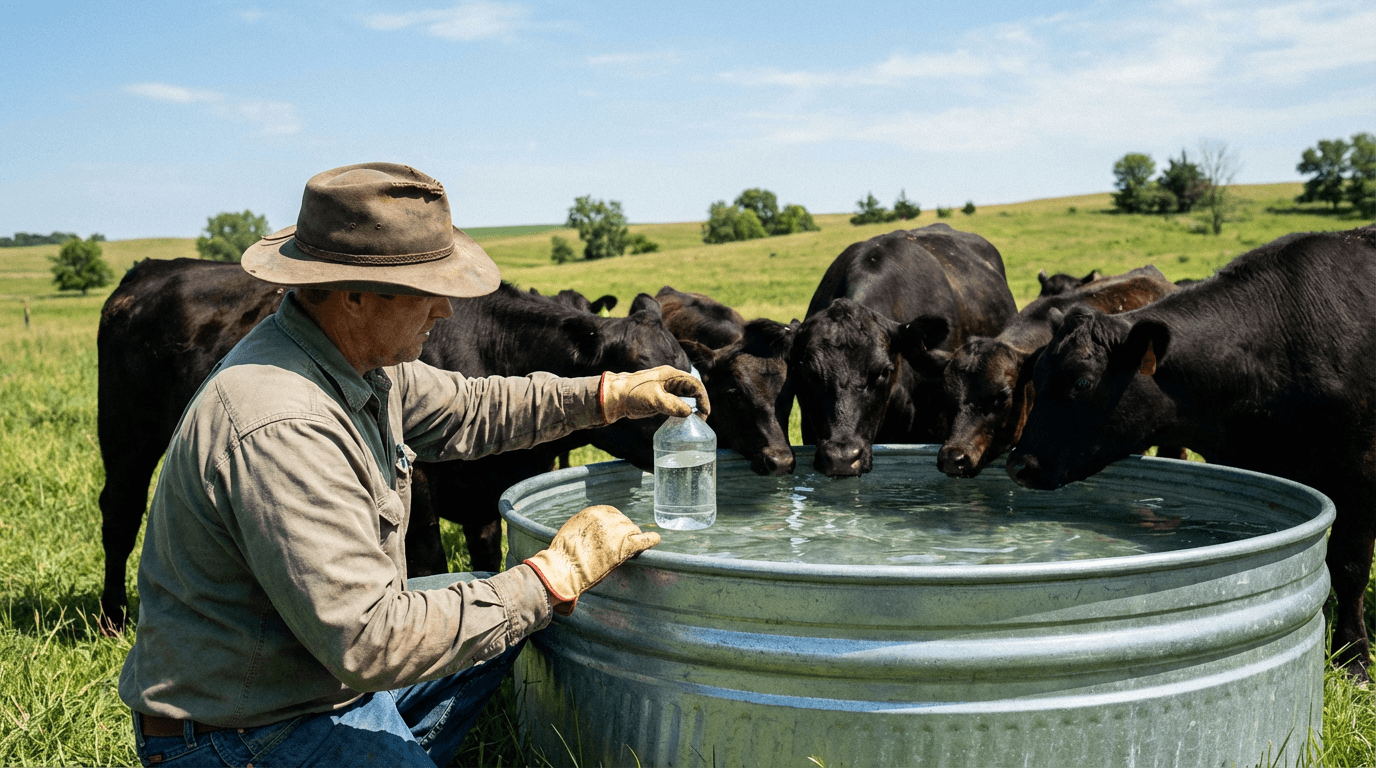
Consider this: a 1,400-pound lactating beef cow may drink 25–30 gallons of water per day in summer heat. At that volume, even modest contamination levels — nitrates, sulfates, excessive total dissolved solids — reach biologically significant concentrations very quickly. Problems that appear as "poor doers," off-feed animals, or unexplained reproductive losses often trace back to water quality issues that a $50–$150 water test would have identified.
The economic impact is well-documented in research. Studies from South Dakota State University and the University of Minnesota found that cattle with access to poor-quality water (high sulfates, high TDS) showed 10–15% lower average daily gains compared to cattle receiving clean water. In a feedlot scenario, that translates directly to days on feed, feed conversion, and profit per head.
The challenge is that most water problems are invisible. Water that looks clear and odorless can be high in nitrates, sulfates, or dissolved minerals. Foul-smelling water may drive animals to reduce intake below their needs without you realizing it. And blue-green algae blooms, one of the most acutely toxic water hazards, can appear overnight in summer heat.
Daily Water Requirements by Species
Understanding how much water your animals need is the foundation of water quality management. Intake varies dramatically by species, body weight, production status, temperature, and diet. The following tables provide practical guidance for farm planning.
Cattle
| Category | Avg. Daily Water Intake (gallons) | Hot Weather Adjustment |
|---|---|---|
| Dry cows (1,200–1,400 lbs) | 12–18 | Add 30–50% |
| Lactating beef cows | 22–30 | Add 30–50% |
| Lactating dairy cows (high production) | 30–50 | Add 25–40% |
| Growing cattle (500–800 lbs) | 8–14 | Add 25–40% |
| Feedlot cattle (900–1,300 lbs) | 12–20 | Add 30–50% |
| Bulls (mature) | 14–22 | Add 25–35% |
| Calves (under 200 lbs) | 2–4 | Add 25–40% |
Horses
| Category | Avg. Daily Water Intake (gallons) | Hot Weather Adjustment |
|---|---|---|
| Mature horse at rest (1,000–1,200 lbs) | 8–12 | Add 50–100% |
| Mature horse in light/moderate work | 12–18 | Add 50–100% |
| Heavily worked horse | 18–25+ | Add 50–100% |
| Lactating mare | 15–20 | Add 40–70% |
| Foal (growing) | 3–5 | Add 40–60% |
Note: Horses are particularly sensitive to water quality and taste. They will significantly reduce or refuse intake when water is off-flavor, heavily mineralized, or contaminated — putting them at risk for impaction colic. Never underestimate a horse's willingness to become dehydrated rather than drink water they find objectionable.
Goats and Sheep
| Category | Avg. Daily Water Intake (gallons) | Hot Weather Adjustment |
|---|---|---|
| Dry doe/ewe (100–150 lbs) | 0.5–1.0 | Add 30–50% |
| Lactating doe/ewe | 1.0–2.5 | Add 30–50% |
| Growing kids/lambs | 0.3–0.6 | Add 25–40% |
| Buck/ram (mature) | 0.7–1.2 | Add 25–40% |
Swine
| Category | Avg. Daily Water Intake (gallons) | Hot Weather Adjustment |
|---|---|---|
| Gestating sow | 3–5 | Add 25–40% |
| Lactating sow | 5–10 | Add 25–40% |
| Growing pig (50–125 lbs) | 1.5–3.0 | Add 25–35% |
| Finishing pig (125–250 lbs) | 3–5 | Add 25–35% |
| Boar | 3–5 | Add 20–30% |
Poultry
| Category | Avg. Daily Water Intake | Hot Weather Adjustment |
|---|---|---|
| Laying hens | 0.05–0.08 gallons (6–10 oz) | Add 30–100% |
| Broilers (market weight) | 0.04–0.07 gallons | Add 30–100% |
| Turkeys (market weight) | 0.10–0.18 gallons | Add 30–80% |
| Ducks | 0.07–0.12 gallons | Add 30–60% |
Poultry are extremely sensitive to water quality and temperature. Water over 80°F (27°C) significantly reduces intake, contributing to heat stress. Water quality problems that slightly reduce intake in cattle may be enough to crash egg production or broiler growth in poultry operations.
Major Water Contaminants on Livestock Farms
Understanding the contaminants most likely to affect your water source is essential for prioritizing testing and interpreting results. The following are the major categories encountered on American livestock operations.
Bacteria and Biological Contaminants
Coliform bacteria — particularly E. coli and fecal coliforms — are the most common biological contaminants in farm water sources. They indicate fecal contamination of the water source and are a proxy for potential pathogen exposure. While mature livestock have some tolerance for moderate bacterial loads (they are not as sensitive as humans), high counts indicate that pathogenic organisms like Salmonella, Campylobacter, or Leptospira may also be present.
Sources of biological contamination include:
- Surface water (ponds, streams) receiving runoff from manure storage or feedlots
- Wells with damaged casings or improperly sealed wellheads
- Shallow wells in flood-prone areas
- Dead animals in or near water sources
- Wildlife fecal contamination (waterfowl are a significant coliform source in ponds)
Young animals (calves, lambs, kids, piglets) are much more susceptible than adults. Herds with persistent scours in young stock, especially when multiple pathogens are ruled out, should have water tested for coliform counts.
Nitrates
Nitrates are the second most common and most dangerous water quality problem on livestock farms, particularly in the Corn Belt, Great Plains, and areas with intensive row crop agriculture.
Nitrates in water originate primarily from:
- Nitrogen fertilizer leaching into shallow groundwater and surface water
- Manure runoff from feedlots or lagoons
- Septic system effluent
- Natural geological sources (rare but present in some regions)
The veterinary concern with nitrates is methemoglobinemia. Ruminants (cattle, sheep, goats) are particularly susceptible because rumen bacteria convert nitrates to nitrites, which then bind hemoglobin and reduce the blood's ability to carry oxygen. Animals essentially suffocate from the inside. Pigs and horses have lower rumen nitrite conversion rates and are somewhat less sensitive, but can still be affected at high nitrate levels.
Acute nitrate toxicity causes:
- Rapid breathing and exercise intolerance
- Blue or grayish mucous membranes (methemoglobinemia)
- Weakness, staggering, muscle tremors
- Chocolate-brown-colored blood (classic sign)
- Death within hours in severe cases
Chronic low-level nitrate exposure causes more subtle effects: reduced reproductive performance (early embryonic death, abortions), reduced weight gains, and immune suppression. These effects are frequently missed because the connection to water is not made without testing.
Sulfates
Sulfates are the most widespread cause of livestock production loss from water quality in the United States, particularly across the northern Great Plains (North Dakota, South Dakota, Montana, Wyoming, Saskatchewan). Natural geological sources — particularly shale and coal formations — release sulfates into groundwater. Irrigation drainage and feedlot runoff can also elevate sulfate levels.
Sulfate toxicity in cattle operates through multiple mechanisms:
- Polioencephalomalacia (PEM): The rumen converts sulfate to hydrogen sulfide gas, which is absorbed and damages the brain. Signs include blindness, head pressing, circling, seizures, and death. This is the most dramatic and acutely life-threatening manifestation.
- Copper interference: High dietary sulfates form copper sulfide compounds in the rumen, dramatically reducing copper bioavailability. Cattle in high-sulfate water areas frequently develop functional copper deficiency even when dietary copper appears adequate — a classic diagnostic trap.
- Reduced feed intake: Sulfates make water taste bitter. Cattle voluntarily reduce intake when sulfates are high, reducing dry matter intake and gains.
Pigs are more sensitive to acute sulfate toxicity than cattle. Horses are generally tolerant at levels cattle find problematic, but very high sulfates will reduce equine water intake as well.
Total Dissolved Solids (TDS) and Salinity
Total dissolved solids (TDS), also called total soluble salts (TSS), measure the total concentration of dissolved minerals in water. High TDS can occur from natural geological sources, irrigation return water, and proximity to saline groundwater formations.
High TDS reduces water palatability and can cause osmotic diarrhea, dehydration, and reduced performance. Animals acclimated gradually to moderately high TDS tolerate levels that would cause problems in abruptly exposed animals. Animals under heat or production stress are more sensitive.
Minerals: Iron, Manganese, Calcium, Magnesium
Iron: High iron is extremely common in farm wells, particularly in areas with red clay soils or iron-rich geology. Iron itself is generally not acutely toxic to livestock at levels typically found in wells, but it has important indirect effects: iron interferes with absorption of zinc, copper, and manganese; it encourages bacterial growth in water systems; it stains troughs and pipes orange; and at very high levels, it may reduce water palatability and intake.
Manganese: Elevated manganese often co-occurs with high iron in reducing environments (deep wells, swampy areas). Chronic high manganese has been associated with neurological signs and reproductive impairment in cattle. Like iron, it also interferes with copper bioavailability.
Calcium and magnesium (water hardness): Hard water is not acutely toxic to livestock, but extremely high calcium in combination with dietary calcium can contribute to urinary calculi (urinary stones) in rams, bucks, and steers. Water hardness also affects the efficacy of disinfectants and detergents used in equipment cleaning.
Blue-Green Algae (Cyanobacteria)
Blue-green algae are not true algae but photosynthetic bacteria (cyanobacteria) that bloom in warm, nutrient-rich (eutrophic) water. They represent the most acutely lethal water quality hazard on livestock farms, capable of killing healthy cattle within hours of exposure.
Bloom conditions:
- Water temperatures above 75–80°F (24–27°C)
- High nutrient levels (phosphorus and nitrogen from manure runoff, fertilizer)
- Slow-moving or still water (ponds, dugouts, slow-flowing ditches)
- Wind concentrating algae on one shore
- Late summer to early fall (July–October in most of the US)
The two major toxin types are hepatotoxins (microcystins and cylindrospermopsins, which cause rapid liver failure) and neurotoxins (anatoxins and saxitoxins, which cause rapid respiratory paralysis). Neurotoxin-producing blooms can kill animals within 15–30 minutes of drinking affected water. There is no antidote.
Signs of blue-green algae toxicity:
- Neurotoxin: Rapid collapse, seizures, respiratory paralysis, death within minutes to hours
- Hepatotoxin: Weakness, lethargy, jaundice (yellow membranes), bloody diarrhea, death within 1–3 days
Blue-green algae blooms do not always have a distinctive smell or color. Water may appear blue-green, olive, or brown; it may have a scum or paint-like surface layer; or it may look relatively normal. When in doubt after livestock deaths near a water source in summer, assume cyanobacteria until laboratory testing proves otherwise and remove all animals from the water source immediately.
Hydrogen Sulfide
Hydrogen sulfide (H2S) in water has a characteristic "rotten egg" smell that is detectable at concentrations as low as 0.5 parts per billion. At higher concentrations, it paralyzes the olfactory nerve, meaning the smell paradoxically disappears in very high concentrations — making it insidiously dangerous. Livestock will reduce or refuse water with sulfide odors. Very high levels can cause acute toxic effects.
Water Testing: What to Test, When, and How
When to Test
| Situation | Testing Recommendation |
|---|---|
| Baseline for any farm using well or surface water | Full panel test at least once; repeat every 2–3 years |
| New property or new water source | Full panel test before animals drink |
| After flood or severe weather | Immediate bacterial test; nitrate/TDS if flooded area had agri-chemical exposure |
| Change in water color, taste, or odor noticed by animals | Immediate full panel |
| After nearby agricultural changes (new feedlot, changed cropping) | Nitrate, TDS, coliform |
| Unexplained production losses, illness, reproductive failure | Full panel including nitrate, sulfate, trace minerals |
| Summer (surface water sources) | Blue-green algae visual inspection weekly; bacterial monthly |
| Annual recommendation for active operations | Minimum: coliform, nitrate, TDS; full panel every 3 years |
How to Sample Correctly
Incorrect sampling produces unreliable results. Follow these steps:
- For bacterial testing: Use only sterile containers provided by the lab. Do not rinse them. Let the tap run for 2–3 minutes before collecting. Collect the sample without touching the inside of the container or cap. Keep refrigerated and deliver to the lab within 6 hours for accurate coliform counts.
- For chemical analysis: Use the plastic containers provided by your lab. Label with the date, time, source name, and depth if a well. For troughs, sample the water in the trough — not the source line — if you suspect the trough itself is the problem.
- For ponds and surface water: Sample from the zone where animals drink — typically the shallow entry area — not from the middle of the pond. Sample below the surface (6 inches deep) to avoid surface scum while still capturing representative near-surface water.
- Multiple sources: If you have multiple water sources on your property (well, pond, creek, cistern), sample each separately. A problem with one source may not affect others.
Where to Send Samples
- State university extension laboratories (typically the most cost-effective option)
- State department of agriculture laboratories
- Commercial environmental testing laboratories (search for NELAP-certified labs)
- Your county or state veterinarian can provide referrals for labs that include livestock-appropriate interpretation
A basic bacterial + nitrate + TDS panel typically costs $30–$80 depending on the laboratory. A comprehensive livestock water panel (adding sulfate, trace minerals, pH, hardness, heavy metals) runs $100–$200. For the protection it provides, this is among the best-value diagnostic investments on any farm.
Acceptable Water Quality Limits for Livestock
| Parameter | Acceptable Limit (cattle) | Acceptable Limit (horses) | Acceptable Limit (swine) | Acceptable Limit (poultry) | Notes |
|---|---|---|---|---|---|
| Total coliform (CFU/100mL) | <1,000 | <100 | <100 | <100 | Zero for young animals, immunocompromised |
| Fecal coliform / E. coli (CFU/100mL) | <100 | <10 | <10 | <10 | Zero for young stock |
| Nitrate-N (mg/L = ppm) | <100 ppm | <100 ppm | <100 ppm | <10 ppm | Poultry very sensitive; <44 ppm preferred for cattle |
| Nitrate (as NO3, mg/L) | <440 ppm | <440 ppm | <440 ppm | <44 ppm | Divide by 4.4 to convert to nitrate-N |
| Sulfate (mg/L) | <1,000 ppm | <2,000 ppm | <500 ppm | <250 ppm | 250–500 ppm causes reduced gains in cattle; pigs/poultry very sensitive |
| Total Dissolved Solids (mg/L) | <7,000 ppm | <5,000 ppm | <3,000 ppm | <2,860 ppm | <3,000 preferred for cattle performance |
| pH | 6.0–8.5 | 6.0–8.5 | 6.0–8.0 | 6.0–8.0 | Extremes reduce intake and alter nutrient availability |
| Iron (mg/L) | <0.3 ppm | <0.3 ppm | <0.3 ppm | <0.3 ppm | Higher levels reduce palatability and interfere with copper |
| Manganese (mg/L) | <0.05 ppm | <0.05 ppm | <0.05 ppm | <0.05 ppm | Neurotoxic and reproductive effects at chronic high levels |
| Hardness (mg/L as CaCO3) | <1,500 ppm | <1,000 ppm | <1,000 ppm | <1,000 ppm | Urinary calculi risk in small ruminants and swine above 500 ppm |
| Blue-green algae | Zero (any bloom) | Zero (any bloom) | Zero (any bloom) | Zero (any bloom) | Restrict access at any visible bloom; test before returning access |
| Hydrogen sulfide (mg/L) | <0.1 ppm | <0.1 ppm | <0.1 ppm | <0.05 ppm | Reduced intake at detectable smell |
Sources: USDA Natural Resources Conservation Service, University of Minnesota Extension, South Dakota State University Extension. Limits are guidelines — consult with your large animal veterinarian for interpretation in the context of your specific operation and species.
Trough and Waterer Management
Water source quality is only part of the equation. The best water in the world can become a contamination problem by the time it reaches your animals if troughs and waterers are not properly maintained.
Trough Cleaning Schedule
| Season / Condition | Recommended Cleaning Frequency |
|---|---|
| Summer (high bacterial growth risk) | Every 1–2 weeks minimum; weekly ideal |
| Spring/Fall (moderate temperatures) | Every 2–3 weeks |
| Winter (cold water, slow growth) | Monthly minimum; more frequent if algae or debris present |
| After any disease outbreak in herd | Immediately, full disinfection with bleach (500 ppm chlorine) |
| After dead animal found near or in trough | Immediately, full cleaning and disinfection |
Cleaning Protocol
- Drain the trough completely
- Remove all visible debris, algae, and organic material with a stiff brush
- Scrub all surfaces with a mild detergent and rinse thoroughly
- For disinfection: apply a 200–500 ppm chlorine solution (approximately 1 tablespoon of household bleach per gallon of water for 500 ppm), allow to sit for 20 minutes, then rinse thoroughly until the chlorine smell is gone
- Refill with fresh water before returning animals to access
Never use disinfectants that leave residues harmful to livestock. Quaternary ammonium compounds require thorough rinsing. Do not use phenolic disinfectants in any container that livestock will contact — they are toxic.
Trough Design and Placement
- Material: Concrete, galvanized steel, and polyethylene are all acceptable. Avoid wood troughs — they harbor bacteria and are nearly impossible to adequately disinfect.
- Shade: Troughs in full sun heat rapidly in summer, promoting algae and bacterial growth. Place in shade where possible, or use insulated tanks for hot climates.
- Drainage: Every trough should have a functioning drain. Troughs that must be pumped out are never cleaned as frequently as they should be.
- Fencing: Fence cattle away from direct pond or stream access and pipe water to troughs. This protects the water source from fecal contamination, prevents bank erosion, and improves water quality. It also protects cattle from drowning and getting stuck in muddy banks.
- Livestock exclusion zones: A minimum 100–200 foot buffer between your water source and feedlot, manure storage, or heavy hoof traffic areas reduces bacterial and nitrate contamination risk significantly.
Automatic Waterers
Automatic waterers (automatic float-valve systems) provide continuous fresh water and reduce labor. However, they require specific management attention:
- Check bowls weekly: Sediment, algae, and debris accumulate in the bowl and heating elements of winter waterers. Inspect and clean weekly.
- Inspect float valves: Stuck float valves can either allow the bowl to run over (waste and mud) or fail to refill (animals without water). Check function monthly.
- Freeze protection: Insulated waterers and heat elements must be operational before the first freeze. Test heating elements in September — do not wait for the first hard freeze to discover a failed element.
- Water pressure: Automatic waterers require adequate water pressure to fill adequately for high-demand situations (large groups in summer heat). Confirm the flow rate is sufficient for your herd size.
Seasonal Water Quality Management
Spring: Post-Thaw Assessment
Spring is a high-risk period for water quality problems. Snowmelt and spring rains flush nitrates, pathogens, and agricultural chemicals from fields into surface water and through shallow soils into groundwater. Key spring actions:
- Test surface water sources (ponds, streams) for coliform and nitrates after the first significant runoff event
- Inspect well casings and wellheads for damage from frost heave or flooding
- Check that flood waters did not reach or enter your well — if they did, pump and test before drinking
- Clean troughs thoroughly after winter — accumulated sediment and organic material harbor bacteria
Summer: Blue-Green Algae and Heat Stress
Summer presents the highest-acuity water quality risks on most farms.
Blue-green algae monitoring protocol:
- Inspect all pond and surface water sources weekly throughout June–October
- Look for blue-green, olive, or brown discoloration; scum layers; paint-like surface films; or strong musty or earthy odors
- When in doubt, restrict access until visual inspection is clearly negative or laboratory testing is complete
- Report any algae-associated livestock deaths to your state veterinarian immediately
Heat-related intake management:
- Water temperature above 80°F reduces intake in most species — particularly poultry and swine
- Ensure adequate shade near water sources to reduce water temperature and encourage drinking
- Increase cleaning frequency to prevent rapid bacterial growth in warm water
- Monitor animals closely for signs of heat stress — reduced intake compounds heat stress dramatically
Fall: Algae Senescence and Livestock Transition
As summer algae blooms die off in fall, toxins are released into the water. A pond that appears "better" (less green) after a bloom may actually be more dangerous in the first week after die-off as cell lysate releases concentrated toxins. Maintain livestock exclusion for 1–2 weeks after a bloom appears to die off, or test before restoring access.
Winter: Ice and Freeze Management
Adequate water intake in winter is as critical as in summer, though for different reasons. Dehydration in winter leads to impaction colic in horses, reduced feed intake in cattle, and impaired thermal regulation.
Key winter water management points:
- Water temperature matters — cattle prefer water at 40–65°F (4–18°C). Cold water near freezing reduces intake by 20–40%.
- Heated waterers should maintain water at 35–45°F minimum
- Horses are particularly sensitive to cold water as a colic trigger — many managers offer warm water (60–70°F) in winter to encourage intake
- Ice formation in troughs must be broken and removed at least twice daily without electric heating — more frequent in very cold weather
- Inspect all freeze protection equipment (tank heaters, immersion heaters, insulated waterers) in early fall before cold weather arrives
- Ground-level freeze: water lines can freeze in winter — particularly PEX supply lines without adequate burial depth. Know your frost line depth and ensure supply lines are buried below it.
Treatment Options for Problem Water
If testing reveals a contamination problem, the appropriate treatment depends on the contaminant type and concentration.
Biological Contamination (Coliform, Pathogens)
- Chlorination: The most common treatment for bacterial contamination in wells and storage tanks. Systems can be shock-chlorinated (one-time treatment) or continuously chlorinated with automated injection equipment. Target 0.5–2.0 ppm free chlorine at the point of use. Livestock tolerate up to 10 ppm chlorine without adverse effects; the standard human drinking water limit is 4 ppm.
- UV sterilization: Ultraviolet light systems destroy bacteria and viruses without adding chemicals. Effective for moderate contamination; requires pre-filtration to remove particles that would shield bacteria from UV exposure.
- Source protection: The most durable long-term solution. Fence animals away from surface water, seal well casings, and eliminate sources of fecal contamination near the water source.
Nitrates
- Source change: If possible, identify a lower-nitrate water source (deeper well, different aquifer zone, municipal water connection).
- Dilution: Blending high-nitrate water with a low-nitrate source (rainwater collection, municipal hookup) can reduce nitrate levels to safe ranges. Document the blend ratio carefully.
- Reverse osmosis: RO systems effectively remove nitrates but are expensive and generate significant wastewater. They are practical for high-value livestock (horses, show animals, breeding stock) but cost-prohibitive for large cattle operations without centralized distribution.
- Ion exchange: Anion exchange resins remove nitrates but require regeneration with salt and produce nitrate-rich brine that must be disposed of properly.
- Feeding management: When water nitrates are moderately elevated (44–100 ppm nitrate-N), dietary nitrate from feeds (turnips, corn stalks, certain grasses) should be minimized to reduce total nitrate load. Vitamin A supplementation supports oxidative capacity.
Sulfates
- Source change or blending: As with nitrates, blending or source switching is the most practical solution for large operations.
- Reverse osmosis: Effective but expensive.
- Dietary copper supplementation: Does not lower water sulfates, but offsetting copper deficiency induced by sulfate interference is an important part of managing high-sulfate water situations. Work with your vet to test liver copper levels and develop an appropriate supplementation program.
Iron and Manganese
- Aeration and filtration: Iron and manganese can be oxidized and filtered using aeration systems followed by sand or multimedia filters. Effective and widely used in municipal water treatment; adaptable to farm scale.
- Chemical oxidation: Chlorination, potassium permanganate, or ozone can oxidize iron/manganese for subsequent filtration.
- Water softeners: Ion exchange softeners remove hardness minerals (calcium, magnesium) but do not remove iron or manganese effectively and add sodium to the water, which has its own effects at high replacement levels.
High TDS / Salinity
- Blending: Diluting with a lower-TDS source is the most practical approach on the farm scale.
- Reverse osmosis: Highly effective but expensive at the volumes livestock require.
- Gradual acclimation: Livestock that are gradually exposed to higher TDS levels over weeks develop some tolerance. Never abruptly transition animals from low-TDS water to high-TDS water — introduce the transition over 2–3 weeks minimum.
Signs of Water Problems in Your Animals
Even without testing, your animals will often show signs that water quality is affecting them. The challenge is that these signs are often subtle, non-specific, and easily attributed to other causes. The following patterns should prompt water testing:
| Observation | Possible Water Quality Cause |
|---|---|
| Herd reluctance to drink from a previously used source | Blue-green algae, H2S, high TDS, bacterial contamination |
| Decreased feed intake without obvious feed change | High TDS, sulfates, reduced water intake leading to reduced DMI |
| Reduced average daily gains below expected | Nitrates (chronic), sulfates, high TDS |
| Increased colic incidence in horses | Reduced intake from palatability issues, cold water in winter |
| Unexplained reproductive failures, early embryonic deaths | Nitrates (chronic), copper deficiency from sulfates |
| Dull hair coat, poor condition despite adequate nutrition | Copper deficiency from high sulfates or iron |
| Persistent scouring in young stock despite pathogen treatment | High coliform counts, high TDS, high sulfates |
| Sudden unexplained deaths near pond in summer | Blue-green algae (neurotoxin) — contact your vet immediately |
| Neurological signs: head pressing, blindness, circling | PEM from sulfate toxicity, blue-green algae neurotoxin |
| Blue/gray mucous membranes, brown blood | Acute nitrate toxicity |
| Jaundice, liver failure signs | Blue-green algae hepatotoxin |
| Reduced milk production without mastitis or nutrition change | Reduced water intake from palatability issues or high TDS |
Record Keeping and Water Quality Documentation
Maintaining records of water testing results is valuable for several reasons: it establishes baselines, helps identify trends over time, supports insurance claims in cases of livestock loss from water problems, and provides documentation if neighbors or regulators raise questions about your operation's impact on shared water resources.
Keep a simple water quality log that includes:
- Date of sample collection
- Source sampled (well name, pond name, waterer location)
- Parameters tested
- Results received and date
- Action taken if any parameter exceeded guidelines
- Follow-up test results after any treatment implemented
Digital records (even a simple spreadsheet) are preferable to paper, as they are searchable and can be shared easily with your veterinarian when diagnosing unexplained herd health problems.
Frequently Asked Questions
How often should I test my farm's water?
At minimum, test once per year for bacteria (coliform), nitrates, and TDS. A comprehensive panel including sulfates, trace minerals, and pH should be run every 2–3 years, or whenever unexplained health or production problems appear. Always test immediately after floods, drought breaks, or any visible change in water quality. Surface water (ponds, streams) should be visually inspected weekly during summer for blue-green algae.
Can livestock drink water that humans cannot?
Mature cattle and horses are more tolerant than humans for some parameters (TDS, iron, certain bacteria) but are more sensitive than humans for others (nitrates in ruminants due to rumen conversion, sulfates). Young animals, pregnant animals, and high-production animals (lactating cows, heavily worked horses) are substantially more sensitive than healthy adult animals. Do not use human drinking water standards alone as a guide for livestock water — use livestock-specific guidelines from your state extension service or USDA NRCS.
What is the most common water quality problem on US livestock farms?
Coliform bacterial contamination (indicating fecal contamination of the water source) is the most common finding in farm water tests nationally. Nitrate contamination is the second most common and is particularly prevalent in the Corn Belt and Great Plains where nitrogen fertilizers are intensively used. Sulfate problems are highly regional — most severe across the northern Great Plains — but represent the largest cause of measurable production loss where they occur.
What should I do if my animals are dying and I suspect water toxicity?
Remove all animals from the water source immediately. Call your large animal veterinarian right away — describe the clinical signs, how many animals are affected, and whether the deaths were sudden or progressive. For blue-green algae suspected deaths, alert your state veterinarian's office as well. Collect water samples and submit to a laboratory on an emergency basis. Preserve tissues and blood from dead or affected animals for diagnostic testing — your vet can assist with appropriate sample collection and submission.
Can I treat my pond to prevent blue-green algae blooms?
Copper sulfate and peroxide-based algaecides are used to treat blooms, but timing is critical — applying algaecide to an active bloom causes massive cell lysis and toxin release, potentially making the situation more dangerous for 7–14 days before it improves. Prevention (nutrient management, reducing runoff into ponds) is far more effective than treatment. Consult with your state fish and wildlife or environmental agency before applying any chemical treatments to surface water, as regulations vary by state and pesticide permits may be required.
How does winter water management differ from summer?
Winter water management focuses on ensuring adequate intake despite cold temperatures (which reduce palatability and voluntary intake) and preventing ice formation. Use heated waterers or break ice at least twice daily. Provide water at 40–65°F where possible — horses particularly benefit from warmer water in winter to prevent impaction colic. Bacterial contamination risk is lower in cold water, but algae are not a concern. Nitrate and TDS levels may be higher in winter when aquifers are recharging with concentrated leachate — do not assume winter water is automatically cleaner.
My cattle avoid one water source but drink from another. Should I be concerned?
Yes. Animals have surprisingly good sensory discrimination for water quality. Avoidance of a previously used source without an obvious physical explanation (dead animal nearby, broken equipment) should immediately trigger testing of that source. Common causes of voluntary avoidance include blue-green algae (even early, invisible stages), hydrogen sulfide odors, high sulfates making water taste bitter, and high bacterial loads producing off-odors. Do not force animals to use a source they are avoiding — their judgment may be saving their lives.
Find a Large Animal Vet Near You
Water quality problems often manifest as herd health issues that require veterinary diagnosis to trace back to the source. If your herd is experiencing unexplained production losses, reproductive failures, neurological signs, or increased mortality, a large animal veterinarian with experience in toxicology and herd health should be your first call — not only to treat affected animals but to help you design appropriate water testing protocols and interpret results in the context of your operation.
FarmVetGuide helps you find experienced large animal veterinarians across all 50 states. Our directory includes over 9,500 listings with detailed information on species treated, emergency availability, and practice specialization. Find a vet in your county who can partner with you on water quality assessment and herd health management — before a water problem becomes a livestock emergency.
Related Articles & Resources
Sources & Further Reading
We cross-check the animal-health information in this guide against these recognized veterinary and government sources. For clinical guidance, consult them directly or speak with a licensed veterinarian.
How this guide is maintained
Animal-health guides on FarmVetGuide are written and maintained by the FarmVetGuide Editorial Team and cross-checked against authoritative veterinary sources, including the AVMA, USDA APHIS, and the Merck Veterinary Manual. This guide is general educational information, not a substitute for professional veterinary diagnosis or treatment. For a sick or injured animal, contact a licensed veterinarian directly.