Poultry Veterinary Care: Health Management, Common Diseases & Finding a Flock Vet
By FarmVetGuide Editorial Team · Published April 2026 · Updated March 2026 · Based on verified data from our directory of 9,500+ practices
Poultry health management has never been more important. Whether you maintain a small backyard flock of ten laying hens or operate a commercial broiler operation with tens of thousands of birds, the fundamentals of disease prevention, biosecurity, and veterinary oversight apply equally. What has changed is the regulatory environment, the sophistication of available diagnostics, and the growing recognition that poultry — chickens, turkeys, ducks, geese, guinea fowl, quail, and peafowl — deserve the same level of professional veterinary attention as any other livestock species.
For decades, many small-flock owners treated their birds entirely with over-the-counter products, internet advice, and trial-and-error experience. That approach is becoming less viable. The FDA's Veterinary Feed Directive now requires veterinarian authorization for medically important antibiotics in feed or water. Avian influenza outbreaks have prompted state and federal agencies to take a harder look at biosecurity standards across all operation sizes. And backyard chicken keeping has expanded dramatically in urban and suburban areas, creating new demand for veterinarians who see poultry — and a nationwide shortage of those veterinarians.
This guide walks through everything you need to know about poultry veterinary care: the diseases most likely to hit your flock, how vaccination programs actually work, what biosecurity means in practical terms, when to call a vet, and how to find one who will actually see your birds.
Understanding Poultry as a Veterinary Patient
Chickens and other poultry present unique challenges compared to mammals. Their physiology differs substantially — birds have a higher normal body temperature (105–107°F), a faster heart rate, and a respiratory system that makes them uniquely susceptible to airborne pathogens. Their immune systems mount responses differently. Many diseases progress from subclinical to catastrophic in 24–72 hours, meaning the window for effective intervention is narrow.
Birds also mask illness instinctively. Prey animals that show weakness attract predators, so chickens in particular tend to appear normal until they are seriously ill. By the time you notice a hen sitting alone, fluffed up, with closed eyes and reduced appetite, she may have been sick for several days. This masking behavior is one of the most important reasons for daily close observation of your flock — you need to notice the subtle changes before the bird crashes.
What Counts as a Poultry Vet?
Veterinarians who see poultry range from avian specialists (board-certified through the American College of Poultry Veterinarians or American Board of Veterinary Practitioners in Avian Practice) to large-animal vets who have developed poultry experience on farms in their area. Many small-animal vets will see backyard chickens as exotic patients. A few veterinarians work exclusively with commercial poultry operations on a consulting basis and may not see individual birds at all.
For backyard flock owners, the most practical option is often a veterinarian who sees chickens as part of a mixed avian/exotic practice, or a large-animal vet willing to do farm calls. For commercial operations, company vets, integrator veterinarians, and USDA APHIS-accredited practitioners are typically involved.
Common Poultry Diseases: Recognition, Risk, and Response
The diseases below represent the most clinically significant conditions affecting US poultry flocks. Some are reportable — meaning you are legally required to notify state or federal authorities if you suspect them. Others are managed routinely through vaccination and biosecurity. All of them benefit from early diagnosis.
Marek's Disease
Marek's disease is caused by Marek's disease virus (MDV), an alphaherpesvirus that is endemic in virtually every poultry-keeping environment in the United States. It is the single most economically important poultry disease worldwide and the most common cause of death in backyard layer flocks.
MDV infects chickens through inhalation of viral particles shed from feather follicles of infected birds. The virus survives for years in poultry house dust and dander, meaning contamination is effectively permanent once established. Birds are infected in the first days of life but do not develop clinical signs for weeks to months.
The disease presents in several forms:
- Classical (neural) Marek's: Progressive paralysis of legs, wings, or neck. The classic presentation is a bird lying on its side with one leg extended forward and one backward — the "splits" posture. This results from demyelination of peripheral nerves by tumor-infiltrating lymphocytes.
- Ocular Marek's: Gray iris, irregular pupil ("gray eye"), blindness. One or both eyes may be affected.
- Visceral Marek's: Lymphomatous tumors in organs — ovary, spleen, liver, kidney, proventriculus. Birds die suddenly or waste away. Often confused with lymphoid leukosis.
- Cutaneous Marek's: Feather-follicle tumors. Less common, usually seen at processing.
- Transient paralysis: Acute flaccid paralysis that resolves within 1–2 weeks in some birds, followed by permanent immunity or later relapse.
Vaccination is the cornerstone of Marek's prevention. Vaccines do not prevent infection — they prevent tumor formation and clinical disease in vaccinated birds. The HVT (herpesvirus of turkeys) vaccine, bivalent HVT+SB-1, and the cell-associated CVI988/Rispens strain vaccines are all used depending on the level of field challenge. Hatcheries routinely vaccinate day-old chicks in ovo or subcutaneously. Backyard flock owners purchasing from hatcheries should confirm vaccination status at purchase; birds hatched on-farm or purchased from auctions may be unvaccinated.
There is no treatment for Marek's disease. Affected birds should be humanely euthanized. Flock-level response focuses on maximizing vaccine coverage, improving ventilation to reduce dust accumulation, and strict biosecurity to prevent introduction of high-pathogenicity strains.
Newcastle Disease
Newcastle disease (ND) is caused by virulent Newcastle disease virus (vNDV), a paramyxovirus with strains ranging from mildly pathogenic (lentogenic) to devastating (velogenic). The velogenic viscerotropic (VVND) form is a federally reportable foreign animal disease — a single confirmed case triggers immediate quarantine and depopulation protocols across a defined control zone.
US poultry operations routinely vaccinate against ND using lentogenic strains (LaSota, B1, Clone 30) delivered via drinking water, spray, or eye drop. These vaccines provide solid immunity against clinical disease but do not prevent shedding of field strains. Commercial layer and broiler operations follow precisely timed vaccination programs. Backyard flock owners rarely vaccinate, which leaves small flocks as potential amplifiers during outbreak events.
Clinical signs of velogenic ND include:
- Sudden high mortality (up to 100% in unvaccinated flocks)
- Respiratory distress: gasping, coughing, rattling
- Neurological signs: torticollis (twisted neck), circling, paralysis
- Green diarrhea
- Drop in egg production; soft-shelled, misshapen eggs
- Facial edema, hemorrhagic lesions in trachea and intestines at necropsy
If you suspect Newcastle disease — particularly the sudden death of multiple birds with neurological signs — contact your state veterinarian immediately. Do not move birds off the property. The USDA APHIS Veterinary Services Outbreak Response Plan provides indemnity for depopulated flocks when VVND is confirmed. Early reporting is critical for limiting spread.
Avian Influenza
Avian influenza (AI) is caused by influenza A viruses classified by hemagglutinin (H) and neuraminidase (N) subtypes. Low pathogenicity avian influenza (LPAI) causes mild respiratory disease and reduced egg production. Highly pathogenic avian influenza (HPAI) — particularly H5N1 and H5N2 strains — causes catastrophic mortality and is among the most feared poultry diseases in the world.
The 2022–2024 HPAI H5N1 outbreak was the largest in US history, resulting in the depopulation of over 100 million birds across commercial flocks and devastating losses in turkey, layer, and waterfowl operations. Wild birds — particularly migratory waterfowl — serve as the primary reservoir. Contact with wild birds, wild bird feces on equipment, water sources, or boots, and movement of contaminated materials between farms drove spread.
Signs of HPAI in poultry include:
- Sudden, unexplained death of multiple birds
- Severe respiratory distress
- Neurological signs: tremors, loss of coordination, torticollis
- Swollen head, comb, and wattles; cyanosis (blue discoloration) of non-feathered skin
- Cessation of egg production
- Bloody discharge from beak and vent
HPAI is a federal and state reportable disease. If you find unexplained mass mortality or see these signs, call USDA APHIS at 1-866-536-7593 and your state veterinarian. Do not move birds. Do not attempt to treat. The federal government provides indemnity payments and covers depopulation costs for confirmed HPAI flocks.
Prevention rests almost entirely on biosecurity. Vaccination is not currently authorized for US commercial poultry (though research trials are ongoing). Core biosecurity measures include: eliminating or minimizing contact with wild waterfowl and their habitat, dedicated footwear and clothing for poultry areas, covered water sources, strict visitor controls, and vehicle sanitation.
Infectious Bronchitis
Infectious bronchitis virus (IBV) is a coronavirus (not related to SARS-CoV-2) that affects chickens worldwide. It is one of the most common causes of respiratory disease in layer and broiler flocks, and an important trigger of drops in egg production.
IBV primarily infects the respiratory tract but also has tropism for the kidneys and reproductive tract. The respiratory form causes coughing, sneezing, nasal discharge, and rales (rattling breathing). The kidney form causes wet droppings, lethargy, and mortality in young birds. The reproductive form causes permanent damage to the oviduct of hens infected before sexual maturity, resulting in "false layers" that never produce eggs — birds with normal ovaries but non-functional oviducts.
IBV exists in numerous serotypes and variants, and cross-protection between serotypes is incomplete. This is why IBV vaccination programs must be carefully matched to the strains circulating in your geographic region. Common vaccine strains include Massachusetts, Connecticut, Arkansas, Delaware/GAe, and various variant strains. Your state diagnostic laboratory or local poultry veterinarian can guide appropriate serotype selection based on regional surveillance data.
Clinical management of IBV outbreaks includes supportive care (electrolytes, vitamins, ensuring good ventilation and temperature), secondary bacterial infection control (IBV damages respiratory epithelium and predisposes to E. coli, Mycoplasma, and other pathogens), and depopulation of false layers in layer flocks where production is irrecoverable.
Coccidiosis
Coccidiosis is caused by Eimeria species — protozoan parasites that invade and destroy intestinal epithelium. It is the most economically significant disease of broiler chickens globally and a major concern in backyard layer flocks, especially in young birds from 3 to 16 weeks of age.
Different Eimeria species infect different portions of the intestinal tract with varying severity. E. tenella infects the ceca and causes bloody droppings and high mortality. E. necatrix causes severe damage to the small intestine. E. acervulina, E. maxima, and E. brunetti are common in layers and cause production losses without necessarily causing high mortality.
Clinical signs include:
- Bloody or mucoid droppings (cecal coccidiosis)
- Pale, watery droppings
- Ruffled feathers, hunched posture
- Reduced feed and water intake
- Drooping wings, lethargy
- High mortality in acute outbreaks in young birds
Prevention in commercial broilers relies on coccidiostats in feed (ionophores such as monensin, lasalocid, salinomycin) or live oocyst vaccines (Coccivac, Inovocox) that allow controlled exposure and immunity development. Backyard flocks rarely receive medicated feed beyond the chick phase and rely on management — avoiding wet litter, providing adequate space, and not overstocking. Once birds have survived subclinical exposure, they typically develop solid immunity to the strains in their environment.
Treatment with amprolium (Corid) or sulfonamides can be used during active outbreaks. Amprolium is available over the counter for water administration. For medically important antibiotics (sulfa drugs), a Veterinary Feed Directive or prescription from a licensed veterinarian is required. This is another reason to establish a veterinary relationship before you have an emergency.
Mycoplasma gallisepticum and Mycoplasma synoviae
Mycoplasma gallisepticum (MG) causes chronic respiratory disease (CRD) in chickens and infectious sinusitis in turkeys. It is endemic in many flocks and is the most common cause of chronic respiratory signs in backyard layers. Mycoplasma synoviae (MS) causes infectious synovitis — swollen hocks and breast blisters — as well as respiratory disease and eggshell apex abnormalities in layers.
Mycoplasmas are transmitted vertically through the egg and horizontally through direct contact and respiratory droplets. Biosecurity between flocks is critical because introducing even one chronically infected bird can seed an entire naive flock. Birds may carry Mycoplasma without clinical signs for months, shedding the organism during stress events.
Diagnosis requires culture (slow and technically demanding), PCR testing, or serology (ELISA, plate agglutination). State diagnostic labs and the USDA National Poultry Improvement Plan (NPIP) certification programs test breeding flocks for MG and MS as part of official classification.
Treatment with tylosin, tetracyclines, or fluoroquinolones reduces clinical signs and transmission but does not eliminate infection from the flock. Eradication in commercial flocks requires depopulation, cleanout, and restocking with certified Mycoplasma-free birds.
Fowl Pox
Fowl pox is caused by Avipoxvirus and presents in two forms: dry (cutaneous) and wet (diphtheritic). The dry form causes proliferative nodular lesions on unfeathered skin — combs, wattles, face, and feet. The wet form causes caseous (cheese-like) plaques in the oral cavity, esophagus, and trachea that can obstruct breathing.
Fowl pox is transmitted mechanically by mosquitoes (the primary vector in warm climates) and by contact with scab material. It spreads slowly through a flock, affecting birds one by one over several weeks. Mortality is low in the dry form but can be significant in the wet form, particularly in young or stressed birds where tracheal obstruction occurs.
Vaccination with fowl pox or pigeon pox vaccines (administered by wing-web stab) is effective and provides lifelong immunity. Vaccinate before mosquito season in endemic areas. There is no antiviral treatment; management focuses on supportive care, preventing secondary bacterial infections of lesions, and controlling mosquito habitat.
Vaccination Programs for Poultry Flocks
Vaccination is the most cost-effective tool in poultry disease management. But vaccination programs must be designed for your species, your region, your production system, and the specific strains circulating in your area. A program appropriate for a commercial layer operation in the Central Valley of California is different from what a backyard flock in the Southeast needs.
Core Vaccines for Backyard Layers and Small Flocks
| Disease | Vaccine Type | Route | Age at First Vaccination | Booster |
|---|---|---|---|---|
| Marek's Disease | HVT or bivalent (HVT+SB-1) | SQ injection (hatchery) | Day of hatch (in ovo or day-old) | None required |
| Newcastle Disease | Lentogenic live (LaSota, B1) | Eye drop, drinking water, spray | 1–2 weeks | Every 4–8 weeks; pre-lay booster |
| Infectious Bronchitis | Live attenuated (Mass/Ark/CT) | Eye drop, drinking water | 1 day to 2 weeks | Every 4–8 weeks; pre-lay booster |
| Fowl Pox | Live attenuated | Wing-web stab | 4–8 weeks (before mosquito season) | Once; annual in high-risk areas |
| Infectious Laryngotracheitis (ILT) | Chicken embryo origin (CEO) or tissue culture origin (TCO) | Eye drop or drinking water | 4–6 weeks | Every 6–12 weeks in endemic areas |
| Coccidiosis | Live oocyst (Coccivac) | Spray, eye drop, or drinking water | Day of hatch to 5 days | None (immunity from controlled exposure) |
Vaccination Principles That Matter
Vaccine quality and cold chain: Live poultry vaccines contain attenuated live virus or live oocysts. They must be maintained at appropriate temperatures from manufacture through administration. A vaccine that has been temperature-abused — left in a warm truck or partially thawed and refrozen — provides no protection. Always check expiration dates and store vaccines per label instructions.
Maternal antibodies interfere with early vaccination: Chicks hatched from vaccinated hens receive maternal antibodies that protect them in the first week or two of life but also neutralize live vaccines given during that window. Vaccination timing must account for maternal antibody decline. This is why hatchery vaccination at day of hatch (before maternal antibodies can interfere with immune response establishment) is preferred for Marek's.
Route of administration matters: Eye-drop administration delivers vaccine directly to mucosal tissue, stimulating local IgA immunity in the respiratory tract. Drinking-water vaccination is less reliable due to chlorine in water, consumption variation between birds, and mixing challenges. Spray vaccination requires proper droplet size. Cutting corners on administration method reduces efficacy.
Vaccinate healthy birds: Vaccines are not therapeutic. Vaccinating birds that are already sick with the disease you are trying to prevent is ineffective and wastes money. Vaccination programs should be completed before expected disease challenge, typically before birds reach laying age for respiratory diseases and before mosquito season for fowl pox.
Biosecurity: The Foundation of Flock Health
No vaccination program can compensate for poor biosecurity. Biosecurity means creating and maintaining barriers between your flock and disease agents — and it requires discipline, infrastructure, and buy-in from every person who sets foot on your property.
The Three Zones of Biosecurity
The clean zone: Where your birds live. Entry should require dedicated footwear and clothing, hand washing or hand sanitization, and ideally a foot bath. Only authorized personnel should enter. Visitors, delivery drivers, and casual observers should not enter.
The transition zone: Where you change footwear and clothing before entering the clean zone. This might be a mudroom, a hallway in a poultry barn, or a dedicated changing area outside a backyard coop. The transition zone is where the discipline of biosecurity either holds or breaks down.
The dirty zone: Everything outside. Vehicles, equipment from other farms, wild birds, rodents, and your boots before you change them all belong in the dirty zone.
Practical Biosecurity Measures
- Dedicated footwear: Keep rubber boots that never leave the poultry area. Foot baths with approved disinfectants (Virkon S, quaternary ammonium compounds) at entry points to poultry areas.
- No new birds without quarantine: Any bird coming onto your property — purchased, traded, won at a fair, or rescued — must be quarantined in a separate airspace for a minimum of 30 days. Watch for respiratory signs, lethargy, abnormal droppings, and mortality.
- No sharing equipment: Borrowed feeders, waterers, transport cages, and brooders from other operations are a primary route of disease introduction. If you must borrow equipment, disinfect it thoroughly before use.
- Rodent control: Rats and mice contaminate feed, damage structures, and serve as mechanical carriers of Salmonella, Mycoplasma, and other pathogens. Bait stations, snap traps, and exclusion work together.
- Wild bird exclusion: Cover feeders or move them inside the coop. Use netting over runs in high-risk areas. Eliminate standing water that attracts waterfowl.
- Control human traffic: Do not allow visitors who have been in contact with other poultry in the last 48–72 hours. This includes people returning from poultry auctions, fairs, or other farms.
- Cleanout protocols: Between flocks, remove all litter, clean all surfaces with a detergent to remove organic material, apply an approved disinfectant, and allow adequate drying time before new birds arrive. Disinfectants do not work well in the presence of organic material — the cleaning step is not optional.
Biosecurity in Commercial Poultry Operations
Commercial poultry operations — broiler complexes, turkey barns, cage-free layer facilities — operate under much more stringent biosecurity protocols, often required by integrators, lenders, or state regulations. All-in/all-out production (a single age group per barn, complete depopulation and cleanout between flocks) is the cornerstone of commercial biosecurity. Enhanced biosecurity zones (EBZ) around HPAI-high-risk areas require additional measures: vehicle sanitation stations, visitor restriction, increased surveillance testing.
USDA APHIS provides the Secure Poultry Supply (SPS) plan, which helps commercial operations maintain business continuity during HPAI outbreaks by demonstrating they are free of disease and maintaining enhanced biosecurity. Enrollment and compliance with SPS can mean the difference between continued operation and a standstill order during a regional outbreak.
Nutrition, Housing, and Preventive Management
The healthiest flocks are those whose basic needs are consistently met. Veterinary medicine is most effective as a supplement to good husbandry, not as a substitute for it.
Nutrition
Commercial layer feeds are formulated to meet the nutritional requirements of laying hens at various production stages. Starter (0–6 weeks), grower (6–16 weeks), and layer (16+ weeks) feeds differ primarily in protein content and calcium levels. Feeding layer ration to chicks under 16 weeks provides excess calcium that can damage developing kidneys. Feeding starter or grower ration to laying hens provides insufficient calcium for eggshell production, leading to soft-shelled eggs, increased bone resorption, and cage layer fatigue.
Supplementing with scratch grains, treats, and kitchen scraps dilutes the nutritional balance of a complete feed. The "10% rule" — treats should constitute no more than 10% of dietary intake by volume — is a reasonable guideline. Oyster shell offered free-choice provides supplemental calcium for high-producing hens whose eggshell quality declines. Grit (insoluble granite particles) is essential for birds on pasture or receiving whole grains; grit remains in the gizzard and grinds feed.
Housing and Ventilation
Proper ventilation is the single most important factor in respiratory health for poultry. Ammonia from decomposing litter damages respiratory epithelium and dramatically increases susceptibility to respiratory pathogens. If you can smell ammonia when entering the coop, ventilation is inadequate. Target ammonia levels below 25 ppm; above 50 ppm, eye and respiratory damage occurs rapidly.
Litter management in deep-litter systems requires turning, drying, and supplementing with new material. Wet litter is the primary driver of coccidiosis pressure, bumblefoot (plantar pododermatitis), and ammonia accumulation. In confined spaces, stocking density directly impacts litter quality — overcrowding accelerates litter degradation.
Lighting programs influence reproductive cycling in layers and growth in broilers. A minimum of 14 hours of light per day maintains egg production in commercial layers. Artificial lighting supplements natural light during short winter days.
Recognizing a Sick Bird: What to Watch For
Daily observation is your primary diagnostic tool. Train yourself to notice deviations from normal before they become emergencies. Normal poultry behavior includes: active foraging, vocalizations appropriate to species, full crop in the evening, firm droppings (solid component with white urate cap), good feather condition, erect posture, and bright eyes.
Signs that warrant closer investigation:
- Isolation from the flock; sitting alone in a corner
- Reduced feed or water intake
- Ruffled feathers, hunched posture, closed eyes
- Respiratory signs: coughing, sneezing, nasal discharge, open-mouth breathing, rattling
- Neurological signs: tremors, head tilt, circling, inability to stand
- Changes in dropping character: bloody, watery, yellow-green, or excessively odorous
- Swollen face, joints, or abdomen
- Lameness or reluctance to walk
- Sudden drop in egg production or change in egg quality
- Any unexplained deaths, especially multiple deaths in a short period
Any time you find unexpected deaths — more than 1–2 birds per hundred per week in layers, or unusual clustering of deaths — you need a diagnosis. Do not simply assume predation or "just one of those things." Submit fresh carcasses or live sick birds to your state diagnostic laboratory. Most state labs charge nominal fees and provide results within a few days.
When to Call a Poultry Veterinarian
Many poultry owners hesitate to call a vet because they are unsure whether a vet will see chickens, whether it is worth the cost for inexpensive birds, or whether there is anything a vet can actually do. These hesitations are understandable but often misplaced.
Call a vet when:
- Multiple birds are dying or showing severe signs simultaneously
- You suspect a reportable disease (HPAI, Newcastle, any sudden unexplained mass mortality)
- A bird requires diagnostic workup — culture, PCR, or necropsy — to identify the cause of illness
- You need a prescription or Veterinary Feed Directive for antibiotic treatment
- A valuable bird (show bird, breeding rooster, pet chicken) needs individual treatment
- You want to establish a vaccination program and need guidance on regional strain selection
- You are experiencing recurring disease problems and need a flock health plan
What a Vet Can Do for Your Flock
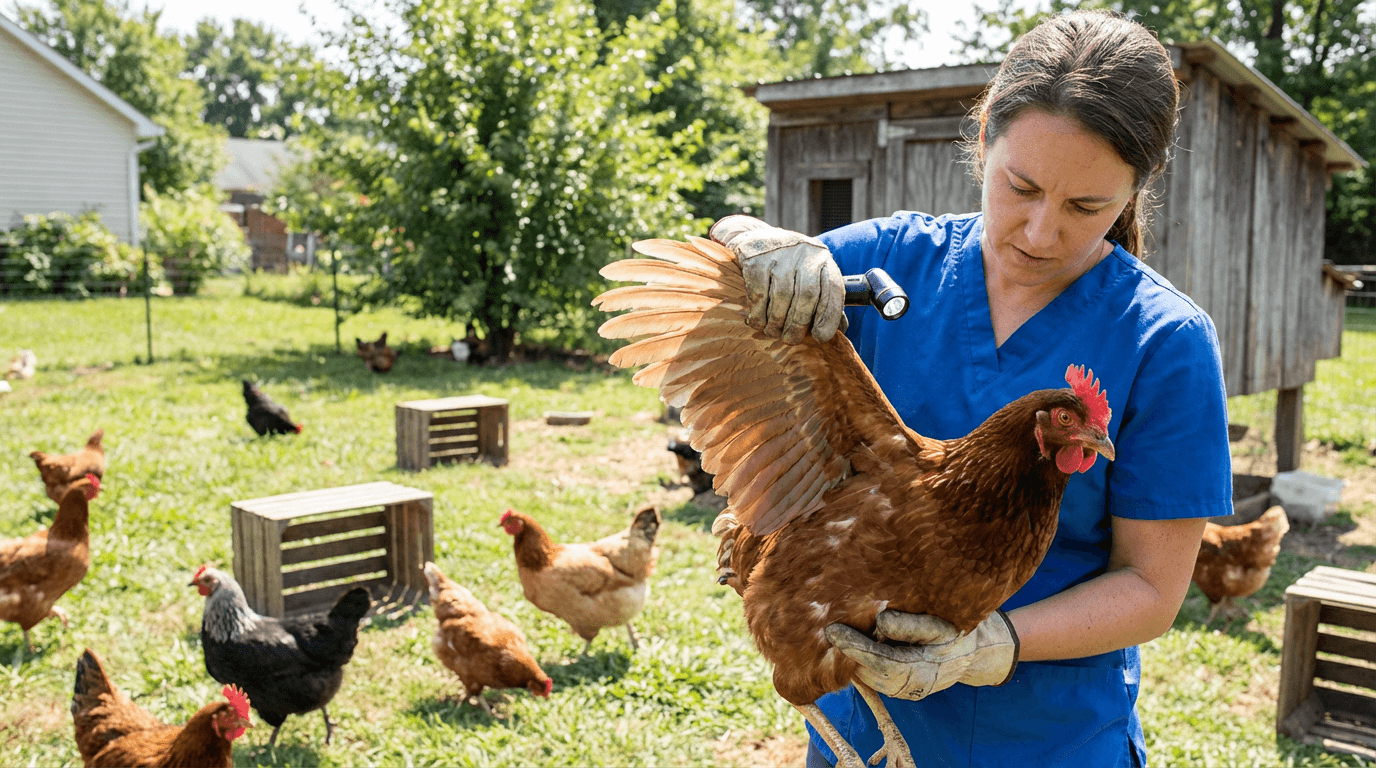
A veterinarian who works with poultry can perform necropsies on-farm or direct you to the state diagnostic lab. They can collect and submit samples for PCR, culture, serology, and histopathology. They can prescribe antibiotics and other medications under a valid Veterinarian-Client-Patient Relationship (VCPR). They can design vaccination programs appropriate for your region and production system. They can provide a Certificate of Veterinary Inspection (CVI) for moving birds across state lines. And they can serve as your point of contact with state and federal animal health officials in the event of a reportable disease.
The Veterinary Feed Directive and Antibiotic Use
Since January 1, 2017, all medically important antibiotics (those shared between human and veterinary medicine) require either a Veterinary Feed Directive (VFD) for feed-administered drugs or a prescription for water-administered drugs. This applies to all poultry producers regardless of flock size — backyard, small farm, or commercial. There are no exemptions for small flocks.
Medically important antibiotics commonly used in poultry include tetracyclines (oxytetracycline, chlortetracycline), macrolides (tylosin, erythromycin), aminoglycosides (neomycin, gentamicin), and sulfonamides (sulfadimethoxine, trimethoprim-sulfa). To use any of these, you need a valid VCPR with a licensed veterinarian.
Not all effective poultry medications require a VFD or prescription. Amprolium (for coccidiosis), vitamins, electrolytes, probiotics, and various herbal supplements are available over the counter. Ionophore coccidiostats in feed are not medically important antibiotics and do not require a VFD. But if you are considering treating respiratory disease, Mycoplasma, E. coli, or any bacterial condition with an antibiotic, you need a vet.
Establishing a VCPR before you have a disease emergency means you are not scrambling to find a veterinarian willing to see you when birds are already dying. A VCPR typically requires an initial visit or consultation, a review of your flock health history, and a reasonable expectation of ongoing veterinary oversight. Many veterinarians offering poultry services will do this as an annual flock health consultation.
Specialty Considerations: Turkeys, Ducks, Geese, and Other Species
Turkeys
Turkeys are susceptible to some diseases that primarily affect them rather than chickens, and are more severely affected by others. Histomoniasis (blackhead disease), caused by Histomonas meleagridis, is the most important turkey-specific disease and causes high mortality in affected flocks. The organism is transmitted via the eggs of the cecal worm Heterakis gallinarum. Chickens and turkeys should not be housed together or share the same ground because chickens can carry the cecal worm without clinical signs while infecting the environment for turkeys. There is no approved treatment for blackhead in the US (nitarsone, the only effective drug, was withdrawn from the market). Prevention relies on cecal worm control, separate housing, and pasture rotation.
Turkeys are highly susceptible to Mycoplasma gallisepticum and develop severe infectious sinusitis, with swelling of the infraorbital sinuses that can become massive. They are also highly susceptible to Newcastle disease, hemorrhagic enteritis (caused by turkey adenovirus), and lymphoproliferative disease of turkeys (LPDT).
Waterfowl (Ducks and Geese)
Ducks and geese are important reservoir hosts for avian influenza and can carry highly pathogenic strains without showing clinical signs. This makes them particularly dangerous as biosecurity risks in mixed-species settings. Waterfowl have higher natural resistance to many respiratory diseases that devastate chickens, but are susceptible to duck virus enteritis (duck plague), duck viral hepatitis, and Riemerella anatipestifer (duck septicemia).
Waterfowl are rarely vaccinated in backyard settings. Commercial duck operations may vaccinate against duck plague and Riemerella. Finding a veterinarian experienced with waterfowl is more challenging than finding one who sees chickens — avian specialists at university veterinary teaching hospitals are often the best resource.
Guinea Fowl and Quail
Guinea fowl are remarkably hardy and relatively disease-resistant compared to chickens, but they are susceptible to Marek's and other common poultry diseases and should be vaccinated accordingly. They are efficient tick predators and often kept in mixed flocks for this purpose. Quail, particularly bobwhite quail and Coturnix quail, are susceptible to quail disease (ulcerative enteritis) caused by Clostridium colinum, which can cause rapid high mortality in young quail. Bacitracin in feed is preventive; treatment with penicillin or lincomycin requires veterinary direction.
Finding a Poultry Veterinarian: Practical Strategies
The shortage of veterinarians willing to see poultry is real, particularly for backyard and small-flock owners. The following approaches improve your chances of finding competent poultry veterinary care:
Start with Your State Veterinarian's Office
Your state veterinarian's office maintains contacts with poultry veterinarians operating in the state. Many states have poultry diagnostic laboratories affiliated with veterinary schools that can perform necropsies and diagnostic testing even if they do not provide farm-call services. Call the state veterinarian's office and explain what you need — they deal with poultry health questions regularly and can direct you to appropriate resources.
Contact Your State Diagnostic Laboratory
State animal diagnostic laboratories accept fresh carcasses and sick live birds for necropsy and testing without necessarily requiring a veterinarian to submit. This is often the fastest and cheapest way to get a diagnosis when birds are dying. Fees are typically $20–$100 per submission depending on the testing requested. Diagnostic lab staff can often recommend poultry veterinarians in your area.
Extension Poultry Specialists
Land-grant university Cooperative Extension services in most states have poultry specialists — not veterinarians, but specialists with deep knowledge of poultry production who can answer husbandry questions and connect you with veterinary resources. Extension publications on poultry health are free and reliable.
Poultry Associations and Breed Clubs
The American Poultry Association, the Livestock Conservancy, state poultry associations, and breed-specific clubs maintain networks of experienced producers who can recommend veterinarians in your region. Exhibition poultry exhibitors often have established relationships with poultry veterinarians who sign health certificates for shows.
Avian Exotic Vets for Small Flocks
In suburban and urban areas, veterinarians who see pet birds (parrots, cockatiels, etc.) often also see backyard chickens as exotic patients. They may not have farm-call capability but can often see individual birds in a clinic setting. Search for "avian vet" or "exotic animal vet" in your area. Be upfront about your species and situation when calling — some avian vets focus exclusively on psittacines and will not see poultry.
Telehealth and Remote Consultation
Veterinary telehealth platforms increasingly offer remote consultations for poultry, though the VCPR requirements for prescribing medications vary by state. Telehealth consultations can help you determine whether a condition warrants emergency in-person care, guide supportive care while you arrange a farm visit, and provide expert input on vaccination and biosecurity programs.
Cost of Poultry Veterinary Care
| Service | Approximate Cost | Notes |
|---|---|---|
| State diagnostic lab necropsy | $25–$75 per bird | PCR/culture adds $20–$60 per test |
| Farm call (large-animal vet) | $75–$200 + mileage | Varies by region |
| Clinic visit (avian vet) | $50–$150 per bird | Individual bird exam |
| Flock health consultation | $150–$400 | Annual VFD/vaccination plan |
| Necropsy on-farm | $100–$300 | Includes basic interpretation |
| Vaccination program design | Included in consultation | Cost of vaccines additional |
| VFD (antibiotic authorization) | $0–$75 | Some vets include in consultation fee |
For backyard flock owners, the economics of veterinary care are real: a $150 clinic visit to evaluate a $20 laying hen is a hard sell. But consider the value in terms of flock-level diagnosis (identifying and stopping a disease that could kill the entire flock), regulatory compliance (VFD requirements), and reportable disease detection (early reporting may qualify you for indemnity payments). For commercial operations, veterinary oversight is not optional — it is built into the cost of doing business.
Flock Health Records: What to Track
Good records make veterinary consultations more productive and help you identify patterns before they become crises. For each flock, maintain:
- Acquisition date, source, number and species of birds, and vaccination history at purchase
- Vaccination dates, vaccines used, lot numbers, route of administration, and who administered
- Mortality log: date, approximate age, signs observed, and disposition (submitted for necropsy, home burial, etc.)
- Feed records: product, lot number, date purchased, source
- Medication records: drug, dose, route, duration, veterinarian who authorized, and withdrawal time
- Diagnostic results: date submitted, lab, results, and diagnosis
- Production records: weekly egg count, feed consumption, water consumption
Even a simple notebook kept in the coop serves this purpose. Digital records in a spreadsheet or farm management app allow pattern analysis over time — a gradual decline in production that wouldn't be noticed day-to-day becomes obvious when charted by week.
Find a Large Animal Vet Near You
Finding a veterinarian who sees poultry takes effort, but it is worth the investment before you face an emergency. Whether you need a flock health consultation, a Veterinary Feed Directive for antibiotic treatment, a Certificate of Veterinary Inspection for a show or auction, or emergency help during a disease outbreak, having an established veterinary relationship is invaluable.
FarmVetGuide maintains a directory of large animal and poultry veterinarians across all 50 states. Search by county to find practitioners in your area, filter by species treated (including poultry), and identify vets with emergency availability. The directory includes USDA-accredited veterinarians who can provide federal health certificates and mobile practitioners who make farm calls to small operations.
Do not wait until your flock is dying to look for a veterinarian. Build the relationship now — arrange an annual consultation, establish a VCPR, and have a phone number to call when you need it. Your flock will thank you.
Frequently Asked Questions About Poultry Veterinary Care
Do I need a vet to buy antibiotics for my chickens?
Yes, for medically important antibiotics. Since the Veterinary Feed Directive rules took effect in 2017, all medically important antibiotics administered in feed or water require either a VFD (for feed drugs) or a prescription (for water drugs) from a licensed veterinarian with whom you have a valid VCPR. Amprolium (for coccidiosis) and some other non-antibiotic medications remain available over the counter.
Can a small-animal vet see my chickens?
Some can, but not all are trained or equipped for poultry. Avian and exotic practitioners who see parrots and pet birds often also see backyard chickens. Call ahead and ask specifically whether the practice has experience with poultry. A veterinarian willing to see your birds is more useful than one who nominally accepts but has no practical experience with the species.
How do I know if my chickens have Marek's disease?
Classic signs include progressive leg or wing paralysis, with affected birds in the characteristic "splits" posture (one leg forward, one back). Ocular Marek's causes gray, irregular pupils. Visceral Marek's causes sudden death or wasting. Definitive diagnosis requires histopathology from a diagnostic laboratory. Many state diagnostic labs can diagnose Marek's from fresh carcasses submitted by the owner without a veterinarian's referral.
Is avian influenza a risk for backyard flocks?
Yes. The 2022–2024 HPAI H5N1 outbreak affected backyard flocks as well as commercial operations. Wild waterfowl are the primary reservoir. Risk reduction focuses on preventing wild bird contact: covered runs, removing standing water, and securing feed. If you find unexplained mass mortality, call USDA APHIS at 1-866-536-7593 and your state veterinarian before moving any birds.
Can chickens and turkeys be kept together?
It is strongly discouraged. Chickens can carry Histomonas meleagridis (blackhead) and the cecal worm that transmits it without showing illness, while infecting the shared environment for turkeys. Turkeys are highly susceptible to blackhead and can die rapidly from it. Separate housing and separate pastures — with no shared equipment — is the safest approach.
How often should I vaccinate my backyard chickens?
Vaccination frequency depends on the disease and your regional risk. Newcastle disease and infectious bronchitis vaccines are typically given every 4–8 weeks in endemic areas, with a pre-lay booster before pullets reach production. Marek's vaccination at hatch provides lifelong protection. Fowl pox vaccination is typically done once before mosquito season. Work with a poultry veterinarian or your state diagnostic lab to design a program appropriate for your specific location and flock size.
What should I do if multiple birds die suddenly?
Do not dispose of the carcasses immediately. Place fresh carcasses (dead less than 4–6 hours, not decomposed) in a sealed plastic bag and refrigerate — do not freeze. Contact your state veterinarian, state diagnostic laboratory, or local poultry veterinarian as soon as possible. If you suspect avian influenza or Newcastle disease, call USDA APHIS at 1-866-536-7593. Mass mortality in poultry can indicate reportable foreign animal diseases that qualify for federal indemnity if reported promptly.