Cattle Reproductive Management: Breeding, Pregnancy, Calving & Fertility Programs
By FarmVetGuide Editorial Team · Published April 2026 · Updated March 2026 · Based on verified data from our directory of 9,500+ practices
Cattle reproductive efficiency is the single greatest driver of profitability on cow-calf and seedstock operations. A cow that fails to produce a calf every 12 months is an economic liability — her feed, labor, and overhead costs continue while she generates no revenue. Yet national data consistently show that US beef cow pregnancy rates hover around 88–92%, and calving intervals average 13–14 months in many commercial herds — numbers that represent massive, largely preventable economic losses.
Whether you're managing 20 cows on a small family operation or 2,000 on a commercial range operation, understanding the biology of cattle reproduction, implementing proven fertility programs, recognizing signs of reproductive failure, and building a strong working relationship with a reproductive veterinarian are the foundations of a profitable breeding program.
This guide covers the complete cattle reproductive management cycle: breeding physiology, bull evaluation, synchronization protocols, pregnancy diagnosis, calving management, postpartum recovery, and the full range of reproductive diseases that can devastate herd fertility.
Understanding the Bovine Reproductive Cycle
The estrous cycle in cattle averages 21 days (range: 18–24 days). During each cycle, one (rarely two) follicles develop to maturity, ovulate, and form a corpus luteum (CL) that maintains the cycle until the next heat if the cow does not conceive. Understanding this cycle is the foundation for designing any breeding or synchronization program.
Key Events in the Estrous Cycle
| Day of Cycle | Event | Management Significance |
|---|---|---|
| Day 0 | Estrus (standing heat, ovulation ~12 hr later) | Optimal breeding window: 6–18 hr after onset of standing heat |
| Day 1–5 | Early diestrus, CL formation | CL development; embryo in oviduct → uterus |
| Day 5–14 | Mid-diestrus, CL functional | Progesterone maintains uterine environment; embryo development |
| Day 14–16 | Embryonic signaling (interferon-tau) | Conceptus signals non-pregnancy → CL maintains; critical window for embryo survival |
| Day 17–18 | Luteolysis (PGF2α release) if not pregnant | CL regresses; estrogen rises; cow returns to heat |
| Day 18–21 | Proestrus / heat detection | Follicle matures; behavioral estrus signs begin |
Signs of Estrus
Detecting estrus accurately is the critical skill for a successful natural or timed AI program. In beef cattle, estrus lasts an average of 12–18 hours (range 6–30 hours). Cows are most active during evening and early morning hours. Signs include:
- Standing to be mounted: The definitive sign — a cow that stands immobile while mounted by other cows or the bull is in true standing estrus
- Mounting other cows: A cow in heat is very active sexually and will mount herdmates even when not in standing estrus herself
- Clear mucus discharge: Thin, rope-like cervical mucus hanging from the vulva; may be visible on tail or hindquarters
- Restlessness, bawling: Elevated activity, pacing fence lines, vocalizing
- Swelling and reddening of vulva
- Roughened tailhead hair, mud on flanks from being mounted
Detection aids: Chin-ball markers or Kamar patches on teaser bulls, paint sticks on tail heads (removed paint = mounted), electronic activity monitors (Estrotect, SCR Heatime), or scratch cards (Estrotect patches).
Bull Breeding Soundness Evaluation (BSE)
Your bull is half the calf crop. A subfertile bull that goes undetected at the start of breeding season can breed 30–50 cows and produce an empty or late-calving herd — a catastrophic, entirely preventable loss. A Breeding Soundness Evaluation (BSE) by a veterinarian 60 days before the breeding season is mandatory good management.
Components of a BSE
- Physical examination: Eyes, feet and legs (soundness and libido depend on ability to mount), body condition score (BCS 5–6 is ideal), prepuce and penis examination for lesions, injuries, or deformities
- Scrotal circumference (SC): Directly correlated with sperm production and heifer puberty (daughters of bulls with high SC reach puberty younger). Minimum satisfactory SC: 30 cm for bulls 12–14 months, 31 cm for 15–18 months, 32 cm for 19–24 months, 34 cm for 2 years and older
- Semen collection (electroejaculation or AV): Assess volume, concentration, motility, and morphology
- Minimum satisfactory semen standards (Society for Theriogenology):
- Progressive motility: ≥30%
- Normal morphology: ≥70%
BSE Classification
| Classification | Criteria | Action |
|---|---|---|
| Satisfactory Potential Breeder | Passes all physical and semen standards | Clear for breeding season |
| Classifier as Satisfactory (conditional) | Passes physical; semen borderline (28–29% motility, 67–69% normal) | Retest in 60 days — semen quality may improve |
| Unsatisfactory Potential Breeder | Fails physical or semen below minimum standards | Do not breed — cull or treat if correctable condition |
BSE cost: $50–$150 per bull depending on region and vet. One of the highest-ROI veterinary services in cattle production — catching one subfertile bull before a breeding season can save tens of thousands of dollars in lost calves and re-synchronization costs.
Bull-to-Cow Ratios
Rule of thumb: one bull per cow-of-age-in-months up to age 5 (e.g., a 24-month bull can breed 24 cows). Mature bulls (5+ years) can cover 25–35 cows in a 65-day season with natural service. With multiple bulls running together, dominance behavior can limit actual breeding activity of subordinate bulls — observe carefully in the first week of breeding season.
Artificial Insemination (AI) Programs
AI gives producers access to genetically superior sires at a fraction of the cost of owning a high-quality bull and allows rapid genetic improvement. With effective synchronization protocols, conception rates to AI can approach natural service rates — and with sexed semen or fixed-time AI (FTAI) programs, labor efficiency can be dramatically improved.
Semen Handling — Critical Points
- Store semen at -196°C in liquid nitrogen. Never let nitrogen level drop below 1/3 of tank capacity.
- Thaw straws at exactly 35–37°C (body temperature water bath) for 30–45 seconds — no more, no less.
- Load AI gun immediately, keep warm, and inseminate within 15 minutes of thawing.
- Deposit semen at the body of the uterus (transcervical) — not in the cervix, not too deep into a uterine horn.
- Semen handling errors (improper thaw temperature, cold shock, over-exposure) are major causes of poor AI conception rates that get blamed on the protocol or the cow.
Fixed-Time AI (FTAI) Synchronization Protocols
FTAI protocols synchronize ovulation so all cows can be bred at a predetermined time — eliminating heat detection and dramatically reducing labor. Multiple protocols exist; the three most widely used in US beef cattle:
7-Day CO-Synch + CIDR Protocol
- Day 0: GnRH injection (100 mcg gonadorelin) + CIDR insert
- Day 7: Remove CIDR + PGF2α injection (25 mg dinoprost or 150 mcg cloprostenol)
- Day 9–10: GnRH injection (48–60 hr after PGF2α) + FTAI (same time as second GnRH)
First-service conception rates: 55–65% in beef cows with good BCS and appropriate postpartum interval. Higher pregnancy rates achieved by following AI with cleanup bulls for a shortened natural service period.
5-Day CO-Synch + CIDR
- Day 0: GnRH + CIDR
- Day 5: Remove CIDR + PGF2α (two doses of PGF2α 8–12 hr apart used in some variants)
- Day 7–8: GnRH + FTAI
Achieves higher synchrony rate than 7-day protocol in some studies; useful in late-cycling or anestrous cows.
Select Synch + CIDR + Heat Detection
Combines synchronization with heat detection — cows detected in heat are bred; non-detected cows receive FTAI 48 hr after PGF2α. Higher conception rates in heat-detected animals (60–70%) compared to FTAI-only (55–65%), but requires 48-hour heat observation window.
AI Protocol Drug Costs
| Item | Cost per Cow | Notes |
|---|---|---|
| GnRH (Factrel, Cystorelin, OvaCyst) | $3–$6 per dose | 2 doses per FTAI protocol |
| PGF2α (Lutalyse, Estrumate, ExcelErate) | $3–$8 per dose | 1–2 doses per protocol |
| CIDR (progesterone device) | $8–$14 each | One per cow; single use |
| Conventional beef semen (per straw) | $15–$100+ | Highly variable by sire EPDs and genetics |
| Sexed semen (per straw) | $25–$50 | 50–70% conception rate vs. conventional; lower per-straw fertility |
| AI technician fee | $5–$15 per cow | Or producer-performed if certified |
| Vet oversight / protocol consultation | $2–$5 per cow | Pro-rated over herd |
| Total FTAI cost per cow bred | $45–$150 | Excluding sire genetic value |
Pregnancy Diagnosis
Pregnancy diagnosis (preg-checking) is one of the most economically important veterinary services in the cattle business. Identifying non-pregnant (open) cows promptly allows producers to make culling or re-synchronization decisions before they run out of breeding season or feed a dry cow through winter needlessly.
Methods of Pregnancy Diagnosis
Rectal Palpation
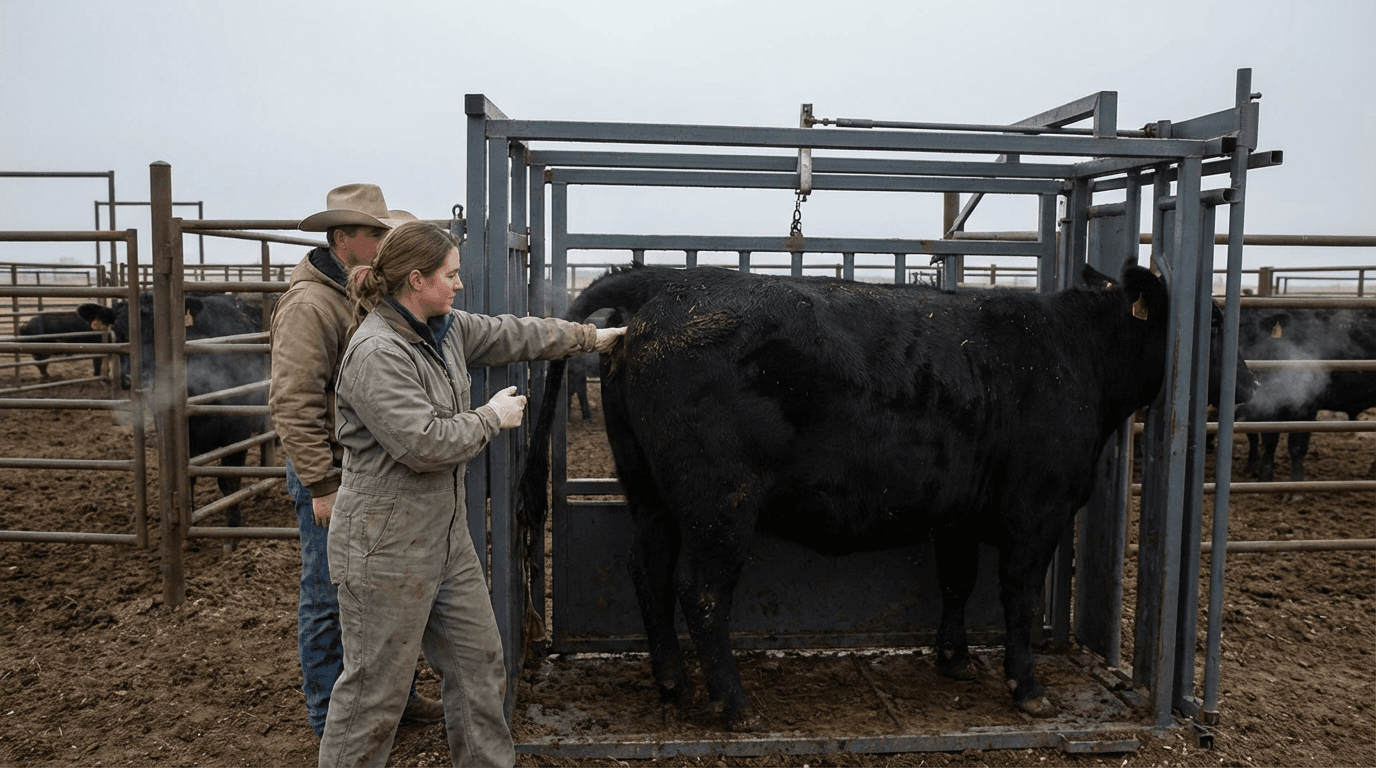
The traditional method, performed by a veterinarian or trained technician. Detects pregnancy as early as 35–45 days by feeling the uterine horn, amniotic vesicle, and corpus luteum via the rectal wall. Accurate in experienced hands, low equipment cost, can be performed rapidly in chute-processing situations.
Transrectal Ultrasound
The gold standard for early pregnancy diagnosis. A 5 MHz linear or sector probe inserted rectally provides real-time imaging of the uterus, embryo/fetus, and placentomes. Can detect pregnancy as early as 25–28 days, determine fetal sex (60–90 days), confirm fetal viability (heartbeat), and identify twins. Ultrasound has largely replaced palpation for early pregnancy work in progressive operations.
Blood Progesterone / Pregnancy-Associated Glycoprotein (PAG) Tests
Blood tests for PAG (BioPRYN, DG29) detect placental proteins and are accurate at 28+ days. Can be run in-house with rapid test kits or sent to a lab. Useful for large-scale herd testing, remote operations, or when rectal exam is not practical. Cannot provide gestational age or fetal sex.
Timing of Pregnancy Checks
| Timing | Method Options | Purpose |
|---|---|---|
| 25–35 days post-AI | Ultrasound | Confirm conception, identify failures early for re-synch |
| 35–45 days post-breeding | Palpation or ultrasound | Standard early preg check after AI season |
| 60–90 days post-breeding | Palpation, ultrasound, or PAG test | Confirm pregnancies, fetal sex determination at 60–90d |
| Post-breeding season (all open cows) | Any method | Cull open cows or re-synchronize |
| Pre-calving (last 30 days) | Ultrasound or palpation | Confirm twins, assess fetal size/position if dystocia risk |
Cost of pregnancy diagnosis: $5–$15 per cow depending on method and region; bulk rates for large herds often available. Ultrasound preg check by vet or trained technician typically $8–$20 per cow (includes farm call pro-rated). PAG blood test: $3–$8 per sample run in-house; $10–$20 with lab submission.
Calving Management
The calving season is the most labor-intensive and highest-stakes period of the cattle year. Calf and cow losses at calving represent the largest single source of mortality in beef herds. The majority of calving losses are preventable with attentive monitoring, proper nutritional preparation, and knowing when and how to intervene.
Pre-Calving Preparation
- Body condition score: Cows should calve at BCS 5–6 (moderate to moderate fleshy). Thin cows (BCS <4) have longer postpartum anestrous intervals, weaker calf immunity, and more dystocia. Overconditioned cows (BCS >7) are at higher risk of metabolic disease and fat depot dystocia. Adjust nutrition 60–90 days before calving — it's too late to fix BCS in the last 30 days.
- Vaccination: Scour prevention vaccines (Bovishield Gold One Shot, ScourGuard 4K, or equivalent) should be given 4–6 weeks pre-calving to maximize IgG concentration in colostrum for passive transfer to calves.
- Vitamin A, D, E, selenium: Ensure adequate micronutrient status — deficiencies increase susceptibility to scours, white muscle disease (selenium), retained placentas (selenium and vitamin E), and dystocia.
- Calving area: Clean, dry, well-bedded calving pens or pastures away from the main herd. Fresh bedding reduces pathogen load for newborns whose immune systems are entirely dependent on colostrum.
Stages of Calving
| Stage | Duration | Signs | Intervention Threshold |
|---|---|---|---|
| Stage 1 (Preparatory) | 2–6 hr (up to 24 hr heifers) | Restlessness, separation from herd, relaxed vulva/tailhead ligaments, mucus discharge | Observe; do not disturb |
| Stage 2 (Expulsive) | 30–90 min cows; 1–3 hr heifers | Water sac appears, active straining, calf entering birth canal | If no progress after 30–60 min of active straining, examine |
| Stage 3 (Placental) | 4–8 hr | Placenta expelled | If placenta not passed by 12 hr post-calving, call vet |
Dystocia: When and How to Intervene
Dystocia (difficult birth) accounts for 25–40% of calf deaths at or shortly after birth and is a leading cause of cow injuries and reproductive failure. The most important dystocia management rule: intervene at the right time, in the right way, with clean hands and clean equipment.
Examine the cow if:
- Active straining for 30–60 minutes with no visible progress
- Water sac (allantois or amnion) has appeared but no calf parts visible after 30 minutes
- You can see calf feet but no head (or vice versa) after 30 minutes of straining
- The cow shows signs of exhaustion and stops straining
Presentation and correction: Normal delivery is front feet first (front feet pads pointing down), head resting on the legs. Common abnormal presentations include head back, one front leg back, breech (hind first), and twin entanglement. Correction requires experienced hands, obstetrical chains/handles, and adequate lubrication. Do not apply traction until presentation is corrected.
When to call your vet:
- You cannot identify the calf's position or cannot correct malpresentation
- The calf is obviously too large (feto-pelvic disproportion)
- You have applied gentle traction for 20–30 minutes with no progress
- The cow is hemorrhaging excessively
- Any uterine prolapse (red mass protruding from vulva after calving)
Newborn Calf Care
- Clear airways immediately — swing calf by hind legs briefly, or use bulb syringe for mucus
- Stimulate breathing — vigorous rubbing with straw or towels; stick straw up nostril as respiratory stimulant
- Navel dipping — 7% iodine tincture applied to navel stump within 15 minutes of birth, repeated at 12 hours
- Colostrum — first feeding within 2 hours, ideally within 30 minutes. A 90-lb calf needs approximately 2 quarts per feeding, 4 feedings in first 12 hours (roughly 10% of body weight in colostrum in first 24 hours)
- Identification — ear tag, tattoo, or branding as soon as practical
Postpartum Recovery and Return to Estrus
The postpartum interval (PPI) — the time from calving to first fertile estrus — is the single most critical factor in achieving a 12-month calving interval. Cows must rebreed within 82 days of calving to calve again in the same calendar period next year. In well-managed herds with adequate nutrition, PPI averages 50–60 days. In nutritionally stressed or thin cows, PPI can extend to 90–120+ days, making the next-year pregnancy impossible without a very long breeding season.
Factors That Extend PPI
- Low body condition score at calving (BCS <4): Most important single factor. Thin cows divert energy to survival and milk production; reproductive function is luxury physiology that gets shut down.
- Nursing / suckling stimulus: Calf nursing suppresses GnRH pulses. Restricted suckling (once or twice daily) or early weaning shortens PPI in thin cows.
- Dystocia and uterine health: Cows that had difficult calvings, retained placentas, or uterine infections (metritis, endometritis) take longer to resume cycling.
- Season and photoperiod: Spring-calving cows benefit from increasing daylength, which stimulates GnRH pulses. Fall-calving cows have shorter days and often longer PPI.
- Age: First-calf heifers have longer PPI than mature cows — they're still growing while gestating and lactating, making nutritional demands triple.
Strategies to Shorten PPI
- Flushing (short-term energy boost): Increase energy intake 2–3 weeks before and during breeding season. Even thin cows respond to improved nutrition with shorter PPI and better conception rates.
- Progestin pretreatment (CIDR): A 7-day CIDR insert 7 days before breeding season "primes" anestrous cows and shortens time to first fertile estrus. Highly effective in thin first-calf heifers.
- MGA (melengestrol acetate): Oral progestogen fed for 14 days before breeding season synchronizes anestrous cows and heifers. Requires 0.5 mg/head/day in feed; cost-effective for large synchronization programs.
- Early weaning: Weaning calves at 45–60 days removes suckling stimulus, dramatically shortens PPI, and improves re-conception in thin cows. Calves can be transferred to creep feeding or early-weaning rations.
Reproductive Diseases and Infectious Causes of Infertility
Bovine Viral Diarrhea Virus (BVDV) — The Silent Reproductive Killer
BVDV is arguably the most economically important viral disease affecting cattle reproduction in North America. The virus can cause:
- Early embryonic death (days 1–40) — appears as repeat breeding or long inter-service intervals
- Fetal mummification (days 40–125)
- Abortion (any stage)
- Congenital defects (cerebellar hypoplasia, ocular abnormalities, skeletal deformities)
- Persistently infected (PI) calves — if infection occurs days 42–125 of gestation, calves are born immunotolerant to the specific virus strain. PI calves are the virus reservoir: they shed enormous quantities of BVD virus throughout life, infecting the entire herd. PI calves may appear normal or show chronic poor thrift — they are not visibly identifiable without testing.
Testing and control: Ear notch testing (PCR or antigen capture ELISA) of all calves at birth identifies PI animals. Cull all PI animals immediately — retaining them ensures continued herd exposure. Vaccination with modified live vaccines (MLV) containing BVDV types 1 and 2 is highly effective. Annual boosters required. Pre-breeding MLV vaccination of open cows (with vet verification of non-pregnancy) and pre-breeding season bull vaccination is recommended.
Infectious Bovine Rhinotracheitis / Infectious Pustular Vulvovaginitis (IBR/IPV)
IBR (caused by Bovine Herpesvirus-1, BHV-1) causes respiratory disease and can also cause infectious pustular vulvovaginitis (pustules in the vaginal vestibule) and balanoposthitis (penile inflammation) in bulls — both causing temporary infertility. BHV-1 also causes abortions at 5–8 months of gestation after respiratory or reproductive infection or reactivation of latent virus.
Vaccination with MLV or killed IBR vaccines is standard practice. MLV vaccines provide superior immunity but cannot be used in pregnant cows — use killed vaccines in pregnant animals or vaccinate before breeding.
Leptospirosis
Multiple Leptospira serovars cause reproductive failure in cattle. The most economically important in US beef cattle is L. borgpetersenii serovar Hardjo, which is adapted to cattle as a reservoir host. Cattle can be persistently infected with Hardjo without showing clinical signs while continuously shedding in urine, contaminating pastures and water sources.
Reproductive consequences of Hardjo infection: late-term abortions (7+ months), stillbirths, and birth of weak calves, as well as reduced milk production in dairy animals. Diagnosis via urine PCR or paired serology. Treatment: individual animals with dihydrostreptomycin (DSM) + penicillin; whole-herd oxytetracycline pulse treatment.
5-way or 7-way leptospirosis vaccines (covering Hardjo plus icterohaemorrhagiae, canicola, grippotyphosa, pomona) should be given twice yearly in endemic regions — annual vaccination often insufficient for Hardjo. Work with your vet to determine local serovar prevalence.
Neosporosis (Neospora caninum)
Neospora is a protozoan parasite responsible for up to 20–25% of diagnosed cattle abortions in some US regions, particularly the western states. Dogs (and coyotes) are definitive hosts; cattle are infected by ingesting oocysts in dog feces-contaminated feed or water. The parasite causes abortion most commonly at 5–6 months gestation.
Critically, Neospora is transmitted vertically (dam to calf) in 80–90% of cases — meaning infected dams consistently produce infected calves that will abort in future pregnancies. Test aborted fetuses; cull seropositive cows that have aborted (not merely seropositive non-aborters, as management is more nuanced).
Prevention: keep dogs out of feed storage and bunks; test purchased animals; cull persistent aborters with confirmed Neospora. No effective vaccine available in the US.
Vibriosis (Bovine Genital Campylobacteriosis — Campylobacter fetus)
Vibriosis is transmitted venereally — infected bulls spread Campylobacter fetus venereally. subsp. venerealis through natural service. Cows become temporarily infertile (irregular cycles, early embryonic death, occasional abortion). The bull remains a lifelong asymptomatic carrier. Cows eventually clear the infection over several heat cycles.
Signs: Infertility outbreak — many cows returning to heat repeatedly, extended calving seasons, low pregnancy rates with natural service bulls. No clinical signs in bulls. Diagnosis via preputial wash or smegma PCR/culture from bulls.
Control: Vaccinate cows AND bulls annually with a 5-way vibrio vaccine (Vibrin, Vibo-5, etc.). Use AI instead of natural service whenever possible. Test and treat (streptomycin) or cull infected bulls.
Trichomoniasis (Tritrichomonas foetus)
Trichomoniasis is a venereal protozoal disease causing early embryonic death, repeat breeding, and occasional late-term abortion. Like vibriosis, it is spread by infected bulls during natural service. Bulls become permanent carriers with no clinical signs. Cows clear the infection spontaneously within 3–4 months.
Important regulation note: Trichomoniasis is a regulated disease in many states (especially western range states: Colorado, Montana, Nevada, New Mexico, Oregon, Utah, Wyoming, and others). Bulls must be tested negative before interstate movement and often before entry to sale barns or community pastures. Regulations vary by state — check with your state veterinarian.
Diagnosis: preputial smegma culture (3 consecutive tests) or PCR. No approved treatment — cull infected bulls immediately. Vaccine (TrichGuard, Trich-Plex) reduces infection in cows but does not prevent transmission or eliminate carrier bulls.
Retained Placenta
Normal placental expulsion occurs within 4–8 hours after calving. Retention beyond 12 hours is pathological and occurs in 5–15% of beef cows. Risk factors include dystocia, twins, hypocalcemia, selenium/vitamin E deficiency, abortion, premature calving, and BVDV infection.
Management: Current recommendations have shifted significantly in recent years. Manual removal (pulling the placenta) is no longer recommended — it causes more trauma and does not improve outcomes compared to non-intervention. Instead: antibiotics (oxytetracycline intrauterine, or systemic antibiotics in febrile cows), NSAIDs, and supportive care. Most retained placentas shed within 7–14 days. Monitor for metritis (uterine infection, foul discharge, fever, depression).
Cows with retained placenta that develop metritis have longer PPI and reduced conception rates. They require veterinary treatment and close monitoring. Cows with repeat retained placenta episodes should be evaluated for selenium/vitamin E status and culled if the pattern persists.
Heifer Development: Getting Her Ready for a Lifetime of Production
The heifer development program sets the trajectory for a cow's entire productive life. Research consistently shows that heifers that calve for the first time at 24 months — not 26–30 months — have higher lifetime productivity, more total calves, and greater lifetime weaning weight than late-calving heifers.
Target Goals for Replacement Heifers
| Parameter | Target | Why It Matters |
|---|---|---|
| Weight at breeding (15 months) | 65% of mature cow weight | Associated with puberty attainment and fertility |
| Age at first calving | 24 months | Extra productive year vs. 36-month program |
| Pregnancy rate, first breeding | >90% | Benchmark for excellent heifer development |
| Body condition at first calving | BCS 5–6 | Adequate reserves for lactation + re-breeding |
| Calving ease (unassisted) | >90% | Use appropriate EPD-selected bulls; small-framed heifers |
Heifer Synchronization Programs
Breeding heifers to calve 2–3 weeks before mature cows serves multiple purposes: heifers get first-time calving supervision, they have more time before their second breeding, and their calves are larger at weaning than cows calving later. Use proven synchronization protocols modified for heifers (heifers respond well to 5-day CO-Synch + CIDR), select for calving ease EPDs (<10% CE EPD), and use small-framed, high-growth sires appropriate for the heifer's mature size.
Fertility Economics: Cost of Reproductive Failure
| Scenario | Annual Economic Loss per Cow |
|---|---|
| Open cow (no calf) fed through winter | $600–$1,200 (feed + overhead, no calf revenue) |
| Late-calving cow (30 days late) | $60–$120 (lighter calf at weaning) |
| Subfertile bull (50% conception, 50 cows) | $12,000–$25,000 (25 fewer calves) |
| BVDV abortion storm (10% of 200-cow herd) | $15,000–$30,000 in lost calves + vet costs |
| Dystocia loss (1 calf and cow death) | $3,000–$5,000 (calf value + cow replacement + vet) |
| Retained placenta + metritis treatment | $200–$600 per cow (vet + drugs + extended PPI) |
These numbers make the ROI on preventive reproductive management — BSE, vaccination, pregnancy diagnosis, nutritional monitoring — obvious. A $150 investment in synchronization and AI that produces one additional calf returns $700–$1,500 in weaning weight revenue.
Seasonal Reproductive Management Calendar
| Month | Key Reproductive Tasks |
|---|---|
| January–February | Monitor BCS of late-gestation cows; adjust nutrition; order AI supplies; confirm calving supply inventory |
| February–April | Calving season: monitor 24/7 during peak period; navel dipping; colostrum management; scours prevention |
| April–May | Post-calving health checks; BCS assessment; CIDR pretreatment for thin cows; BSE bulls 60 days pre-breeding |
| May–July | Breeding season: AI + cleanup bulls; heat detection; pregnancy confirmation 30–45 days post-AI |
| August–September | Pregnancy diagnosis (open cow identification); cull open cows; wean calves; body condition scoring |
| October–November | Pregnancy check fall-calving cows; pre-calving vaccination; bull turnout for spring-calving replacement heifers |
| December | Annual reproductive vaccinations; herd health review with vet; fertility program planning for next year |
Regional Reproductive Considerations
Northern Great Plains (ND, SD, MT, WY): Extreme winter weather drives spring calving late (April–May) to avoid calf hypothermia. Short breeding season, compressed calving, and severe cold are major challenges. Trichomoniasis testing requirements for bulls in MT, WY. Selenium deficiency common — supplementation before calving critical for white muscle disease prevention in calves.
Southern Great Plains (TX, OK, KS): High Trichomoniasis prevalence; bull testing before community pasture access required in some counties. Summer heat suppresses estrous activity — breeding seasons scheduled for cooler months. Drought pressure frequently forces nutritional compromises that reduce pregnancy rates.
Southeast (AL, GA, MS, TN): Year-round breeding possible due to mild winters. Fescue toxicosis from endophyte-infected tall fescue suppresses reproduction — reduced conception rates, prolonged PPI, and agalactia (poor milk let-down) are common. Transitioning to novel-endophyte fescue or removing fescue pastures during breeding season improves fertility significantly.
Pacific Northwest (OR, WA, ID): High Neospora prevalence — feral dog and coyote populations maintain parasite; test aborted fetuses. IBR management critical in high-density dairy/beef mixing areas. Selenium deficiency year-round in many counties.
Corn Belt (IA, IL, IN, OH, MO): High feedlot crossover operations; BVDV biosecurity is critical when buying from auction markets. Leptospirosis management important due to swine and wildlife reservoirs. Vibriosis management important in natural service programs with purchased bulls.
Working with a Reproductive Veterinarian
A cattle reproductive specialist — whether your local mixed-practice large animal vet or a board-certified theriogenologist (DACT) — is the most valuable partner in your fertility program. Build that relationship before you need emergency intervention. Consider scheduling:
- Pre-breeding herd evaluation (annually): BCS scoring, vaccination status review, protocol selection, nutritional consultation
- Bull BSE (60 days pre-breeding): Every single bull, every single year — no exceptions
- Mid-season reproductive check: Confirm synchronization protocol is working; problem-shoot repeat breeders
- Post-breeding pregnancy diagnosis: Identify opens early; make culling decisions before winter feeding
- Abortion workup: Any abortion cluster (>2% in 30 days) should trigger immediate diagnostic submission and vet consultation
Board-certified theriogenologists (diplomates of the American College of Theriogenologists) specialize exclusively in animal reproduction and are the highest level of reproductive expertise available. They can provide advanced semen evaluation, reproductive ultrasonography, and consultation on complex fertility problems. Find DACT diplomates through the ACT website or ask your local vet for a referral.
Frequently Asked Questions About Cattle Reproductive Management
How do I know if my bull is fertile before breeding season?
The only reliable way is a Breeding Soundness Evaluation (BSE) by a veterinarian. Visual assessment alone is insufficient — many subfertile bulls appear completely normal. The BSE includes physical examination (including feet and legs for mounting ability), scrotal circumference measurement, semen collection, and evaluation of progressive motility and morphology. A satisfactory BSE result is the minimum standard; it does not guarantee fertility but confirms the bull meets minimum thresholds. Test every bull, every year, 60 days before the breeding season so you have time to replace failures.
What pregnancy rate should I expect from a synchronization and AI program?
In well-managed beef cow herds with good BCS, appropriate postpartum interval, and proper protocol execution, first-service FTAI conception rates typically run 55–65%. Following AI with 21–42 days of cleanup bulls with proven fertility should bring overall 63-day pregnancy rates to 88–95%. Common reasons for poor AI pregnancy rates include semen handling errors (improper thaw temperature, cold shock), cow factors (thin body condition, inadequate postpartum interval), protocol errors (missed injections, wrong timing), and inadequate heat detection in hybrid protocols.
My cows are open — what should I check first?
Start with the bull. A subfertile or physically unsound bull is the most common cause of unexpected open cows. Run a BSE immediately. Next, evaluate nutritional status — were cows in adequate BCS (5–6) at breeding? Review postpartum intervals — were first-calf heifers given adequate time post-calving before breeding? Consider disease — run blood titers for BVDV, Leptospira, and IBR if you haven't vaccinated. Sample open cows for pregnancy and evaluate estrous cycling with progesterone testing. Submit preputial smegma from bulls for Trichomonas and Campylobacter. A systematic diagnostic workup with your vet will identify the primary cause.
When is the best time to pregnancy check my cows?
The earlier the better — early diagnosis allows faster decision-making. Ultrasound can detect pregnancy at 25–28 days with an experienced technician. For most operations, a first check 30–45 days post-AI identifies conception status for the AI portion of the program. A second check 30–45 days after cleanup bulls are removed confirms final pregnancy rates and identifies all open animals. The cost of a preg check ($8–$15 per cow) is trivially small compared to the cost of feeding an open cow through winter.
What vaccines does my cow herd absolutely need for reproductive performance?
The minimum reproductive vaccination program for US beef cows should include: modified live virus (MLV) vaccine containing IBR and BVDV types 1 and 2 (such as Bovishield Gold 5, Express 5, or Pyramid 5) given annually pre-breeding to open cows; leptospirosis 5-way vaccine (twice yearly in endemic areas, annually minimum); vibriosis vaccine annually; clostridial 8-way vaccine annually; and BVD PI testing for any purchased animals. Work with your vet to customize based on local disease prevalence — some regions require Mycoplasma bovis, Neospora, or additional coverage.
How long after calving can I breed my cows?
To achieve a 12-month calving interval with a 65-day breeding season, cows must conceive within 82 days of calving. That means first-service breeding begins around day 50–60 post-calving in most protocols. Cows need a minimum of 30 days postpartum before any synchronization treatment can be effective — the uterus requires this time to involute. In well-nourished cows in good BCS, most will be cycling by 40–50 days post-calving. Thin cows, first-calf heifers, and cows that had dystocia or retained placentas take significantly longer.
Should I use sexed semen in my cow herd?
Sexed semen offers compelling benefits in specific situations: heifer development programs (sex females to keep replacements), seedstock operations (sex males for more bull calves from elite dams), and dairy × beef crossbreeding (sex for heifers from AI, beef bulls for cull cows). Considerations: sexed semen typically has 10–20% lower conception rates than conventional semen in FTAI programs, costs 2–3x more per dose, and requires excellent synchronization and insemination technique to achieve acceptable results. For commercial beef operations with conventional goals, the economics often don't favor sexed semen on a whole-herd basis, but targeted use on select females can be highly profitable.
Find a Large Animal Vet for Reproductive Services Near You
Cattle reproductive management at the highest level requires a veterinarian who understands both the biology and the economics of your operation. Whether you need bull BSE, synchronization protocol design, pregnancy diagnosis, abortion workups, or access to a board-certified theriogenologist, finding the right large animal vet for your herd is the foundation of a profitable breeding program.
FarmVetGuide lists over 9,500 large animal veterinarians across all 50 states. Search by county to find practices that work with cattle, offer mobile farm call service, and provide reproductive services. You can filter by USDA accreditation (required for interstate cattle movement health certificates), emergency availability, and service type.
Use FarmVetGuide to:
- Find cattle veterinarians with reproductive expertise in your region
- Locate mobile vets who can come to your operation for BSE, preg checks, and calving assistance
- Identify practices with ultrasound pregnancy diagnosis capability
- Find after-hours emergency vets for calving complications and uterine prolapses
- Connect with USDA-accredited vets for interstate movement certificates
Don't wait for a reproductive crisis to find your vet. Establish a veterinarian-client-patient relationship (VCPR) now, schedule your pre-breeding herd consultation, and build the reproductive program your herd deserves. Visit FarmVetGuide.com to find qualified large animal veterinarians near you.
Related Articles & Resources
Sources & Further Reading
We cross-check the animal-health information in this guide against these recognized veterinary and government sources. For clinical guidance, consult them directly or speak with a licensed veterinarian.
How this guide is maintained
Animal-health guides on FarmVetGuide are written and maintained by the FarmVetGuide Editorial Team and cross-checked against authoritative veterinary sources, including the AVMA, USDA APHIS, and the Merck Veterinary Manual. This guide is general educational information, not a substitute for professional veterinary diagnosis or treatment. For a sick or injured animal, contact a licensed veterinarian directly.