
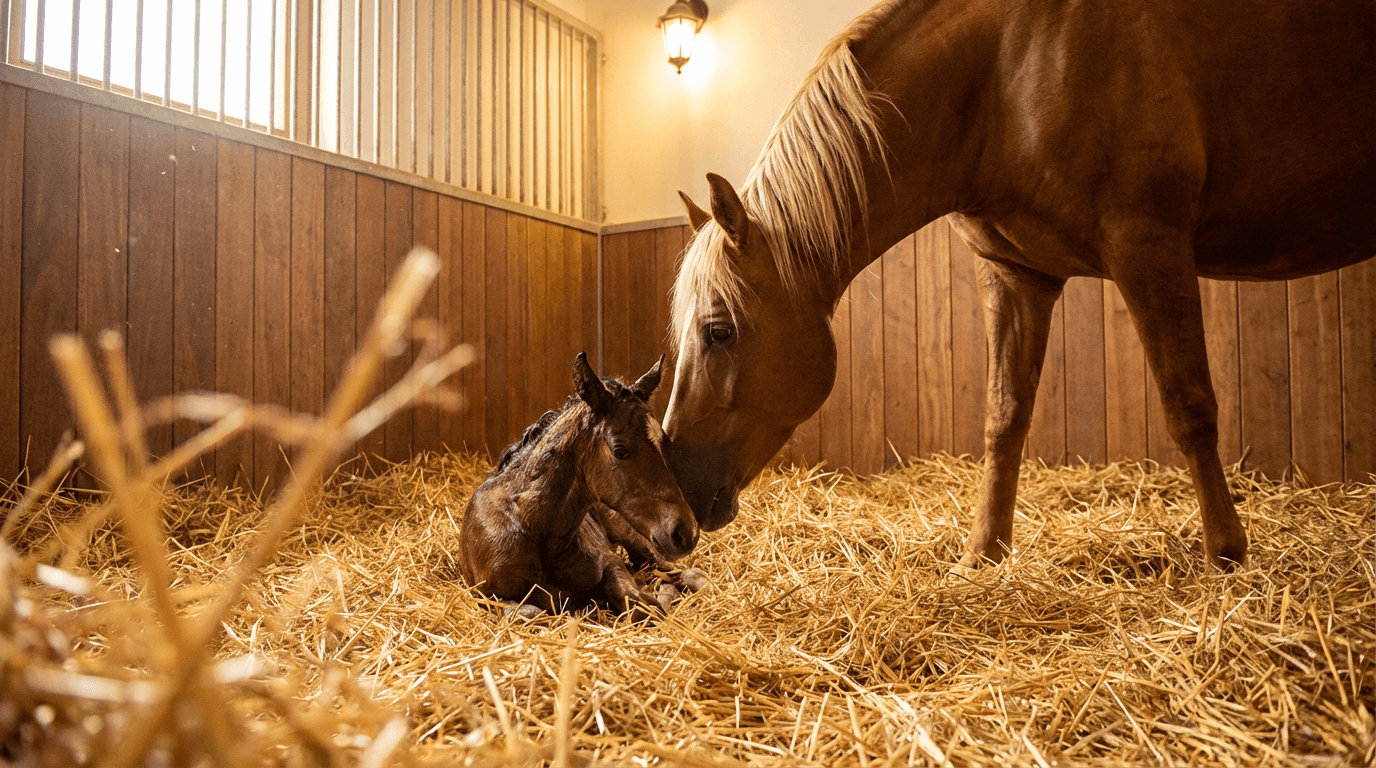
Foaling Checklist: Complete Guide to Preparing for Mare Birth & Newborn Foal Care
By FarmVetGuide Editorial Team · Published March 2026 · Updated March 2026 · Based on verified data from our directory of 9,500+ practices
Foaling season is one of the most exciting — and stressful — times on any horse farm. Whether you're a first-time breeder or a seasoned horseperson preparing for your twentieth foaling season, having a complete, practical checklist in hand can mean the difference between a smooth delivery and a life-threatening emergency. Mares give very few warning signs before foaling, and things can go wrong fast. A newborn foal can go from healthy to critically ill within hours if not properly attended. This guide walks you through everything you need to know: how to prepare your barn and foaling kit weeks in advance, how to read the signs of impending labor, what normal delivery looks like and when to call your vet, how to care for the mare and foal in the critical first 24 hours, and how to recognize the warning signs that demand immediate veterinary attention. Use it as your master reference every foaling season.
Why Preparation Is Everything in Foaling
Unlike cattle, which often calve in pastures with minimal human intervention, mares frequently foal at night and the process unfolds rapidly — typically in 20 to 30 minutes once active labor begins.[2] A foal that is not breathing, not nursing, or not passing its first manure (meconium) within predictable timeframes faces rapidly worsening odds. Owners who are unprepared — who don't have colostrum on hand, who haven't established a relationship with a large animal vet, who don't know the normal foaling sequence — are at a severe disadvantage.
The investment in preparation is modest compared to the cost of a veterinary emergency or the loss of a foal. Equine veterinary practices consistently report that the foaling emergencies with the worst outcomes involve owners who called too late, who weren't watching when labor began, or who didn't have basic supplies available. This checklist is designed to eliminate those gaps.
The Cost of Being Unprepared
| Emergency Scenario | Typical Vet Cost | Survival Rate (Unprepared) | Survival Rate (Prepared) |
|---|---|---|---|
| Dystocia (malpresentation) | $500-$3,000+ | ~40% | ~75% |
| Retained placenta (over 3 hrs) | $300-$800 | 60% (sepsis risk) | 90%+ (early intervention) |
| Neonatal maladjustment (dummy foal) | $2,000-$8,000 | 30-50% | 60-80% (with ICU) |
| Failure of passive transfer | $500-$2,500 | 50% (if untreated) | 95%+ (with plasma) |
| Meconium impaction | $200-$1,200 | 70% | 95%+ |
Timing Your Preparation
Most experienced breeders begin active foaling preparation 4 to 6 weeks before the mare's due date. However, since equine gestation averages 340 days but can range from 320 to 370 days, you should begin building your foaling kit and preparing your foaling stall no later than 3 weeks before the expected due date. Many mares foal early with no warning.
Setting Up Your Foaling Stall
A proper foaling stall is larger than a standard horse stall. The minimum recommended size is 14 feet by 14 feet, with 16 by 16 feet being ideal. This gives the mare room to lie down, roll, and get up without injuring herself or the foal. The stall should be thoroughly cleaned and disinfected at least two weeks before the expected foaling date, then bedded deeply with clean straw — not shavings. Wood shavings can stick to wet foals and interfere with breathing.
Foaling Stall Requirements
- Size: Minimum 14x14 ft; 16x16 ft preferred
- Bedding: Deep, clean straw (not shavings) — at least 6 to 8 inches deep
- Walls: Solid bottom boards to prevent foal from getting legs trapped underneath
- Lighting: Bright enough for observation but not harsh; install a camera if possible
- Temperature: Shelter from drafts; supplemental heat lamp on standby for cold climates
- Water: Automatic waterer or large bucket — the mare will drink heavily after foaling
- Access: Easy access for the vet — wide door, no obstacles in the aisle
- Security: Latches the mare cannot open; no sharp edges or protruding nails
Foaling Camera and Monitoring Systems
A barn camera connected to your smartphone is one of the best investments a breeder can make. Several systems are designed specifically for foaling monitoring. Some attach to the mare's halter and alert you when she lies down in a foaling position. Others use motion detection in the stall. The goal is to be notified the moment active labor begins, since you have a narrow window — often 15 to 30 minutes — to assess whether delivery is progressing normally and whether veterinary assistance is needed.
Popular foaling monitor options include the Foal Alert system (a transmitter in the mare's vulva), Breeder's Edge wireless camera systems, and smartphone-connected IP cameras. At minimum, plan to check on the mare every 30 to 60 minutes once she shows signs of imminent foaling, even if you have camera monitoring.
Stall Disinfection Protocol
- Remove all old bedding completely; bag and remove from the barn
- Scrub walls, floors, and feed buckets with hot water and detergent
- Rinse thoroughly and allow to dry
- Apply a diluted bleach solution (1:10 bleach to water) or a commercial equine-approved disinfectant
- Allow stall to air dry completely before adding fresh bedding
- Add deep straw bedding 2 weeks before due date; refresh as needed
The Complete Foaling Kit Checklist
Your foaling kit should be assembled at least 3 weeks before the expected foaling date and kept in the foaling stall or immediately adjacent to it. A tackle box, a plastic storage bin with a lid, or a large duffel bag all work well. Label everything clearly, check expiration dates on medications, and make sure your vet's emergency number is posted prominently.
Essential Medical Supplies
| Item | Purpose | Quantity | Notes |
|---|---|---|---|
| Disposable obstetric gloves (shoulder length) | Assisting delivery if needed | 6-10 pairs | Lubricated preferred |
| Sterile lubricant (OB lube) | Assist with delivery | 1 large bottle | Keep warm in cold climates |
| Iodine solution (Betadine 7%) | Dip umbilical stump | 1 small bottle | Dilute to 0.5% for navel dipping |
| Navel dip cup | Apply iodine to navel | 2 | Wide-mouth preferred |
| Fleet enema (saline, ready-to-use) | Meconium relief | 2 | Pediatric size |
| Colostrum (frozen backup) | Passive immunity if mare has no milk | 2 liters | Thaw in warm water, not microwave |
| Nursing bottle and nipple (Pritchard teat) | Supplement feeding if needed | 1 set | Horse-specific nipple |
| Thermometer (digital rectal) | Check foal and mare temperature | 2 | Normal foal temp: 99-101.5 F |
| Stethoscope | Auscultate heart rate, gut sounds | 1 | Normal foal HR: 80-120 bpm after first hour[6] |
| Sterile gauze and bandaging material | Minor wound care | Assorted | |
| Clean towels | Dry the foal | 6-8 large | Old but washed |
| Bucket for warm water | Warm hands, warm colostrum | 1 bucket | Keep heat source handy |
Documentation and Identification Supplies
- Notebook and pen for recording times: water break, foal delivered, foal stood, foal nursed, placenta passed
- Flashlight or headlamp — foaling often happens in the dark
- Camera or smartphone for photographs (Jockey Club registration requirements)
- Foal identification band or temporary marking materials
- Halter and lead in foal size
- Large plastic bag or bucket to collect and save the placenta for veterinary examination
Emergency Supplies
- Foal Warmer / Heat Lamp: Essential in cold climates below 40 F. A chilled foal can die within hours.
- Oxygen source: If your farm is remote, a small oxygen cylinder with a neonatal mask can be life-saving for foals slow to breathe.
- Plasma (frozen equine plasma): Some breeders in remote areas keep a unit on hand for failure of passive transfer. Consult your vet.
- Veterinarian emergency phone number: Posted on the stall door and saved in your phone. Confirm 24-hour emergency availability before foaling season.
Reading the Signs: Pre-Foaling Changes in the Mare
Mares give a series of physical signs in the days and hours before foaling. Recognizing these signs allows you to begin intensive monitoring at the right time. No single sign is definitive — mares are notoriously unpredictable — but a combination of signs in the timeline below should put you on high alert.
Weeks Before Foaling
- Udder development (bagging up): The mare's udder will begin to enlarge 2 to 6 weeks before foaling. In maiden mares, this may begin only days before. The teats will gradually fill out.
- Relaxation of the hindquarters: The ligaments on either side of the tailhead soften and relax, making the area above the tail look sunken. This typically begins 1 to 3 weeks before foaling.
- Vulvar relaxation: The vulva elongates and becomes softer and more relaxed in appearance.
- Waxing: Small waxy droplets form on the tips of the teats, usually 12 to 48 hours before foaling. Not all mares wax.
Days to Hours Before Foaling
| Sign | Typical Timing Before Foaling | Reliability |
|---|---|---|
| Milk streaming or dripping from teats | 1-24 hours | High — especially if streaming |
| Waxing on teat tips | 12-48 hours | Moderate (not all mares wax) |
| Elevated milk calcium (over 200 ppm) | 12-24 hours | High — use commercial test strips |
| Marked restlessness, pawing, lying down and getting up | 1-4 hours | High |
| Sweating, especially at flanks and behind elbows | 0-2 hours | High |
| Frequent urination and defecation | 0-4 hours | Moderate |
| Looking at flanks repeatedly | 0-4 hours | Moderate |
| Water breaking (rupture of chorioallantois) | Active labor beginning | Definitive |
Milk Calcium Testing
Milk calcium testing strips offer one of the most reliable ways to predict foaling within 12 to 24 hours. As foaling approaches, the mare's milk calcium concentration rises above 200 parts per million and her milk pH changes from acidic to alkaline. Once calcium reads above 200 ppm on two consecutive tests 4 hours apart, foaling is usually imminent. Test strips are available from equine supply companies for approximately $25 to $40 per kit.
The Three Stages of Labor: What to Expect
Understanding the normal sequence of equine labor is critical. Knowing what is normal lets you recognize what is not normal and when you need to call for help. Equine labor is divided into three stages, each with its own timeline and characteristics.
Stage 1: Preparatory Labor
Stage 1 labor is the preparatory phase during which the uterus begins contracting and the foal positions itself for delivery. It typically lasts 1 to 4 hours. Signs include restlessness, pawing, getting up and lying down repeatedly, sweating, and intermittent colic-like pain. Many mares interrupt Stage 1 if they sense human activity in the barn — this is normal behavior, as mares in the wild would postpone birth if predators were nearby. Keep human activity minimal and quiet.
Stage 2: Active Delivery
Stage 2 begins when the chorioallantois (the outer fetal membrane) ruptures — the water breaking. A large volume of allantoic fluid (4 to 8 gallons) will gush from the vulva. Stage 2 should be completed within 20 to 30 minutes.[2] If active straining labor has been going on for more than 30 minutes without significant progress, call your veterinarian immediately.
The normal foal delivery sequence:
- Water breaks — allantoic fluid released
- Amnion (white, glistening inner membrane) appears at vulva
- One front foot appears, sole facing down
- Second front foot appears, slightly behind the first (diving position)
- Foal's nose rests on its front legs
- Head, shoulders, and chest are delivered with the mare's pushing
- The foal slides out — the mare often rests with the foal's hind legs still in the birth canal
- Do not rush to break the umbilical cord — allow it to pulse for 2 to 5 minutes
Stage 3: Placenta Passage
Stage 3 is the passage of the placenta (afterbirth). This normally occurs within 1 to 3 hours after foaling.[3] A retained placenta — any placenta still attached 3 hours after delivery — is a medical emergency in mares and requires immediate veterinary attention.[3] Unlike cattle and goats, horses should NEVER have the placenta manually removed by the owner. Manual removal tears placental villi from the endometrium, leading to severe uterine infection, toxemia, and laminitis.
Important: Tie the placenta up in a knot above the hocks after delivery so the mare doesn't step on it before it is fully passed. Save the entire placenta in a bucket for veterinary examination.
Stage 2 Danger Signs — Call the Vet Immediately If:
| Warning Sign | What It May Indicate | Action |
|---|---|---|
| Red, velvety membrane at vulva (not white or clear) | Premature placental separation ("red bag")[5] | EMERGENCY — call vet, cut membrane immediately |
| Both feet present but nose not visible after 10 min of pushing | Head deviated to side | Call vet now |
| One foot only visible with strong pushing | Leg malpresentation | Call vet now |
| No progress after 30 minutes of active straining | Dystocia (any cause) | EMERGENCY — call vet immediately |
| Feet visible but soles facing up | Posterior presentation | EMERGENCY — very high-risk delivery |
| Mare in extreme pain, rolling violently | Uterine rupture or other complication | EMERGENCY |
Caring for the Foal in the First 24 Hours
The first 24 hours of a foal's life are among the most critical. Several physiological events must occur within specific timeframes for the foal to survive and thrive. Memorize the "1-2-3 rule": the foal should stand within 1 hour, nurse within 2 hours, and the placenta should pass within 3 hours.[1] Deviation from these milestones by more than 30 to 60 minutes warrants a veterinary call.
Immediate Post-Birth Care (First 30 Minutes)
- Clear the airway: If the amnion did not rupture during birth, break it immediately at the foal's head and clear mucus from nostrils.
- Stimulate breathing: Rub the foal vigorously with clean towels to stimulate respiration and circulation and help dry it.
- Check heart rate: Normal is 60-80 beats per minute immediately after birth, rising to 80-120 bpm within the first hour.
- Let the cord separate naturally: Do not cut or tie the umbilical cord. It will break naturally when the mare stands or the foal moves. Allow it to pulse for at least 2 minutes — it continues to deliver blood to the foal.
- Dip the navel: As soon as the cord breaks, dip the stump in 0.5% chlorhexidine or diluted iodine. Repeat 3 to 4 times in the first 24 hours.
- Observe bonding: The mare should show strong interest in the foal — nuzzling, nickering, licking. A mare that ignores or is aggressive toward her foal needs close monitoring.
The 1-2-3 Milestones
| Milestone | Normal Timeframe | Action if Late |
|---|---|---|
| Foal stands | Within 1 hour | If not standing at 2 hrs — call vet |
| Foal nurses successfully | Within 2 hours | If not nursing at 3 hrs — call vet, supplement with colostrum |
| Placenta passes | Within 3 hours | If retained at 3 hrs — call vet immediately |
| Meconium passed | Within 3-6 hours | If not by 12 hrs — enema; call vet if distressed |
| Foal urinates | Within 4-8 hours | If not by 12 hrs — call vet |
| Foal appears bright, alert, responsive | Ongoing from birth | Any lethargy or weakness — call vet |
Colostrum: The Critical First Milk
Colostrum is the mare's first milk, produced in the 24 to 48 hours after foaling. It contains high concentrations of immunoglobulins (IgG antibodies) that the foal must absorb to develop passive immunity. Foals are born with essentially no immune protection — they rely entirely on the antibodies in colostrum absorbed through the gut wall. This window for gut absorption closes at approximately 12 to 24 hours after birth, after which the foal's gut becomes impermeable to large IgG molecules.[4]
The foal must consume adequate colostrum — at least 1 to 2 liters — in the first 8 to 12 hours of life. If the mare has been dripping milk before foaling and has lost much of her colostrum, if the foal is too weak to nurse, or if the mare rejects the foal, you must have backup frozen colostrum available. Your veterinarian can test IgG levels at 18 to 24 hours to confirm passive transfer was adequate.
Failure of Passive Transfer (FPT)
Failure of passive transfer occurs when a foal has inadequate IgG levels (less than 800 mg/dL) at 24 hours of age.[4] FPT affects an estimated 3 to 6% of foals. Treatment depends on timing:
- Under 12 hours old: Oral colostrum supplementation (still gut-absorbable)
- 12 to 24 hours old: Oral colostrum may still be partially absorbed; supplement aggressively
- Over 24 hours old: Intravenous plasma transfusion required; cost $300-$800 per liter of plasma
Newborn Foal Health Checks
Even if birth goes smoothly, a thorough health assessment is essential. Your veterinarian should examine the foal within 12 to 24 hours of birth for a new foal exam. This covers heart assessment, cleft palate check, umbilical hernia palpation, and IgG testing — checks that go beyond what most owners can do at home.
Owner Assessment: What to Check
| System | What to Check | Normal Finding | Abnormal — Call Vet |
|---|---|---|---|
| Breathing | Rate, effort, character | 20-40 breaths/min, quiet | Rapid, labored, noisy breathing |
| Heart rate | Pulse at jaw or chest | 80-120 bpm after 1st hour | Below 60 or above 150 bpm |
| Temperature | Rectal thermometer | 99.5-101.5 F | Below 98 F or above 102.5 F |
| Gum color | Mucous membrane color | Pink, moist | White, blue, yellow, or bright red |
| Capillary refill time | Press gum, time to pink return | Under 2 seconds | Over 2 seconds |
| Eyes | Appearance, responsiveness | Bright, alert, responsive to light | Dull, sunken, entropic eyelid |
| Navel | Stump appearance | Drying, no swelling or discharge | Moist, swollen, or draining |
| Limbs | Conformation, flexion | Able to stand, normal angles | Knuckling, contracture, laxity |
| Nursing behavior | Interest in mare, latching | Seeking teat, nursing vigorously | Not seeking, weak suck, rejection |
Common Newborn Foal Problems and Costs
| Condition | Signs | Urgency | Typical Vet Cost |
|---|---|---|---|
| Meconium impaction | Straining, tail flagging, not defecating | High | $100-$500 |
| Neonatal maladjustment syndrome | Wandering, not nursing, seizures, barking | Emergency | $2,000-$10,000+ |
| Septicemia | Fever, weakness, hot joints, not nursing | Emergency | $3,000-$15,000+ |
| Umbilical infection (joint ill) | Swollen navel, swollen joints, fever | Urgent (24-48 hrs) | $500-$3,000 |
| Failure of passive transfer | Diagnosed by blood test at 24 hrs | Urgent | $300-$2,000 |
| Angular limb deformity | Crooked legs, knuckling | Moderate (days) | $500-$5,000+ |
| Entropion (inrolled eyelid) | Squinting, tearing, eye discharge | Urgent (causes corneal damage) | $100-$400 |
| Ruptured bladder | Distended abdomen, not urinating, depression | Emergency | $2,000-$6,000 |
Mare Care After Foaling
Once the foal is delivered, nursing, and stable, attention must shift to the mare. Foaling is a major physical event, and mares can experience serious complications in the hours and days following delivery. A mare that does not receive proper post-foaling care is at risk for retained placenta, uterine infection, colic, and laminitis.
Immediate Post-Foaling Mare Care
- Allow bonding time: Keep the mare and foal together in the foaling stall without interruption for the first hour.
- Offer fresh water and hay: The mare will be thirsty and hungry. Avoid large amounts of grain immediately after foaling, as this can increase laminitis risk.
- Monitor placenta passage: Note the time of delivery and check the clock. If the placenta has not passed completely within 3 hours, call your veterinarian.
- Save and examine the placenta: Once passed, spread it out to confirm it is complete — the placenta should look like an F or Y shape with both uterine horns intact. Place it in a bucket of water for your vet to examine.
- Check the mare's vital signs: Temperature, heart rate, and gut sounds should be checked once or twice on foaling day. Normal temperature 99-101 F; heart rate 28-44 bpm; gut sounds present in all four quadrants.
Post-Foaling Mare Monitoring Schedule
| Day | What to Monitor | Call Vet If |
|---|---|---|
| Day 1 | Placenta passage, vital signs, attitude, uterine discharge | Retained placenta over 3 hrs; fever above 102 F; colic signs |
| Days 2-3 | Discharge (should be scant, reddish-brown), appetite, attitude | Foul-smelling discharge; depression; not eating; hoof tenderness |
| Days 3-7 | Udder fullness (foal nursing adequately), hoof temperature | Hoof pain or digital pulse (laminitis sign); swollen legs |
| Days 7-14 | Foal heat cycling | Abnormal cycling, retained fetal structures (uncommon) |
Foal Heat Breeding
Most mares come into their first post-foaling heat cycle at 7 to 14 days — the foal heat.[5] Conception rates on foal heat are lower than on subsequent cycles, and breeding before day 10 carries increased pregnancy failure risk. A uterine culture before breeding on foal heat is recommended if delivery was complicated or required veterinary intervention.
Regional and Seasonal Considerations
Foaling season varies significantly by region and breed. While Thoroughbred racing registries set January 1 as the universal birthdate — pushing breeders toward winter and early spring foalings — most other breeds allow foaling to occur when nature and climate align. Understanding the unique challenges of your region is essential for planning.
Foaling Season by Region
| Region | Typical Foaling Season | Primary Risks | Special Preparations |
|---|---|---|---|
| Northern states (MT, MN, ND, WI) | March-May (sometimes Feb for TB) | Hypothermia in foals, frozen water, difficult vet access in storms | Heat lamps, insulated foaling stall, snow chains for vet trucks |
| Southern states (TX, FL, GA, LA) | Feb-April | Mosquito-borne disease (EEE, WNV) in spring; heat stress in late-season foals | Mosquito management, early vaccination, shade access |
| Mountain West (CO, WY, ID, UT) | April-June at altitude | Late snowstorms, altitude effects on neonates, limited vet coverage in rural areas | Emergency foaling plan for bad weather; long-distance vet relationships established early |
| Mid-Atlantic and Southeast | Feb-May | Potomac Horse Fever in summer/fall; mud and fescue pastures | Fescue-free pasture in last trimester; PHF vaccination |
| Pacific Coast (CA, OR, WA) | Feb-April (coastal); May-July (inland) | Wet conditions, equine herpesvirus exposure | Biosecurity during herpesvirus outbreaks; dry foaling area |
Fescue Toxicity Warning for Pregnant Mares
Tall fescue grass infected with the endophytic fungus Neotyphodium coenophialum is a serious reproductive hazard for pregnant mares. The fungal toxins interfere with prolactin production, leading to prolonged gestation, thickened placenta, agalactia (no milk production), and poor foal viability. It is estimated that 35 to 40 million acres of fescue pasture in the United States are infected with endophyte. Any mare in her last trimester should be removed from fescue pasture at least 60 to 90 days before her due date. Consult your veterinarian about the drug domperidone if fescue exposure is unavoidable.
Cold-Weather Foaling Protocols
Foaling in sub-freezing temperatures requires additional precautions. A wet newborn foal can become hypothermic within 15 to 30 minutes in temperatures below 20 F. Equip your foaling stall with:
- A heat lamp mounted safely out of reach (use infrared bulbs in appropriate fixtures, mounted high to prevent fire)
- Extra towels for vigorous drying immediately after birth
- A foal blanket sized for a newborn
- A warm-water thermos or hot water access to warm iodine dip and OB lube
- Insulation for pipes; buckets checked regularly for ice
A foal that is shivering, weak, or has a rectal temperature below 98 F needs active warming: move to a warm environment, use towels and blankets, apply a heat lamp, and call your veterinarian. A hypothermic foal cannot nurse effectively even if it appears to try.
Costs and Financial Planning for Foaling Season
Breeding and foaling can be expensive, and the costs extend well beyond the stud fee. Building a realistic financial plan before foaling season means you won't be caught off guard by veterinary bills. Costs vary by region — higher in the Northeast and West Coast, lower in rural Midwest and South — and by practice type.
Typical Foaling-Related Veterinary Costs
| Service | Low Estimate | High Estimate | Notes |
|---|---|---|---|
| New foal exam (routine) | $100 | $300 | Includes IgG test at many practices |
| Emergency farm call (nights/weekends) | $150 | $400 | Call fee only; procedures extra |
| Dystocia assistance (farm) | $500 | $3,000 | Depends on complexity |
| Retained placenta treatment | $300 | $800 | Oxytocin, lavage, antibiotics |
| Plasma transfusion (FPT) | $400 | $1,200 | Per liter; often 1-2 liters needed |
| Referral to equine hospital (dystocia) | $3,000 | $10,000+ | Surgery, ICU care |
| Neonatal ICU (septicemia, NMS) | $3,000 | $15,000+ | Per week; often 1-2 weeks |
| Foal enema (meconium) | $50 | $200 | Often bundled with new foal exam |
| Post-foaling uterine lavage (mare) | $200 | $600 | If endometritis suspected |
| Pre-foaling bloodwork (mare) | $100 | $300 | Recommended for high-risk mares |
Mare Vaccination Schedule Before Foaling
Vaccinating the mare correctly in the weeks before foaling is critical. The purpose is twofold: protect the mare against disease, and maximize antibody content in her colostrum so the foal receives the best possible passive immunity.
| Vaccine | Timing | Purpose |
|---|---|---|
| EWT/WNV (combination) | 4-6 weeks before foaling | Protect mare; boosts colostral antibodies |
| Rhinopneumonitis (EHV-1) | 5th, 7th, 9th months of gestation | Prevent EHV-1 abortion |
| Rabies | 4-6 weeks before foaling | Rabies-endemic areas |
| Strangles | 4-6 weeks before foaling (if risk area) | Boosts colostral antibodies |
| Botulism | 4-6 weeks before foaling | Ohio, Kentucky, Mid-Atlantic especially |
| Rotavirus | 8th, 9th, 10th months of gestation | Foal diarrhea prevention on endemic farms |
When to Call the Veterinarian: Quick Reference
One of the most common mistakes horse owners make during foaling is waiting too long to call for help. Equine veterinarians consistently emphasize: call early, call often. Know your vet's emergency number before foaling season begins and confirm their after-hours availability.
Call Immediately (Do Not Wait)
- Red membrane at the vulva before the foal is delivered ("red bag delivery")
- More than 30 minutes of active straining without delivery
- Only one foot visible after water breaks and active straining has begun
- Feet visible but soles pointing upward
- Placenta not passed within 3 hours of foaling
- Mare showing signs of colic after foaling
- Mare is severely distressed, unable to stand, or collapses
Call Within 1-2 Hours
- Foal not standing at 2 hours of age
- Foal not nursing successfully at 3 hours of age
- Foal appears weak, dull, or unresponsive
- Foal's temperature is below 98 F or above 102.5 F
- Foal straining to defecate without passing meconium by 6 hours
- Mare has not passed placenta and is approaching the 3-hour mark
FAQ: Foaling Questions from Horse Owners
How long does it take for a mare to foal after her water breaks?
Once the chorioallantois ruptures (water breaks), active delivery should be completed within 20 to 30 minutes. If the mare is actively straining and pushing but has not delivered the foal within 30 minutes of the water breaking, this is an emergency. Call your large animal veterinarian immediately. Every additional minute of delay in a dystocia increases risk to both mare and foal.
What does "waxing" mean and is it reliable as a foaling predictor?
Waxing refers to small deposits of colostrum — yellowish, waxy-looking beads — that appear on the tips of the mare's teats, typically 12 to 48 hours before foaling. It indicates the mare's udder is full and her milk is ready. It is a useful sign but not completely reliable: some mares wax for days without foaling, and some never wax at all, going straight to full udder and foaling. Milk calcium testing is more reliable than waxing alone.
The mare passed the placenta but I'm not sure it's complete. What should I do?
Lay the placenta flat on a clean surface and examine its shape. A complete placenta resembles a large, reddish-gray F or Y shape, with both uterine horns present. Look for any torn or ragged edges where a portion might have remained in the uterus. If you're unsure, keep the entire placenta in a bucket of water and have your veterinarian examine it during the new foal exam. Any suspicion of a retained piece is a veterinary call.
My foal is 4 hours old and hasn't nursed yet. Is this an emergency?
Yes, this warrants an immediate veterinary call. Foals should nurse successfully within 2 hours of birth, with 3 hours being the outer acceptable limit in some cases. At 4 hours without nursing, the foal is at significant risk of hypoglycemia (low blood sugar) in addition to missing the critical colostrum absorption window. Your veterinarian can identify why the foal isn't nursing and get colostrum into the foal via tube feeding if necessary.
Can I give the mare Banamine for post-foaling colic?
Call your vet first before administering any medications. While flunixin meglumine (Banamine) is commonly used in horses with colic, post-foaling colic can have a variety of causes — some of which require specific treatments that Banamine could mask. A mare with a large colon displacement needing surgery could have her pain masked temporarily while her condition deteriorates. Your vet may advise Banamine over the phone, but get the call in first so they can assess the situation.
What should the foal's first poop look like, and when should I give an enema?
The foal's first manure is called meconium — it is dark brown to black, tarry, and firm. It should be passed within 1 to 6 hours of birth. If the foal is straining repeatedly without passing manure, is flagging its tail, or appears painful within the first 12 hours, this likely indicates meconium impaction. A single Fleet enema (saline, ready-to-use, pediatric size) can be administered rectally with care. If one enema does not resolve the straining within 30 minutes, or if the foal is very uncomfortable, call your veterinarian rather than administering multiple enemas.
How do I know if my mare is producing enough milk?
A well-nourished foal receiving adequate milk will nurse frequently (every 20 to 30 minutes in the first days of life) and will have a rounded, well-filled belly. It will be bright, alert, and spending time exploring and resting between nursing sessions. A mare that is not producing milk — often from fescue toxicity — will have an udder that does not fill and teats that do not produce milk when expressed. This is an emergency requiring veterinary treatment and supplemental feeding for the foal.
Summary: Foaling Season Readiness Checklist
Use this master checklist to confirm you are ready for foaling season. Check off each item at least 3 to 4 weeks before the mare's expected due date.
- Foaling stall cleaned, disinfected, and bedded with deep straw
- Foaling kit assembled and stocked (medical supplies, towels, iodine, enema, colostrum)
- Foaling camera or monitoring system set up and tested
- Large animal veterinarian's emergency number confirmed and posted
- Pre-foaling vaccinations given to mare on schedule (4-6 weeks before)
- Mare removed from fescue pasture (if applicable) at least 60 days before due date
- Frozen backup colostrum on hand (2 liters minimum)
- Milk calcium test strips purchased and on hand
- Heat lamp or foal warmer available (cold climates)
- New foal exam scheduled with vet (12-24 hours after expected foaling)
- Foal health milestones memorized: stand in 1 hr, nurse in 2 hrs, placenta in 3 hrs
- Placenta collection bucket ready to save afterbirth for vet examination
- Meconium enema supplies on hand and technique reviewed
- Colostrum tube feeding technique practiced or instruction obtained from vet
Find a Large Animal Vet Near You
The single most important thing you can do before foaling season is establish a relationship with a qualified large animal or equine veterinarian who offers after-hours emergency coverage. Foaling emergencies happen at night, on weekends, and during holidays — because mares don't follow a convenient schedule.
FarmVetGuide is the most comprehensive directory of large animal and equine veterinarians in the United States, with over 9,500 verified practices listed across all 50 states. You can search by county, filter for equine specialists, find practices offering 24/7 emergency services, and locate USDA-accredited vets in your area. Don't wait until your mare is in active labor to start calling around — find your foaling vet now, introduce yourself, and have their number saved and posted in your barn before the first foal hits the ground.
Visit FarmVetGuide.com to find an equine or large animal veterinarian near you — searchable by state, county, species, and emergency availability.
Sources & References
This guide references peer-reviewed research and guidelines from leading veterinary organizations. All medical information has been reviewed for accuracy against these authoritative sources.
- American Association of Equine Practitioners (AAEP) — Foaling Mare & Newborn: Preparing for a Safe & Successful Foal Delivery. Last accessed March 2026.
- Merck Veterinary Manual — Parturition in Horses. Last accessed March 2026.
- Merck Veterinary Manual — Retained Fetal Membranes in Mares. Last accessed March 2026.
- Merck Veterinary Manual — Failure of Transfer of Passive Immunity in Large Animals. Last accessed March 2026.
- Merck Veterinary Manual — Perinatal Mare and Foal Care. Last accessed March 2026.
- Merck Veterinary Manual — Intensive Care and Emergencies in Neonatal Foals. Last accessed March 2026.
- American Association of Equine Practitioners (AAEP) — Foaling Monitor Sheet. Last accessed March 2026.