
Cattle Mastitis: Complete Guide to Prevention, Treatment & Milk Quality for Dairy & Beef Producers
By FarmVetGuide Editorial Team · Published March 2026 · Updated March 2026 · Based on verified data from our directory of 9,500+ practices
Mastitis is the single most costly disease affecting dairy cattle in the United States, responsible for an estimated $2 billion in annual losses to the industry.[1] Whether you manage a large commercial dairy, a small family farm, or even a beef cow-calf operation, understanding mastitis — its causes, detection, treatment, and prevention — is essential to protecting your herd's health, your milk quality, and your bottom line. This comprehensive guide walks you through everything a US producer needs to know.
What Is Cattle Mastitis?
Mastitis is an inflammation of the mammary gland (udder), typically caused by bacterial infection. The inflammation disrupts milk production at the cellular level, damages udder tissue, and introduces somatic cells (white blood cells) into the milk supply. Even subclinical cases that show no visible symptoms can silently drain profitability for months.
Mastitis is classified in two major ways: by severity and by timing relative to lactation.
Clinical vs. Subclinical Mastitis
| Type | Visible Signs | SCC Impact | Yield Loss | Detection Method |
|---|---|---|---|---|
| Peracute/Acute Clinical | Swollen quarter, hot, painful; watery milk; cow off feed, fever | Very high (>5 million/mL) | 40–80% | Visual observation |
| Subacute Clinical | Clots or flakes in milk; mild swelling | High (1–5 million/mL) | 20–40% | Strip cup / CMT |
| Subclinical | None visible | Elevated (200,000–1,000,000/mL) | 5–20% | DHI SCC testing, CMT |
| Chronic | Recurrent flare-ups; hard quarter over time | Persistently elevated | Varies | Culture history + SCC |
Timing: Lactational vs. Dry Period vs. Heifer Mastitis
- Lactational mastitis occurs during active milking. Environmental pathogens are the leading cause during peak lactation.
- Dry period infections acquired in the first or last two weeks of the dry period are a major source of new infections at calving. Dry cow therapy targets this window.
- Heifer mastitis (before first calving) is increasingly recognized; Staphylococcus aureus and coagulase-negative staphylococci (CNS) are common culprits. Heifers calving with elevated SCC drag down the entire herd's bulk tank.
The Main Pathogens: Know Your Enemy
Bacteria causing mastitis fall into two ecological groups: contagious (spread cow-to-cow, primarily during milking) and environmental (originating from the cow's surroundings). Treatment and control strategies differ significantly between these groups.
Contagious Pathogens
- Staphylococcus aureus — The most economically damaging contagious pathogen. Forms biofilms in udder tissue; cure rates even with aggressive antibiotic therapy are low (20–40% for chronic cases). Spread hand-to-teat, teat-to-teat via milking equipment and liner sleeves. Herds with STA aureus typically have a high proportion of cows with chronically elevated SCC.
- Streptococcus agalactiae — Obligate udder pathogen; lives only in the mammary gland. Highly contagious during milking, but also the most curable contagious mastitis pathogen. Penicillin cure rates above 90% are achievable with proper protocols.[1] Eradication from a herd is realistic with aggressive dry cow therapy, culling of chronics, and post-dip compliance.
- Mycoplasma bovis — Increasingly prevalent and devastating. No licensed intramammary antibiotic is effective. Infected cows shed organism intermittently; the disease can spread to lungs, joints, and ears of calves fed infected milk. Culling is the primary management tool.
Environmental Pathogens
- Streptococcus uberis and other environmental streptococci — The leading cause of clinical mastitis in well-managed US herds. Thrive in organic bedding, soil, and manure. Infections often cure spontaneously or respond well to treatment, but reinfection is common if housing hygiene is poor.
- Escherichia coli and coliforms (Klebsiella, Enterobacter) — Cause rapid-onset, often severe clinical mastitis. Endotoxin release drives systemic illness — fever, off-feed, reduced motility. Many E. coli infections resolve without antibiotics if supportive care is given and the cow's immune system is competent.[1] Klebsiella tends to be more persistent and severe.
- Coagulase-negative staphylococci (CNS) — Often considered minor pathogens, but they are the most frequently isolated bacteria from heifer udders pre-calving and can cause subclinical elevations in SCC that persist into lactation.
Other Notable Pathogens
- Trueperella pyogenes (formerly Arcanobacterium pyogenes) — "Summer mastitis." Associated with fly-borne transmission during the dry period, especially in pasture-based systems. Produces fetid, thick, brownish secretion. Quarter loss is common.
- Prototheca spp. — Algae, not bacteria. Rare but untreatable and highly contagious. Infected cows must be culled.
- Yeast/fungal mastitis — Often iatrogenic (caused by repeated intramammary antibiotic infusions). Self-limiting in most cases; aggressive antibiotic therapy worsens outcome.
Somatic Cell Count: The Master Metric[5]
Somatic cell count (SCC) measures the concentration of white blood cells in milk. Healthy quarters typically have SCC below 200,000 cells/mL.[3] When infection occurs, the cow's immune system rushes leukocytes to the udder, dramatically elevating SCC.
Why SCC Matters Financially
| Bulk Tank SCC (cells/mL) | Milk Price Impact (per cwt) | Annual Loss per 100-cow herd |
|---|---|---|
| Under 200,000 | Premium (+$0.50–$1.50) | None |
| 200,000–399,999 | Base price | None |
| 400,000–749,999 | Penalty (-$0.25–$0.75) | $3,000–$9,000 |
| 750,000+ | Severe penalty or load rejection | $15,000+ |
| Above 750,000 (Federal Market Order limit) | Milk cannot be sold for fluid consumption | Catastrophic |
The legal limit for Grade A milk in the US under Federal Milk Marketing Orders is 750,000 cells/mL. Most processors apply penalty pricing well below this threshold. Premium programs often require a bulk tank SCC under 200,000 cells/mL.
Beyond price, elevated SCC signals reduced milk yield. Research consistently shows that for every doubling of individual cow SCC above 100,000 cells/mL, she loses approximately 1.5–2.5 lbs of milk per day.
The Linear Score System
DHI (Dairy Herd Improvement) programs report individual cow SCC as a Linear Score (LS) from 0 to 9. Each unit increase in LS represents a doubling of SCC. A cow at LS 5 (≈ 800,000 cells/mL) is losing significantly more milk than her LS 2 (≈ 100,000 cells/mL) herdmate. Target herd average linear score: below 3.0.
Detection Methods: Finding Mastitis Early
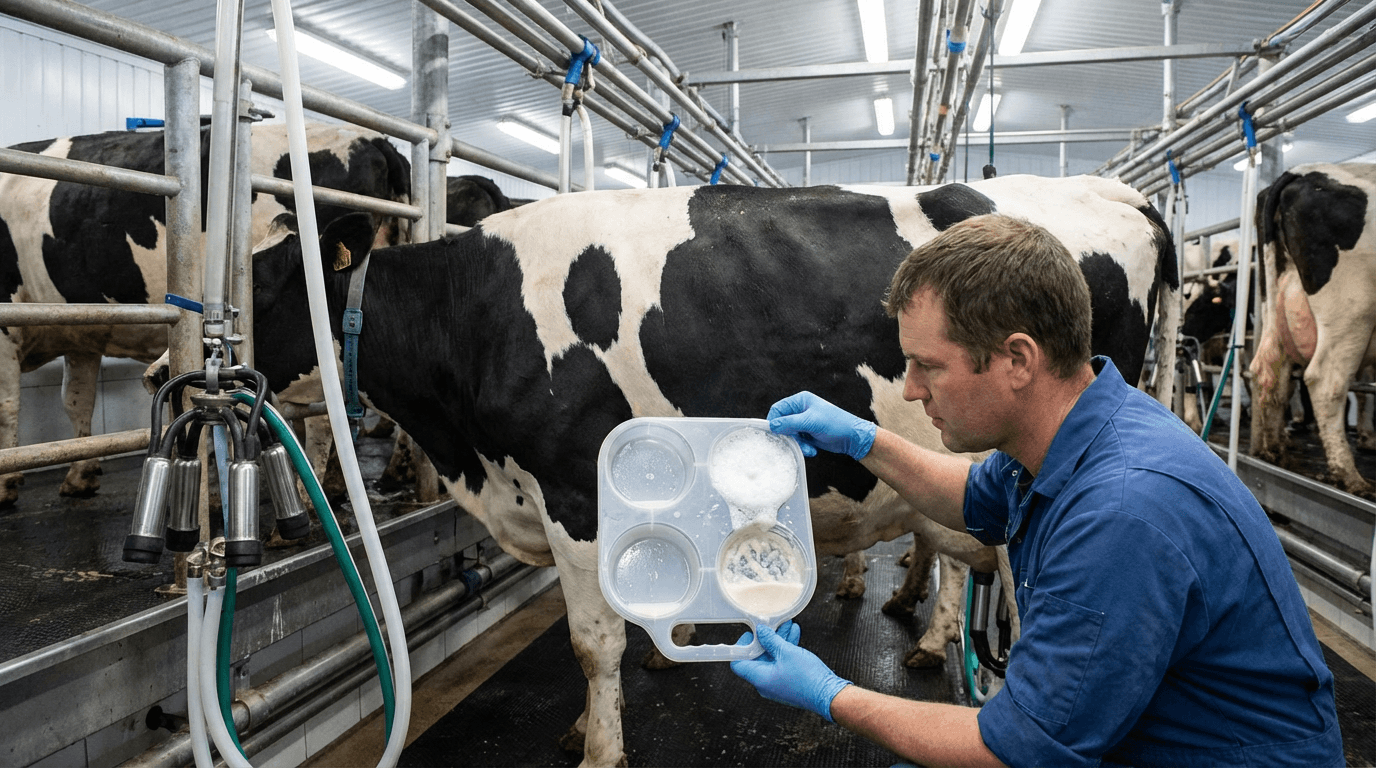
Strip Cup / Strip Plate
The most basic tool: strip 2–3 streams of fore-milk onto a dark-surfaced cup or plate before every milking. Clots, flakes, watery milk, or blood indicate clinical mastitis. Takes 10–15 seconds per cow and catches moderate clinical cases before the unit goes on. Compliance is the challenge — it must be a non-negotiable part of the milking routine.
California Mastitis Test (CMT)
A rapid cow-side test that uses a surfactant reagent to cause a gel reaction proportional to SCC.[2] Score from 0 (negative) to 3 (strong positive gel). CMT is cheap (~$0.02 per test), requires no equipment, and detects subclinical mastitis. Invaluable for:
- Screening fresh cows at calving
- Checking problem cows before dry-off decisions
- Monitoring treatment response
- Investigating herd SCC spikes
DHI Testing and Individual Cow SCC
Monthly DHI testing provides individual cow SCC along with milk production data. This is the gold standard for identifying chronically infected cows (those with 2+ consecutive tests above 200,000 cells/mL in the same quarter) and tracking herd trends over time. Cost varies by association but is typically $4–$8 per cow per month all-in.
In-Line SCC Monitors
Automated milking systems (AMS / robotic milkers) typically include in-line SCC sensors that flag elevated quarters in real time. Stand-alone in-line devices are also available for conventional parlors but are expensive ($15,000–$40,000+). Increasingly common on larger operations with 300+ cows.
Milk Culture
Identifying the causative pathogen through culture is essential for targeted treatment and control decisions. Options:
- Commercial laboratory — Send samples to a veterinary diagnostic lab. Full culture + sensitivity results in 3–5 days. Cost: $15–$45 per sample. Best for herd-level pathogen identification.
- On-farm culture systems (Minnesota Easy Culture, BioPRYN, etc.) — Simple growth media with chromogenic agar. Identifies gram-positive vs. gram-negative in 24 hours. Enables selective treatment protocols: treat gram-positive clinical cases with antibiotics; withhold treatment on gram-negative cases (many resolve spontaneously, reducing antibiotic use and withholding losses).
Treatment Protocols
Always work with your veterinarian to establish a herd-specific mastitis treatment protocol. The following is an overview of general principles and options, not a substitute for veterinary guidance.
Intramammary (IMM) Antibiotics
Intramammary tubes deliver antibiotic directly into the infected quarter. Common products used in the US include:
| Product Class | Examples | Spectrum | Milk Withhold | Meat Withhold |
|---|---|---|---|---|
| Penicillin-based | Pirsue, ToMORROW (dry cow) | Gram-positive, especially Strep agalactiae | 96 hrs (Pirsue) | 30 days |
| Cephalosporin | Spectramast LC/DC, Cefadroxil | Broad, gram-positive and some gram-negative | 72 hrs (Spectramast LC) | 2 days |
| Amoxicillin | Amoxi-Mast | Broad spectrum | 60 hrs | 12 days |
| Cloxacillin | Orbenin DC (dry cow) | Penicillinase-resistant, staph | Dry cow only | 28 days |
Critical note: Withholding periods listed are minimum labels. Your processor may require longer withholds. Always test with a Beta Star or Snap antibiotic residue test before shipping milk from treated cows. A single residue violation can cost $50,000–$500,000 in load rejection and processor penalties.
Systemic Antibiotics
Severe clinical cases (toxic mastitis with fever, depression, reduced rumen motility) require systemic antibiotics in addition to — or sometimes instead of — intramammary therapy. Penicillin, ceftiofur (Excenel, Naxcel), and enrofloxacin (Baytril — restricted use) are common systemic choices. Any use of antibiotics in cattle requires a valid Veterinarian-Client-Patient Relationship (VCPR) and, for extralabel drug use, a veterinary prescription.
Supportive Care for Toxic Mastitis
Coliform mastitis cases with endotoxemia need aggressive supportive care:
- IV fluids — Isotonic saline or balanced electrolytes, 20–40 liters, to combat dehydration and endotoxic shock
- NSAIDs — Flunixin meglumine (Banamine) at 1.1–2.2 mg/kg IV reduces fever and endotoxin-mediated effects. Follow label withdrawal times meticulously.
- Frequent milking — Stripping the affected quarter every 2–4 hours removes endotoxin and debris, reduces pressure, and improves immune response
- Calcium support — Many fresh cows with toxic mastitis are also hypocalcemic. IV or oral calcium boluses are often warranted.
- Oxytocin — Can aid let-down and complete evacuation of affected quarters
When to Cull vs. Treat
Not every mastitis cow deserves aggressive treatment. Use the "5 M" framework to guide culling decisions:
- Milk — Is she a good producer? A 30,000-lb cow with a single, first-time infection is worth treating aggressively. A 14,000-lb cow with her fourth episode this lactation is not.
- Months in milk — Late-lactation cows with infections may be better served by early dry-off than repeated treatment.
- Mastitis history — More than two clinical cases per lactation dramatically reduces cure probability.
- Microbiology — Staph aureus chronics, Mycoplasma, Prototheca: cull without hesitation.
- Money — Treatment costs, withheld milk value, and replacement heifer cost all factor in.
A general rule: if a cow has 3+ clinical episodes in one lactation or 2+ consecutive elevated SCC tests in the same quarter despite treatment, the odds of bacteriological cure fall below 20%. Culling protects your bulk tank SCC and eliminates a reservoir of contagious pathogens.
Dry Cow Therapy: Your Most Powerful Mastitis Tool
The dry period is the optimal time to cure existing infections and prevent new ones entering the teat canal. Research consistently shows that dry cow therapy (DCT) — the administration of long-acting intramammary antibiotics at dry-off — has a higher cure rate for existing infections than treatment during lactation, because: (1) no milk withhold pressure limits treatment duration, and (2) the udder's natural defenses (keratin plug, reduced teat canal dilation) aid recovery.
Blanket vs. Selective Dry Cow Therapy[6]
| Approach | Who Gets DCT Antibiotic | Best For | Regulatory Trend |
|---|---|---|---|
| Blanket DCT | Every cow at dry-off | Herds with high SCC, Strep ag present, limited culture history | Under scrutiny in EU; still common in US |
| Selective DCT | Only culture-positive or high-SCC cows | Low-SCC herds (<200K BTSCC) with good culture data | Preferred by FDA's Antibiotic Stewardship guidance |
The FDA has emphasized antibiotic stewardship in food animals. Many progressive US dairies are transitioning to selective DCT, treating only culture-positive or high-SCC cows with antibiotics and using internal teat sealants (e.g., Orbeseal, First Defense Teat Seal) in all cows to prevent new dry period infections.
Teat Sealants
Internal teat sealants (bismuth subnitrate formulations) form a physical plug in the teat canal during the dry period, blocking pathogen entry. They are not antibiotics — they have no withholding period and can be used in all cows regardless of culture status. When used in combination with selective DCT, teat sealants maintain (or improve) dry period protection while reducing overall antibiotic use. Cost: ~$3–$6 per quarter.
Prevention Programs: The Big Picture
Mastitis control is not a single intervention — it is a continuous program. The National Mastitis Council's (NMC) 10-Point Mastitis Control Program remains the industry standard framework.
Milking Hygiene
- Pre-dipping — Apply germicidal pre-dip (iodine or chlorhexidine) to every teat, wait 30 seconds of contact time, then wipe dry with individual paper towels. This step alone has been shown to reduce new environmental mastitis infections by 50% in research trials.[7]
- Post-dipping — Apply iodine or barrier teat dip immediately after unit removal while the teat canal is still dilated. The single most effective intervention for reducing contagious mastitis (Strep ag, Staph aureus) transmission.[7]
- Gloves — Milkers wearing latex or nitrile gloves significantly reduce Staph aureus transfer from hands to teats. Non-negotiable in herds with contagious mastitis.
- Individual towels — Never use cloth towels shared between cows. Paper towels or dedicated single-use cloth towels prevent cow-to-cow pathogen transfer.
Milking Equipment Maintenance
Poorly maintained equipment causes teat-end damage and incomplete milk-out, setting the stage for infection. Key metrics:
- Vacuum level: 12–15 inches Hg for low-line systems; 15–17 inches Hg for high-line
- Pulsation rate: 55–65 cycles/minute; ratio: 60:40 (milk:rest)
- Liner replacement: every 2,500 milkings or 6 months, whichever comes first (liner sleeves harbor bacteria in micro-cracks)
- Annual or semi-annual dynamic testing by a milking equipment technician is strongly recommended
Cow Housing and Bedding
Environmental mastitis is fundamentally a housing and hygiene problem. Cows spend 12–14 hours per day in their stalls; the stall environment directly determines teat-end exposure to environmental pathogens.
| Bedding Type | Mastitis Risk | Notes |
|---|---|---|
| Dry sand (inorganic) | Lowest | Gold standard for environmental mastitis control; poor for Klebsiella; handling logistics costly |
| Recycled manure solids (RMS) | Low–Medium | Common on large dairies; Klebsiella risk if not properly composted; cost-effective |
| Straw | Medium–High | High Strep uberis and E. coli counts; adequate if changed frequently |
| Sawdust/shavings | Medium–High | Klebsiella risk if wet; common but requires aggressive management |
| Waterbeds/foam mattresses (no bedding) | High if teats contact surface | Must be used with adequate bedding overlay |
Stall hygiene targets: bedding surface should have bacterial counts below 1 million CFU/mL equivalent when sampled. Stalls should be bedded or raked at minimum twice daily in free-stall barns.
Fresh Cow Management
The transition period (3 weeks before to 3 weeks after calving) is the highest-risk window for new infections. Key interventions:
- Minimize overcrowding in close-up and fresh cow pens (target 85% stocking density)
- Ensure adequate feed bunk space — competition causes stress, depresses immune function
- Screen every fresh cow with CMT at first milking and again at 5–7 DIM
- Optimize transition cow nutrition (negative energy balance deepens immunosuppression)
- Minimize metabolic disease (milk fever, ketosis) — hypocalcemic cows have compromised teat sphincter tone and immune response
Vaccination
Two commercially available mastitis vaccines are used in the US:
- J-5 bacterins (Enviracor J-5, J-VAC) — Core-antigen vaccines against gram-negative (coliform) mastitis. Reduce severity and duration of E. coli and Klebsiella clinical cases; do not prevent infection but significantly reduce the proportion of severe/toxic cases. Recommended protocol: 3-dose primary series, annual boosters. Cost: ~$5–$8 per dose.
- Lysigin (Staph aureus bacterin) — Mixed evidence for reducing Staph aureus new infection rates; some studies show modest SCC reduction. Not widely used as a primary control tool; hygiene and culling are more effective.
Mastitis in Beef Herds
While mastitis is primarily a dairy concern, beef producers should not ignore it. Subclinical mastitis in beef cows directly impacts calf weaning weights — calves suckling from cows with mastitis in one or more quarters wean 30–50 lbs lighter than calves from cows with healthy udders. This translates to a direct economic loss of $30–$75 per affected calf at current feeder calf prices.
Key differences in beef herds:
- Diagnosis relies on observation and CMT; no regular SCC testing
- Summer mastitis (T. pyogenes) is more common in pasture-based beef cows during the dry period
- Heifer mastitis pre-calving is underdiagnosed; inspect udder development and symmetry at weaning
- Treatment must account for withholding periods if beef cows are used as nurse cows for calves being raised for slaughter
Culling decisions in beef herds focus on udder conformation (pendulous udders increase mastitis risk) and historical performance. Breed selection matters: Holsteins and crossbreds with dairy influence have higher mastitis incidence than British beef breeds under range conditions.
Regional Factors Affecting Mastitis Risk
Southeast and Gulf Coast
Heat stress dramatically suppresses immune function. Summer months bring peak incidence of clinical mastitis, particularly coliform and environmental streptococcal infections. High humidity keeps bedding perpetually damp. Priorities: shade, cooling fans and misters, aggressive bedding management, heat abatement in close-up pens.
Upper Midwest and Great Plains
Confinement housing dominates. Free-stall bedding management is the primary environmental mastitis driver. Seasonal variation is pronounced: clinical mastitis peaks in late winter (February–March) when cows are concentrated indoors, and again post-calving in spring. Frozen water sources and cold stress are secondary factors.
Northeast
Predominance of smaller, tie-stall and stanchion barns. Straw bedding is common and carries high Strep uberis risk. Seasonal pasture exposure reduces housing-related environmental mastitis during summer. Streptococcus agalactiae historically more prevalent in tie-stall herds due to shared equipment. Regular testing for Strep ag is worthwhile.
Pacific Northwest and California
California leads US dairy production and has some of the most stringent processor SCC requirements. Open-lot dairies on dry lots face sand-bedding advantages but manure alley hygiene challenges. Rainy winters create mud exposure at teat level for pasture-based producers. Klebsiella mastitis is notably prevalent in recycled manure solids bedding operations in California's Central Valley.
Seasonal Summary
| Season | Primary Risk Factors | Priority Actions |
|---|---|---|
| Spring (Calving/Freshening) | Transition cow immune suppression, overcrowding | Fresh cow CMT protocols, calving pen hygiene |
| Summer | Heat stress, fly transmission, wet bedding from sweat/moisture | Cooling, fly control, pre-dip compliance |
| Fall | Dry-off season, dry period management | Selective/blanket DCT, teat sealants |
| Winter | Confinement density, wet bedding, cold stress | Stall maintenance, bedding frequency, adequate ventilation |
Record Keeping and Herd Monitoring
You cannot manage what you do not measure. A robust mastitis record system should track:
- Every clinical mastitis case: date, cow ID, quarter affected, severity score, culture result, treatment given, outcome (cure/cull/recheck)
- Individual cow SCC from monthly DHI tests (or every 30–35 days if on own testing program)
- Bulk tank SCC trend (daily on many modern milking systems)
- Dry cow therapy records: product, date, who administered, teat sealant use
- Fresh cow CMT results at first milking
Key herd-level mastitis benchmarks to track monthly:
| Metric | Goal | Alarm Threshold |
|---|---|---|
| Bulk tank SCC | <150,000 cells/mL | >300,000 cells/mL |
| New infection rate (SCC <200K → >200K) | <10% per month | >20% per month |
| Clinical mastitis incidence | <25 cases/100 cows/year | >50 cases/100 cows/year |
| Chronic cow prevalence (2+ consecutive high SCC) | <5% of herd | >15% of herd |
| Dry period new infection rate | <10% | >20% |
The Economics of Mastitis Control
Cost of a Single Clinical Case
The University of Wisconsin Extension and other agricultural economists estimate the total cost of a clinical mastitis case at $200–$450 per case, depending on severity, pathogen, and outcome. Here's a breakdown:
| Cost Component | Mild Case | Severe/Toxic Case |
|---|---|---|
| Discarded milk (3–7 days withheld) | $30–$70 | $50–$150 |
| Drug cost (intramammary + systemic) | $15–$40 | $50–$150 |
| Veterinary labor (farm call or tech time) | $10–$30 | $50–$200 |
| Lost production (30–90 days post-cure) | $30–$80 | $50–$150 |
| Premature culling risk premium | $20–$50 | $100–$300 |
| Total | $105–$270 | $300–$950+ |
At 50 clinical cases per 100 cows per year (common in poorly managed herds), mastitis costs $10,000–$22,500 per 100 cows annually. Reducing incidence to 25 cases per 100 cows — entirely achievable with disciplined hygiene and dry cow protocols — cuts those costs in half.
Return on Investment for Control Measures
- Pre-dip program: ~$1.50/cow/month in product; typical 50% reduction in environmental new infections → $15–$30 ROI per dollar spent on high-SCC herds
- Teat sealants at dry-off: $12–$24/cow/year (all 4 quarters); prevents 5–8 dry period infections per 100 cows → net positive at any herd above 100 cows
- Monthly DHI testing: $4–$8/cow/month; enables culling chronic Staph aureus carriers before they infect herdmates → can reduce herd prevalence from 20% to 5% over 2 years
- J-5 vaccine: $15–$24/cow/year (3-dose primary, annual booster); reduces toxic coliform cases by 50–70% → valuable on herds with coliform mastitis problem or in heat-stressed environments
Regulatory Compliance and Milk Quality Programs
Federal and State Requirements
- PMO (Pasteurized Milk Ordinance) — The federal standard adopted by all Grade A states limits bulk tank SCC to 750,000 cells/mL. Exceeding this limit triggers a warning on the first test and potential suspension on the second within a 3-month period.
- Standard Plate Count (SPC) — Maximum 100,000 CFU/mL for Grade A raw milk. Elevated SPC suggests equipment sanitation or milk cooling problems, not necessarily mastitis.
- Antibiotic residue testing — Every load of milk is tested upon arrival at the plant. A positive test triggers load rejection and mandatory identification of the farm of origin. USDA's FSIS also tests post-pasteurization under the National Milk Drug Residue Database.
Milk Quality Programs and Premiums
Many processors and cooperatives offer tiered SCC premiums:
| Program | SCC Threshold | Approximate Premium |
|---|---|---|
| Standard base price | 200,000–399,999 | $0 |
| Tier 1 Premium | 100,000–199,999 | +$0.25–$0.50/cwt |
| Tier 2 Premium (Quality programs) | Below 100,000 | +$0.75–$1.50/cwt |
| Organic certification | Typically <200,000 required | +$5–$12/cwt above conventional |
When to Call Your Veterinarian
While many clinical mastitis cases can be managed on-farm by trained personnel under a vet-approved protocol, certain situations always warrant direct veterinary involvement:
- Toxic or peracute mastitis — Fever above 104°F, severe depression, complete anorexia, cold extremities, rumen stasis. This is a life-threatening emergency. Call immediately.
- No response after 2–3 treatment cycles — Persistent infection may indicate a resistant pathogen (MRSA, Mycoplasma) or a quarter abscess. Culture and veterinary evaluation required.
- Suspected Mycoplasma outbreak — Multiple cows with rapidly shifting quarters, no response to treatment, watery secretion. Mycoplasma requires quarantine and culling; delay worsens herd spread.
- Unexplained bulk tank SCC spike — A sudden jump of more than 100,000 cells/mL in bulk tank SCC warrants a systematic investigation including milk culture, milking procedure audit, and equipment check.
- High new infection rate despite good hygiene — If more than 15–20% of cows are developing new infections monthly despite pre-dip and post-dip compliance, something systemic is wrong. A herd veterinarian is best positioned to identify the root cause.
- Antibiotic residue violation — If your herd has had a residue violation, immediate veterinary consultation and protocol review are required before resuming normal shipping.
Mastitis in Small and Hobby Dairy Operations
Small-scale producers milking a handful of cows — or even dairy goats — face the same mastitis pathogens with fewer resources and less routine testing. Practical priorities for small dairies:
- Use a strip cup every milking, no exceptions
- CMT test monthly, or whenever a change in milk character is suspected
- Keep a record of every case; even a simple notebook works
- Establish a VCPR with a local large animal vet before you have a crisis — you need a relationship and a protocol in place
- Keep teat dip, CMT reagent, and a thermometer on hand at all times
- Understand milk and meat withdrawal periods for any product you use
Find a Large Animal Vet Near You
Preventing and treating mastitis effectively requires a strong partnership with a veterinarian who knows dairy cattle, understands your operation, and can help you design and refine your mastitis control program. Whether you need a vet-approved treatment protocol, help troubleshooting a persistent SCC problem, dry cow therapy guidance, or emergency support for a toxic mastitis case, having a relationship with a qualified large animal vet before trouble strikes makes all the difference.
FarmVetGuide helps US dairy and beef producers find large animal veterinarians in their area — including vets with experience in dairy medicine, milk quality, and USDA accreditation. Search by state and county, filter for mobile farm-call vets, and find emergency-available practitioners near you.
Visit www.farmvetguide.com to find a large animal vet near you today.
Frequently Asked Questions
What is the most common cause of mastitis in dairy cows?
In well-managed modern dairies, environmental pathogens — particularly Escherichia coli, Klebsiella spp., and environmental streptococci (Streptococcus uberis) — are the leading causes of clinical mastitis. In herds with higher SCC or poorer milking hygiene, contagious pathogens like Staphylococcus aureus and Streptococcus agalactiae remain significant.
Can I treat mastitis without a veterinarian?
Under a valid VCPR, many herds use vet-approved treatment protocols that allow farm personnel to administer intramammary antibiotics for mild-to-moderate clinical cases. However, any extralabel drug use requires a veterinary prescription. Severe/toxic cases, non-responsive infections, and suspected Mycoplasma or Prototheca cases always require direct veterinary involvement. Antibiotic stewardship rules are tightening — blanket treatment without culture is increasingly discouraged by FDA guidance.
How long does mastitis milk withhold last?
Withholding periods vary by product. Common ranges: 60–96 hours for lactating cow intramammary antibiotics. Always read the label, use residue test strips before shipping, and consult your herd vet if using drugs extralabel — extralabel withdrawal times are always longer than label. Systemic antibiotics (ceftiofur, penicillin) have separate milk and meat withholds.
What SCC level is considered mastitis?
Individual quarter SCC above 200,000 cells/mL is generally considered indicative of infection, though a single elevated test should be confirmed with a follow-up. Composite cow SCC (all quarters combined) above 200,000 cells/mL on two consecutive DHI tests is the standard definition of a chronically infected cow. Bulk tank SCC above 400,000 cells/mL indicates a herd-level mastitis problem requiring investigation.
Does dry cow therapy work without antibiotics?
Teat sealants alone (without dry cow antibiotic therapy) are effective at preventing new dry period infections in cows with SCC below 200,000 cells/mL and no history of clinical mastitis. For cows with active subclinical infections or elevated SCC, antibiotics are needed to achieve cure. Selective DCT (antibiotics only in infected cows, sealant in all) is a validated approach that maintains dry period protection while reducing overall antibiotic use.
How do I know if my cow has Mycoplasma mastitis?
Classic signs include: sudden onset with severe milk production drop, watery or discolored secretion, involvement of multiple quarters (sometimes all four) within days, no fever or systemic illness despite udder changes, and complete failure to respond to any antibiotic treatment. Laboratory culture (using specialized Mycoplasma media) is required for definitive diagnosis. If you suspect Mycoplasma, isolate the cow immediately and contact your veterinarian — the organism spreads rapidly through shared milking equipment and can also cause respiratory disease and arthritis in calves fed infected milk.
What is the best bedding to prevent mastitis?
Clean, dry inorganic sand is the gold standard for minimizing environmental mastitis risk. It has low bacterial counts and does not support pathogen growth. Recycled manure solids, properly composted and managed, are the most practical alternative on large dairies. The key variable is not the bedding type itself but the frequency of replacement and the moisture level — wet bedding of any type dramatically increases teat-end bacterial counts and mastitis risk. Aim to keep bedding dry enough to clump, not pack.
Sources & References
This guide references peer-reviewed research and guidelines from leading veterinary organizations. All medical information has been reviewed for accuracy against these authoritative sources.
- Merck Veterinary Manual — Mastitis in Cattle. Last accessed March 2026.
- Merck Veterinary Manual — Overview of Mastitis in Large Animals. Last accessed March 2026.
- National Mastitis Council — Guidelines on Normal and Abnormal Raw Milk. Last accessed March 2026.
- National Mastitis Council — Guidelines for Accurate Sampling and Reporting of Bulk Milk Cell Counts. Last accessed March 2026.
- National Mastitis Council — U.S. Average SCC Falls to 178,000. Last accessed March 2026.
- University of Minnesota Extension — Selective Dry Cow Therapy. Last accessed March 2026.
- University of Minnesota Extension — Solving Mastitis Problems on Dairy Farms. Last accessed March 2026.