
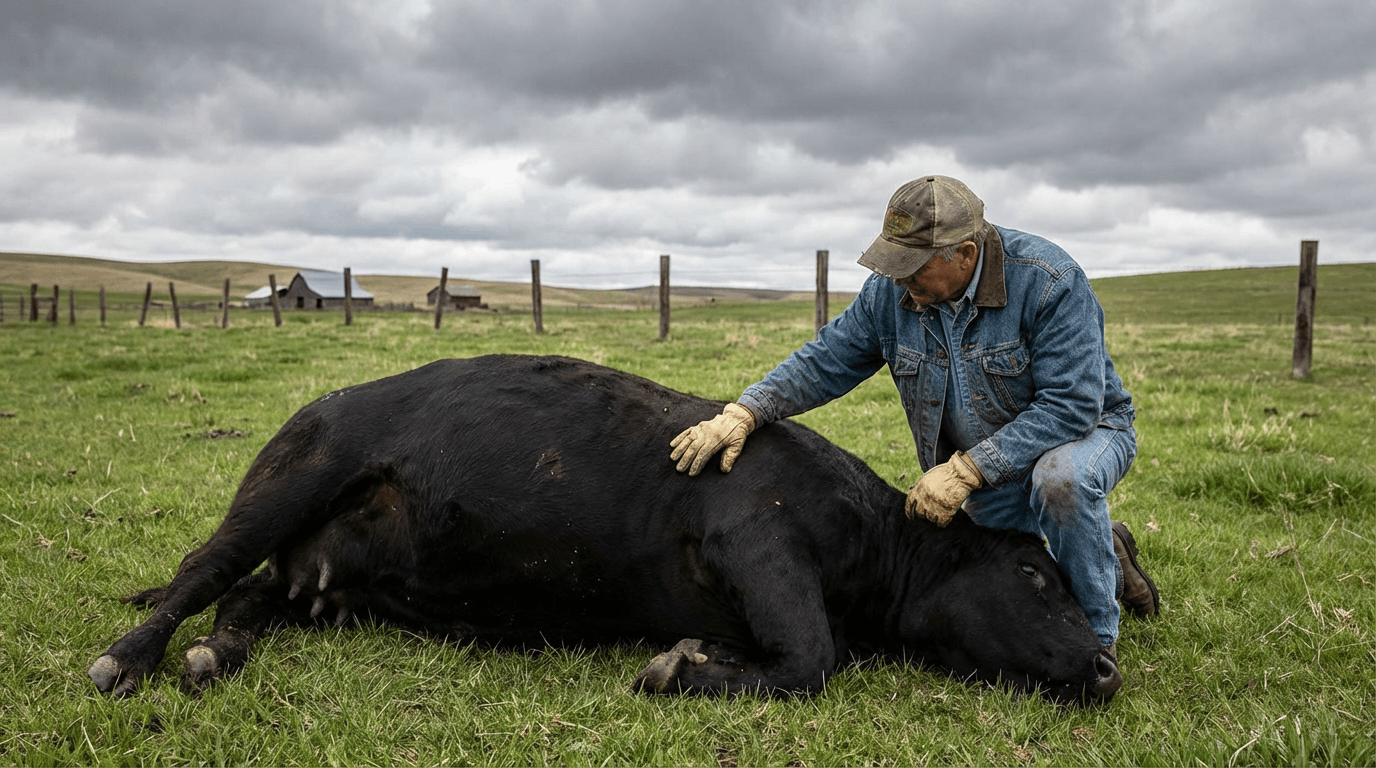
Cattle Bloat: Emergency Treatment, Prevention & When to Call the Vet
By FarmVetGuide Editorial Team · Published March 2026 · Updated March 2026 · Based on verified data from our directory of 9,500+ practices
Cattle bloat is one of the most dramatic and potentially fatal conditions a livestock producer will encounter. A healthy 1,200-pound cow can go from grazing normally to dead in under two hours when severe bloat cuts off blood flow and crushes the lungs. Yet bloat is also one of the most preventable conditions in cattle production — with the right knowledge, management practices, and rapid response protocols, most outbreaks and deaths are avoidable. This guide covers everything you need to know about cattle bloat: the two main types, how to recognize it, how to treat it in an emergency, and how to prevent it from happening in the first place.
Bloat affects beef and dairy cattle across every US region wherever lush legume pastures, wet grain rations, or feedlot conditions exist. Economic losses from bloat run into tens of millions of dollars annually in the US — not only from death losses but from reduced gains, management costs, and the stress-related production decline in animals that survive episodes. Understanding the biology of why bloat happens is the foundation of prevention. Managing the risk requires attention to pasture composition, transition feeding protocols, anti-bloat products, and constant observation during high-risk periods.
The Two Types of Cattle Bloat: Frothy and Free-Gas
The term "bloat" describes distension of the rumen with gas that cannot be eructated (belched) normally. But the mechanism differs fundamentally between the two main types, and this distinction drives the treatment approach. Getting the type wrong — and treating accordingly — can kill an animal rather than save it.
Frothy Bloat (Pasture Bloat / Primary Bloat)
Frothy bloat is the more common and more dangerous form.[1] It occurs when rumen gas becomes trapped in a stable foam — millions of tiny bubbles dispersed through the rumen contents — rather than accumulating as a separate gas cap above the liquid. The foam forms because certain feedstuffs, particularly legumes (alfalfa, clovers), contain soluble proteins, saponins, and pectin that act as surfactants and stabilize gas bubbles the rumen microorganisms generate during fermentation. Because the gas is distributed as tiny bubbles throughout the liquid phase rather than sitting above it as free gas, the normal eructation mechanism — which requires a free-gas cap to trigger the cardia — cannot function. Gas production continues while no gas escapes, and the rumen distends progressively.
Frothy bloat occurs almost exclusively on lush legume-dominant pastures or following heavy intake of rapidly fermentable feeds. The classic scenario: cattle turned onto rapidly growing alfalfa or clover pastures, especially in the morning when forage is wet with dew, after rain, or when the weather turns warm and plant growth accelerates. Bloat can begin within 15–30 minutes of animals entering the pasture and progress to life-threatening distension in 1–2 hours. A pasture that was safe last week may become high-risk as the legume fraction increases.
Free-Gas Bloat (Secondary Bloat / Secondary Ruminal Tympany)
Free-gas bloat occurs when normal gas production in the rumen is not impeded by foam, but the physical eructation mechanism is blocked. This can happen for many reasons: an esophageal obstruction (choke — food, foreign object, or tumor blocking the esophagus), physical compression of the esophagus by enlarged lymph nodes or an abscess in the chest, nerve damage affecting eructation (vagal indigestion), feedlot conditions where animals eat high-grain rations lying in certain positions, or simply a cow lying on her side on a slope with her rumen uphill.
Free-gas bloat is identified by passing a stomach tube: if gas is released freely and the bloat rapidly deflates, free gas is confirmed. Treatment for free-gas bloat focuses on removing the obstruction or repositioning the animal, not on administering anti-foaming agents. However, in a genuine emergency where the animal is in respiratory distress, relieving the gas immediately (by trocar if necessary) takes priority over diagnosis.
Feedlot Bloat
A third important presentation is feedlot bloat, which predominantly affects beef cattle on high-concentrate finishing rations. It has elements of both frothy and free-gas bloat and is associated with high starch rations, slug feeding, grain overload, and changes in rumen microbiome during the transition from forage to concentrate. Feedlot bloat tends to occur in the first 3–6 weeks of a high-grain finishing period and during rapid weather changes. It is a major cause of death in US feedlots, particularly in the Corn Belt and High Plains regions.
Recognizing Bloat: Early Signs and Clinical Progression
Speed of recognition determines whether a bloated animal survives. During high-risk periods — cattle on lush legume pastures, animals transitioning to high-grain rations — walk through and observe your herd every 1–2 hours. What you're looking for changes as the condition progresses.
Early Signs (First 30–60 Minutes)
The first visible sign of bloat is distension of the left flank — the area behind the last rib on the left side. In early bloat, the left paralumbar fossa (the hollow area normally visible above the left hip) begins to fill in and protrude. The animal may appear restless, switching its tail, looking at its flank, or standing apart from the herd. It may stop grazing. If you press on the left flank, it may feel drum-tight in free-gas bloat, or have a doughy, stable-foam quality in frothy bloat.
Critically, in early bloat many animals continue to graze briefly before the discomfort becomes severe. This is why observation frequency matters so much — an animal that looks normal at 8:00 AM may be in crisis by 10:00 AM on a high-risk morning.
Moderate Bloat (60–90 Minutes)
As distension increases, the left flank protrudes visibly and the rumen may bulge above the level of the backbone when viewed from behind. The animal becomes clearly uncomfortable, grinding its teeth (bruxism), repeatedly lying down and rising, kicking at its abdomen, and breathing with effort. Mouth breathing may begin as the distended rumen presses on the diaphragm. The animal refuses to eat. Heart rate begins to rise above 80–90 beats per minute.
Severe Bloat (90+ Minutes — Life-Threatening)
In severe bloat, the animal is in respiratory distress, breathing rapidly and shallowly with the mouth open. Tongue may be protruding and cyanotic (bluish-purple). Legs may be spread wide to maintain balance against the massive abdominal distension. The animal may collapse to its knees or fall. At this stage, blood is being shunted and cardiac function is compromised — death can occur within minutes of collapse if gas is not relieved immediately.
This is a true veterinary emergency. If you cannot reach a veterinarian immediately and the animal is in respiratory distress, you must act: either pass a stomach tube or use an emergency trocar to puncture the rumen through the left flank. Delay at this stage is fatal.
Severity Scoring Guide
| Grade | Description | Left Flank Appearance | Respiration | Action Required |
|---|---|---|---|---|
| 1 — Mild | Animal grazing or eating, mild unease | Slight fill of paralumbar fossa | Normal | Remove from pasture; monitor closely |
| 2 — Moderate | Clearly uncomfortable, not eating, switching tail | Left flank visibly distended | Slightly increased | Treat with anti-foam agent; call vet if no improvement |
| 3 — Severe | Distressed, bruxism, looking at flank, reluctant to move | Prominent distension above spine | Labored, 40–60/min | Immediate treatment; call vet immediately |
| 4 — Critical | Falling, mouth breathing, cyanosis, collapse imminent | Severe; may see above topline | Open-mouth; >60/min or irregular | Emergency decompression NOW; vet en route |
Emergency Treatment of Bloat on the Farm
Having the right supplies on hand before bloat season starts is not optional — it is essential. Animals have died because the producer had to drive 20 minutes to the farm store during the critical window. Your bloat emergency kit should include: a stomach tube (3/4-inch diameter × 8 feet length), a speculum or PVC mouth gag, poloxalene or simethicone anti-foaming agent, vegetable or mineral oil (for frothy bloat if no commercial agent is available), a trocar and cannula (last resort emergency decompression), and your veterinarian's phone number prominently posted.
Treatment Step 1: Move the Animal
The first action for any mildly to moderately bloated animal is to remove it from the problem pasture and move it to a drylot or different grazing area. Walk it — don't drive it — as movement stimulates eructation in some cases of mild bloat. Keep the animal upright; never let a bloated animal lie down, as this prevents eructation and worsens compression. Walking uphill stimulates belching in some animals. For very mild cases, this alone may resolve the bloat within 15–30 minutes.
Treatment Step 2: Anti-Foaming Agents
For confirmed or suspected frothy bloat, administer an anti-foaming agent immediately. The two most effective options:
- Poloxalene (Bloat Guard): 100–200 mL of a liquid poloxalene solution (or equivalent dose of granules dissolved in water) drenched orally. Most effective for alfalfa-origin frothy bloat.[2]
- Simethicone: Available OTC as Gas-X or similar. Give 400–800 mg (4–8 regular-strength tablets or equivalent liquid) crushed and drenched. Widely available at any pharmacy; keep it in your truck.[2]
- Mineral or vegetable oil: 250–500 mL drenched as a stop-gap if commercial agents are not available. Less effective than poloxalene or simethicone but can buy time.
- Dish soap (Dawn): 30–60 mL in 500 mL water, drenched — a widely used emergency folk remedy that does work by breaking foam surface tension. Not as reliable as commercial agents but better than nothing.
Use a drenching gun or large-bore syringe to administer. Ensure the animal is standing and swallowing — never drench a recumbent or unconscious animal. After drenching, walk the animal to stimulate eructation. You should see improvement within 15–30 minutes of effective anti-foam treatment if the diagnosis is correct.
Treatment Step 3: Stomach Tube Passage
If anti-foaming agents do not produce rapid improvement, or if you suspect free-gas bloat, pass a stomach tube. Lubricate the tube with oil or water. Use a speculum or PVC pipe to keep the animal from biting through the tube. Pass the tube through the mouth, down the esophagus — you should feel it pass without resistance — and into the rumen. Blow into the tube and listen for gurgling sounds to confirm rumen placement (as opposed to trachea placement, which would result in airflow without gurgling and could cause aspiration pneumonia). If free gas is present, it will rush out when the tube reaches the rumen gas cap. If frothy material comes out, you have confirmed frothy bloat; infuse poloxalene or simethicone through the tube if you have not already drenched.
Stomach tube passage requires practice. If you have not done it before, have your veterinarian demonstrate the technique during a farm visit before you need to use it in an emergency. Many experienced cattle producers keep a stomach tube on hand and are proficient with it — this skill can save lives when a vet is 45 minutes away and an animal is in grade 3 bloat.
Emergency Step 4: Trocar and Cannula (Last Resort)
If the animal is in grade 4 (critical) bloat — falling, cyanotic, unable to breathe — and a stomach tube cannot relieve the gas (either because you can't pass one quickly enough or frothy material is blocking the tube), emergency rumen puncture with a trocar and cannula is indicated. This is a life-saving procedure but carries risks: peritonitis if the cannula is not properly placed and secured, infection, rumen leakage.[1] It should only be used when the alternative is certain death.
The procedure: identify the left paralumbar fossa — the center of the triangular depression behind the last rib, below the transverse processes of the lumbar vertebrae, and above the flank fold. Clip and disinfect the area if time allows. Drive the trocar firmly through the skin and rumen wall with a single decisive push. Remove the inner trocar spike, leaving the cannula in place. Gas (and in frothy bloat, foam) will exit. Leave the cannula in place and call your veterinarian immediately — the animal needs proper wound care, antibiotics, and monitoring. A rumen cannula left in place improperly can cause serious complications including peritonitis.
If a trocar is not available, a large-bore needle (16 gauge, 3.5 inches) can temporarily relieve gas pressure while you get professional help. This is not ideal — the needle clogs quickly with frothy material — but in a dying animal, it buys time.
Frothy Bloat Prevention: Pasture Management Strategies
Preventing frothy bloat on legume pastures is far more effective and economical than treating it after it occurs. The key strategies work by reducing the legume content of the diet, reducing the rate of forage fermentation, or interfering with foam formation.
Understanding Bloat Risk in Pasture Legumes
Not all legumes carry equal bloat risk. Alfalfa is the highest-risk species — soluble leaf proteins, particularly chloroplast proteins, are powerful foam stabilizers. Red clover is high risk. White clover is high risk, especially young growth. Subterranean clover varies. Birdsfoot trefoil and sainfoin are low-risk legumes that do not cause frothy bloat because they contain condensed tannins that bind and precipitate the foam-stabilizing proteins. Legume grasses like sericea lespedeza are similarly low-risk. Incorporating these tannin-containing species into pasture mixes is a long-term preventive strategy.
Bloat risk on legume pastures is highest when: the legume fraction exceeds 50% of the stand; plants are growing rapidly and producing high-protein new growth; plants are wet with dew or rain; weather changes from cool to warm suddenly; and cattle are hungry or unaccustomed to the pasture. The lowest-risk conditions: legumes are in full bloom or seed-set stage (lower soluble protein); dry weather; cattle are accustomed to the pasture and fill on dry hay first.
Pre-Grazing Management
The most reliable prevention for daily grazing situations: never turn hungry cattle directly onto high-risk legume pastures. Fill cattle with dry hay or stockpiled grass before moving them to the legume pasture. Cattle with a full rumen of long-stem forage have a physical buffer that slows fermentation rate and reduces the immediate legume intake burst that triggers bloat. This is the single most practical recommendation for small operations.
Avoid grazing legume-heavy pastures in the morning when dew is present, after rain, or when temperatures are rapidly warming following a cool period. Wait until mid-morning after dew has dried or even midday during high-risk weather. Graze these pastures in the afternoon when possible. If cattle must go onto a risky pasture at a high-risk time, check them every 30 minutes for the first 2 hours.
Poloxalene (Bloat Guard) — Continuous Feeding Strategy
Poloxalene (Bloat Guard) is an FDA-approved, commercially available surfactant that, when consumed continuously before and during exposure to bloat-risk pasture, prevents stable foam formation in the rumen. It is available as a granular supplement added to grain or salt, as a liquid feed additive, and as a molasses-based block (Bloat Guard block). The critical word is continuously — poloxalene must be consumed at an effective dose every day during the risk period. It does not work if consumed only occasionally.
The standard dosing recommendation is 11 grams per 100 pounds of body weight per day (approximately 1 gram per 100 lb body weight per day in the block formulation, which drives higher intakes). For a 1,200-pound beef cow, that's approximately 132 grams per day. Achieving reliable, consistent intake across the entire herd in a free-choice system is challenging — dominant animals over-consume while timid animals under-consume. Mineral-based delivery helps but is not foolproof. For highest-risk operations, top-dressing poloxalene on grain or in a total mixed ration ensures accurate individual intake.
Monensin for Feedlot and Pasture Bloat Prevention
Monensin (Rumensin) is an ionophore antibiotic that modifies the rumen microbiome, reducing methane production and shifting fermentation away from the rapid-fermentation pathways that generate excess gas. It significantly reduces both frothy and feedlot bloat incidence when fed continuously through the risk period. Monensin is available in various delivery forms including premixed supplements, free-choice minerals, and controlled-release capsules (Rumensin CRC) that provide 150 days of continuous release — eliminating compliance issues with free-choice delivery.
Monensin also improves feed efficiency (4–8% improvement in gain per unit of feed), which provides an economic benefit beyond bloat prevention. It requires a medicated feed license for inclusion in bulk feeds but is available in branded beef cattle supplement products. Work with your veterinarian or nutritionist to incorporate it appropriately into your feeding program if bloat is a persistent issue.
Grazing Management and Pasture Modification
Managing the legume content of your pastures below 50% of the stand reduces bloat risk dramatically. Mixed grass-legume stands with orchard grass, fescue, or other grasses dilute the legume fraction and slow fermentation rate. Overseeding high-legume pastures with grass, or managing fertility to favor grass in the stand, are longer-term strategies. Transition cattle gradually to new pastures — allow access for increasing periods (2, 4, 6 hours per day) before full-time grazing, with dry hay or grass available at all times.
Wilting alfalfa before feeding in a drylot (cutting and allowing to wilt 24–48 hours) reduces bloat risk significantly — cell membranes break down, reducing soluble protein content. This is standard practice for dairy operations feeding high-risk legumes as cut forage. For hay production, alfalfa cut at or after 10% bloom has lower soluble protein and lower bloat risk than pre-bloom early-cut alfalfa — though early cut maximizes yield and quality for other purposes.
Feedlot Bloat Prevention and Management
Feedlot bloat is distinct from pasture bloat in its causes and management, though the clinical emergency is the same. In feedlots, bloat is most common during the first 21–42 days on high-concentrate finishing rations and during weather events (particularly rapid temperature drops or wet weather) that disrupt feeding patterns.
Transition Feeding Protocols
The most important feedlot bloat prevention measure is a gradual, well-managed step-up protocol from receiving ration (typically 65–75% forage) to finishing ration (typically 85–92% concentrate). Moving cattle through 4–6 ration steps over 21–28 days, with each step increasing concentrate by no more than 10–15 percentage points, allows the rumen microbial population to adapt to high-starch fermentation conditions. Abrupt transitions from high-forage to high-concentrate rations are a major cause of feedlot bloat and grain overload.
Consistent feeding times and feed delivery that prevents slug feeding (all cattle consuming a full day's ration in 1–2 hours) reduce bloat risk. Total mixed rations (TMR) are less bloat-prone than grain delivery on top of forage because they ensure every mouthful contains the correct proportion of roughage. Minimum effective particle length of roughage (at least 2–3 inches) is important; finely ground or pelleted roughage has reduced effectiveness as a physical buffer.
Monitoring and Early Intervention in Feedlots
Feedlot pen riders should observe all animals at least twice daily, particularly at dawn and 2–3 hours post-feeding during high-risk periods. Train pen riders to distinguish cattle that are simply resting (normal left flank) from those with early bloat (filling of the left paralumbar fossa). Mark or pull any animal showing signs of bloat immediately — early intervention takes minutes; late intervention may require emergency surgery or result in death.
High-risk animals include: newly arrived cattle unfamiliar with concentrate rations, cattle that missed feedings and are hungry, thin cattle with poor rumen fill on arrival, and individual animals that are known "slug feeders." Monitoring individual feeding behavior through precision feeding technology or pen-level bunk scoring helps identify high-risk individuals before they develop clinical bloat.
Free-Gas Bloat: Special Considerations
Free-gas bloat is less common than frothy bloat but has a different diagnostic approach and treatment priority. The key distinguishing feature is that passing a stomach tube relieves the bloat immediately if free gas is the cause — gas rushes out as the tube enters the rumen. If the tube doesn't relieve the bloat, consider frothy bloat (tube may be blocked by foam), tube misplacement (in trachea), or physical obstruction requiring veterinary diagnosis.
Esophageal Obstruction (Choke)
The most common cause of free-gas bloat in individual cattle is esophageal choke — food material (apples, ears of corn, potatoes, sugar beets, cattle cubes fed too quickly) or a foreign object lodged in the esophagus. The animal shows the classic signs of choke: drooling, repeated swallowing attempts, neck extended, obvious discomfort, and progressive bloat as the esophagus remains blocked. You may be able to see or feel the obstruction in the lower neck if it is in the cervical esophagus.
Treatment: attempt to massage the obstruction toward the stomach through the neck if it is in the cervical esophagus and the object is soft (food material). Never push hard or force objects — esophageal rupture is catastrophic. If the obstruction cannot be dislodged by gentle massage, call a veterinarian. Esophageal choke that doesn't resolve within 30 minutes needs veterinary intervention — the esophagus can develop pressure necrosis and rupture from prolonged obstruction. While you wait, maintain the animal upright and try to relieve the bloat via stomach tube if the obstruction is distal enough to allow passage.
Vagal Indigestion
Vagal indigestion (also called vagal syndrome, Hoflund syndrome) is a complex of conditions caused by damage to branches of the vagus nerve that control rumen motility and forestomach function. Causes include traumatic reticuloperitonitis (hardware disease), lymph node abscesses, liver abscesses that expand to compress vagal branches, and post-surgical complications. Affected cattle develop progressive, recurrent free-gas bloat that does not respond permanently to stomach tube passage — the gas relieves temporarily but returns within hours because the underlying eructation mechanism is permanently impaired.
This is a veterinary diagnosis requiring physical examination, rectal palpation, and often ultrasound. Some cases of vagal indigestion are treatable (particularly hardware disease responding to magnets and antibiotics); others require surgical intervention or euthanasia. Any cow with recurrent free-gas bloat that does not have an obvious dietary cause should be evaluated by a veterinarian promptly.
When to Call the Veterinarian for Bloat
The following situations require immediate veterinary contact. Know your vet's emergency number, your nearest after-hours large animal clinic, and the driving time from each, before bloat season begins.
Call Immediately
- Grade 3–4 bloat — severe distension with respiratory distress, mouth breathing, or imminent collapse. Call while you are beginning emergency treatment.
- Multiple animals bloated simultaneously — suggests a pasture-level problem requiring urgent management change and possible treatment of the entire affected group.
- Anti-foam treatment and stomach tube have not relieved the bloat within 30 minutes — the animal may need emergency surgical intervention (rumenotomy).
- Animal is recumbent and cannot rise — prognosis worsens dramatically with recumbency; this animal needs professional care immediately.
- Choke that cannot be relieved by gentle massage — esophageal rupture risk increases with time.
- Animal collapses after bloat is relieved — sudden release of pressure can cause cardiovascular collapse; the animal may need IV fluids and cardiac support.
- Suspected vagal indigestion or recurrent free-gas bloat — requires diagnostic workup.
Same-Day Consultation
- Bloat that recurs within 24 hours of treatment
- Any single animal with grade 2 bloat not associated with obvious pasture risk factors
- Animals showing signs of hardware disease (reluctance to walk, grunting, arched back, bloat) that may have preceded vagal indigestion
- Feedlot pen with more than 2–3% bloat incidence in a single week
Estimated Costs for Veterinary Bloat Treatment
| Service | Typical Cost Range | Notes |
|---|---|---|
| Farm call (emergency, after hours) | $150–$400 | Base fee; mileage and procedures extra |
| Stomach tube passage (vet-performed) | $50–$150 | Included in farm call in many practices |
| Trocar placement (emergency) | $100–$250 | Wound care and cannula; antibiotic follow-up extra |
| Emergency rumenotomy (surgery) | $600–$2,000+ | Standing flank surgery; sedation, aftercare |
| Hardware disease workup (magnet, antibiotics) | $150–$350 | Magnet, exam, antibiotic course |
| IV fluids and supportive care (post-bloat shock) | $200–$600 | Per treatment; may require multiple |
| Diagnostic workup (vagal indigestion) | $300–$800 | Bloodwork, ultrasound, rectal exam |
| Prognosis counseling / euthanasia | $50–$200 | If animal is not viable |
Hardware Disease and Bloat: The Reticuloperitonitis Connection
Traumatic reticuloperitonitis — "hardware disease" — is caused by the ingestion of metallic foreign objects (wire, nails, staples, fence clips) that penetrate the reticulum wall, causing local or diffuse peritonitis. It is common in cattle because they graze non-selectively and swallow metallic debris easily. Hardware disease can directly cause free-gas bloat by damaging vagal nerve branches, and it causes secondary free-gas bloat in many cases through the pain-induced reduction in rumen motility.
Recognizing Hardware Disease
Classic signs: sudden onset of decreased milk production or appetite, reluctance to walk or go downhill (abdominal pain is worse going downhill), arched back, grunting when getting up or when firm pressure is applied to the xiphoid (sternum) area, and sometimes mild fever (102.5–104°F). Bloat may be present but is often mild and secondary. The pain grunt test — a firm, upward push on the sternum while the cow is standing — often elicits a grunt or groan in hardware-positive animals.
Treatment involves rumen magnet placement (to attract and hold the foreign body), antibiotics (to address peritonitis), and sometimes surgical removal if the magnet cannot capture the object. Prevention: use rumen magnets as a standard practice in adult cattle (one magnet per cow, placed once), keep pastures and hay storage areas clear of metal debris, and be careful with wire baling twine that cows may ingest.
Post-Bloat Care and Monitoring
An animal that has experienced significant bloat needs monitoring and supportive care in the 24–72 hours following the episode, even after the immediate bloat is resolved. Complications include:
- Aspiration pneumonia: If any anti-foam drench was administered to a recumbent or semi-conscious animal, aspiration is possible. Monitor for fever, rapid breathing, and reduced appetite 24–48 hours later.
- Cardiovascular collapse: Sudden decompression of a severely bloated rumen releases pressure on the vena cava and diaphragm, sometimes causing shock. Keep the animal quiet after decompression and monitor heart rate and mucous membrane color.
- Rumenitis and secondary infections: If the rumen was compromised by extreme distension or if a trocar was used, secondary rumenitis or peritonitis can develop. Antibiotics (prescribed by your veterinarian) may be indicated.
- Trocar site infection: If a trocar was used, the puncture site requires antibiotic treatment (injectable or locally applied) and monitoring for signs of cellulitis or abscess formation. This is a veterinary responsibility if possible.
- Recurrent bloat: Some animals become recurrent bloaters due to underlying vagal indigestion or esophageal damage from previous episodes. These animals need veterinary workup and may not be economically viable to maintain in the herd.
Economic Impact of Bloat and Cost-Benefit of Prevention
Bloat deaths are only the most visible economic cost. Sublethal bloat causes significant hidden losses: reduced average daily gain during and after episodes, reduced milk production in dairy cows, stress-related immunosuppression increasing susceptibility to other diseases, labor costs for monitoring and treatment, and the management overhead of risk-period pasture restriction. A single bloat death in a breeding cow represents $2,000–$4,000 in replacement costs plus lost production.
| Cost Category | Estimated Annual Cost (100-cow beef herd with bloat problems) |
|---|---|
| Death losses (1% death rate at $2,500 avg value) | $2,500 |
| Reduced ADG in bloat-affected animals (subclinical) | $500–$1,500 |
| Veterinary treatment costs | $300–$800 |
| Labor for monitoring and treatment | $200–$500 |
| Total estimated annual loss | $3,500–$5,300 |
Prevention costs compare favorably. Poloxalene blocks run $1.50–$3.00 per cow per month for the grazing season (3–4 months), or $4.50–$12.00 per cow per season.[4] Monensin controlled-release capsules cost $8–$15 per animal. For a 100-cow herd, seasonal prevention with poloxalene blocks costs approximately $450–$1,200 — well below the expected losses from uncontrolled bloat on high-risk pastures.
Bloat by Region: US-Specific Considerations
Bloat risk and management vary significantly by US region, primarily based on legume species, climate, and production system.
| Region | Primary Bloat Risk | Peak Season | Key Prevention Strategy |
|---|---|---|---|
| Midwest / Corn Belt (IA, IL, IN, OH, MN) | Alfalfa pasture; feedlot grain | May–June (spring flush); Sept–Oct (regrowth) | Poloxalene; hay fill before turnout; monensin in feedlot |
| Pacific Northwest (WA, OR) | White/red clover; orchardgrass-clover mixes | April–June; Sept–Oct | Delay morning grazing; birdsfoot trefoil as alternative |
| Northern Plains (ND, SD, NE, KS) | Alfalfa; range bloat on broadleaf weeds after rain | June–July; post-rain events | Poloxalene; monensin CRC for range cattle |
| Southeast (AL, GA, MS, LA, TN) | Crimson clover; arrowleaf clover; annual legumes | March–May | Limit access to peak clover pastures; hay fill; poloxalene |
| Mid-Atlantic (VA, NC, MD, PA) | Alfalfa; red/white clover; ladino clover | May–June; Sept | Mixed grass-legume stands; FAMACHA-analog observation frequency |
| California / Southwest | Irrigated alfalfa; annual clovers | Spring and post-irrigation growth flushes | Wilted alfalfa feeding; trough delivery rather than direct grazing |
| Mountain West (CO, WY, MT, ID) | Irrigated alfalfa; aftermath grazing | After first/second cutting; fall aftermath | Hay fill before turnout; monensin in backgrounding |
Frequently Asked Questions About Cattle Bloat
How fast can cattle die from bloat?
In severe frothy or free-gas bloat, cattle can die within 1–2 hours of the onset of serious distension.[1] Rapid respiratory compromise and cardiovascular failure from pressure on the diaphragm and vena cava are the immediate causes. This is why checking cattle every 1–2 hours during high-risk periods is non-negotiable — a cow that looks normal at 7 AM can be dead by 9 AM on a high-risk morning without observation.
Can cattle recover fully after a severe bloat episode?
Many cattle recover fully after even severe bloat if treated quickly enough. However, some develop complications — aspiration pneumonia from improper drenching, esophageal damage, peritonitis after trocar placement, or cardiovascular effects. Animals with underlying vagal indigestion may have recurrent episodes. Overall, cattle that are treated within the first 2 hours and do not require emergency rumenotomy have a good prognosis for full recovery.
Is clover always dangerous for cattle?
Not all clover is equally dangerous. White clover and red clover on lush, rapidly growing stands are high-risk for frothy bloat. Birdsfoot trefoil and sericea lespedeza (tannin-containing legumes) do not cause frothy bloat.[3] Bloat risk on clover pastures depends heavily on the proportion of legume in the stand, plant growth stage (early vegetative highest risk; bloom lowest risk), and moisture conditions. Properly managed mixed grass-clover stands with less than 30–40% legume are substantially lower risk than pure legume stands.
Does bloat only happen in spring?
No. Bloat can occur whenever cattle have access to high-risk legumes or rapidly fermentable feed. On alfalfa pastures, risk is high in spring growth, after cutting regrowth in summer, and on fall aftermath growth. Feedlot bloat occurs year-round but peaks during weather transitions and early receiving periods. In the Southeast, winter annual clovers (crimson, arrowleaf) create a late-winter/spring bloat risk distinct from alfalfa risk. Summer-dormant clover that regrows after drought-breaking rains can trigger sudden bloat outbreaks in late summer or fall in some regions.
Can I use cooking oil instead of commercial anti-foam agents?
Yes, in an emergency. Vegetable oil (250–500 mL) drenched orally will break some foam and can buy time, though it is less reliable and slower-acting than poloxalene or simethicone. The same applies to mineral oil. Dish soap (30–60 mL of Dawn in water) is a widely used field remedy that also provides some anti-foam effect. In a life-or-death situation, any of these is better than waiting. That said, having commercial anti-foam products on hand at the start of bloat season is strongly recommended — the cost difference is trivial compared to a dead cow.
What is the best way to prevent bloat in a cow-calf operation?
The most effective combination: (1) never turn hungry cattle onto high-risk legume pastures — fill with hay or grass first; (2) avoid morning grazing during dew or right after rain on alfalfa or clover-heavy pastures; (3) use poloxalene blocks or top-dress poloxalene during high-risk periods; (4) observe cattle every 1–2 hours during the first 2 weeks on high-risk pastures and during known risk periods; (5) have treatment supplies (stomach tube, simethicone or poloxalene drench) on hand. For repeat-problem pastures, consider over-seeding with grasses to reduce legume content or transitioning to birdsfoot trefoil instead of clover.
My vet is 45 minutes away. Should I invest in a stomach tube kit?
Absolutely. A basic stomach tube kit ($20–$50 from livestock supply stores) and a bottle of poloxalene drench or a supply of simethicone are essential equipment for any cattle operation. Learn to pass a stomach tube before you need to use it — have your veterinarian demonstrate the technique during a routine farm visit and practice on healthy animals. This single skill, combined with the right supplies, can prevent bloat deaths in situations where a vet simply cannot arrive in time. The investment is minimal; the payoff is potentially thousands of dollars in animal value and the stress of watching a preventable death.
Building a Bloat Emergency Response Plan
Before high-risk pasture season, write down and post in your barn a simple emergency response plan. It should include: your veterinarian's main number and after-hours number; your nearest large animal emergency clinic and estimated drive time; the location of your bloat emergency supplies; a brief symptom-to-action flowchart; and the name and contact of a neighbor with cattle experience who could assist in an emergency. Laminate it and put it where everyone who works with your cattle can see it.
Run a drill at the start of each bloat season: locate your stomach tube, check that your poloxalene drench or simethicone supply is adequate, and review the FAMACHA-equivalent observation protocol for your operation. Share the plan with any family members or employees who may be first on scene during a bloat event. Preparedness costs nothing; unpreparedness costs cattle.
Find a Large Animal Vet Near You
Cattle bloat — especially when it strikes multiple animals at once or involves complicated cases like vagal indigestion, esophageal obstruction, or post-bloat complications — requires experienced large animal veterinary care. Building a relationship with a trusted cattle vet before a crisis strikes is one of the most valuable investments you can make in your operation's resilience. Your vet can review your specific pasture situation, help develop a customized prevention protocol, demonstrate stomach tube technique, and be the person you call when a cow is in grade 4 distress at 6 AM on a Sunday.
FarmVetGuide is the most comprehensive directory of large animal veterinarians in the United States, with listings for over 9,500 practices across all 50 states. Search by county to find cattle-experienced vets near you — including emergency availability, mobile farm-call service, and feedlot consultation specialists.
Find a cattle vet in your county at FarmVetGuide.com — the trusted directory for livestock producers across America.
Sources & References
This guide references peer-reviewed research and guidelines from leading veterinary organizations. All medical information has been reviewed for accuracy against these authoritative sources.
- Merck Veterinary Manual — Bloat in Ruminants: Causes, Types, and Treatment. Last accessed March 2026.
- Merck Veterinary Manual — Drugs for Specific Purposes in the Ruminant Digestive System (Poloxalene, Simethicone). Last accessed March 2026.
- University of Minnesota Extension — Benefits of Legume-Grass Mixtures and Bloat Risk Reduction. Last accessed March 2026.
- Merck Veterinary Manual — Prevention of Common Nutrition-Related Disorders in Beef Cattle (Ionophores, Bloat Prevention). Last accessed March 2026.
- University of Minnesota Extension — Grazing and Pasture Management for Cattle. Last accessed March 2026.
- Merck Veterinary Manual — Traumatic Reticuloperitonitis in Cattle (Hardware Disease and Secondary Bloat). Last accessed March 2026.
- American Association of Bovine Practitioners (AABP) — Clinical Guidelines for Bovine Practitioners. Last accessed March 2026.