Bovine Respiratory Disease (BRD): Complete Guide for Cattle Producers
By Thomas Blanc, Founder · Published March 2026 · Updated March 2026 · Based on verified data from our directory of 9,500+ practices
Bovine respiratory disease — better known as BRD, shipping fever, or pneumonia complex — is the single most expensive disease affecting beef and dairy cattle operations in the United States. It costs the industry an estimated $800 million to $1 billion every year in treatment costs, lost performance, and death losses. If you run stocker cattle, feed a lot of calves, or manage a cow-calf operation, BRD is not a hypothetical — it is a threat you will face, likely every single year. Understanding how it works, how to prevent it, and when to act aggressively can mean the difference between a profitable calf crop and a financial disaster. This guide covers everything a working cattle producer needs to know about BRD: the biology behind it, how to catch it early, treatment protocols, costs, prevention strategies, and when to call your large animal veterinarian for help.
What Is Bovine Respiratory Disease?
Bovine respiratory disease is not a single pathogen — it is a disease complex that results from the interaction of multiple stressors, viral pathogens, and bacterial opportunists attacking a calf's respiratory system simultaneously. The disease primarily targets the lower respiratory tract, causing bronchopneumonia that can range from mild and self-limiting to rapidly fatal.
The BRD Triad: Why It is So Hard to Beat
Veterinary researchers often describe BRD using what is called the Leukens Triangle — three interacting factors that must align for disease to develop:
- The animal: Immune status, age, nutritional plane, previous disease exposure, and stress history all determine how vulnerable a calf is. Young calves with inadequate passive immunity from colostrum are the most susceptible. Stressed, commingled, or nutritionally compromised cattle are easy targets regardless of age.
- The environment: Weather changes, temperature swings, humidity, poor ventilation, overcrowding, mud, dust, and poor nutrition all suppress immune function and damage the respiratory epithelium — the first line of defense against pathogens.
- The pathogen: Both viral and bacterial agents are involved. Viruses typically strike first, weakening defenses and setting the stage for bacterial invasion. It is the bacteria that do the most physical damage to lung tissue.
The key insight here is that BRD is fundamentally a management disease. Stressors are the fuel. Pathogens are the spark. Remove enough stressors and you reduce the risk dramatically, even in the presence of BRD pathogens.
Primary Viral Pathogens
Several viruses play important roles in predisposing cattle to BRD. The most important are:
- Bovine Respiratory Syncytial Virus (BRSV): The most common and arguably the most damaging of the BRD viruses. BRSV destroys the cilia lining the airways, impairing the mechanical clearance mechanism that normally sweeps pathogens out before they can establish infection. It is particularly dangerous in calves under 6 months old. BRSV outbreaks often appear in late fall and early winter.
- Bovine Viral Diarrhea Virus (BVDV): BVDV is an immunosuppressor. Even transient BVDV infection causes a measurable dip in white blood cell counts and leaves cattle vulnerable to every other pathogen for weeks. Persistently infected (PI) animals — cattle infected in utero before developing immune competence — shed massive quantities of virus continuously and act as amplifiers within a herd. A single PI animal in a pen can devastate the entire group.
- Infectious Bovine Rhinotracheitis (IBR, Bovine Herpesvirus-1): IBR causes severe upper respiratory inflammation and is highly contagious. Like most herpesviruses, it establishes latency and can reactivate under stress. Cattle that recover become carriers. IBR is the classic shipping fever trigger.
- Bovine Parainfluenza-3 (PI3): PI3 alone is a relatively mild pathogen, but it synergizes with other viruses to impair mucosal immunity and predispose cattle to bacterial pneumonia.
- Bovine Coronavirus (BCoV): Increasingly recognized as an important BRD pathogen, BCoV causes respiratory disease as well as enteric disease (winter dysentery in adults). Commingled feedlot calves are especially vulnerable.
Primary Bacterial Pathogens
After viruses compromise the respiratory tract, bacteria move in and cause the pneumonia that is responsible for most of the tissue damage, morbidity, and death. The four most important bacterial pathogens in BRD are:
- Mannheimia haemolytica: Previously called Pasteurella haemolytica, this is the most common and most virulent bacterial pathogen in BRD. It normally lives harmlessly in the tonsils and nasopharynx of healthy cattle but can proliferate explosively when stress or viral infection suppresses local defenses. Mannheimia produces a powerful toxin called leukotoxin that destroys the white blood cells sent to fight it, making infection especially difficult to control once established.
- Pasteurella multocida: Often found alongside Mannheimia, P. multocida tends to cause a more chronic, fibrinous pneumonia. It is an important pathogen in calves and in cattle that relapse after initial antibiotic treatment.
- Histophilus somni (formerly Haemophilus somnus): This organism can cause a devastating form of BRD that spreads beyond the lungs to cause septicemia, thrombotic meningoencephalitis (TME), myocarditis, and polyarthritis. Cattle infected with Histophilus often deteriorate rapidly and can die within 24 hours of showing first signs.
- Mycoplasma bovis: Mycoplasma is uniquely problematic because it lacks a cell wall, making it naturally resistant to beta-lactam antibiotics. Mycoplasma infections tend to cause chronic, non-resolving pneumonia with joint infections and ear infections as complications. Cattle with Mycoplasma-associated BRD frequently relapse even after appropriate antibiotic treatment and may ultimately require salvage or euthanasia. The organism is widespread in the cattle population and spreads readily through commingled groups.
Risk Factors and High-Risk Periods
BRD does not strike randomly. Certain situations dramatically elevate risk, and every cattle producer should know when their animals are most vulnerable.
The Stressors That Open the Door
Stress is the foundational risk factor for BRD. The physiological stress response releases cortisol, which directly suppresses immune function. Common stressors that set the stage for BRD include:
- Weaning: Abrupt weaning is one of the most stressful events in a calf's life. Separation anxiety, dietary change, and loss of passive maternal immunity create a perfect window for BRD. Calves typically peak in BRD risk in the first 2 to 3 weeks after weaning.
- Transport: Hauling cattle stresses them physically and psychologically. Cattle in transit are exposed to temperature fluctuations, dehydration, forced activity, and the respiratory secretions of other animals. Studies show that even a 4-hour haul can measurably suppress immune function. Longer hauls compound the effect. This is why the disease is often called shipping fever.
- Commingling: Mixing cattle from multiple sources is one of the highest-risk scenarios in commercial beef production. Each group of cattle carries its own microbial community. When they mix, animals encounter pathogens to which they have no immunity, and stress amplifies transmission risk.
- Weather changes: Cold, wet, windy weather is classically associated with BRD outbreaks. Rapid temperature drops — especially drops greater than 20 degrees F over 24 hours — are reliable predictors of BRD flare-ups in stocker and feedlot cattle.
- Poor nutrition: Cattle arriving at a new location depleted of energy, protein, or trace minerals (copper, zinc, selenium, vitamin E) have impaired immune responses. Backgrounded cattle that are thin at the time of stress are at higher risk.
- Dust and poor ventilation: Airborne dust particles carry pathogens deep into the respiratory tract and physically damage the mucosal lining. Confinement barns with inadequate ventilation allow pathogen concentrations to build in the air.
High-Risk Animal Categories
| Category | Risk Level | Key Reason |
|---|---|---|
| Freshly weaned, commingled beef calves | Very High | Multiple simultaneous stressors plus pathogen mixing |
| Newly received feedlot cattle (days 1 to 45) | Very High | Transport stress plus commingling plus diet change |
| Sale barn cattle (2 or more owner changes) | Very High | Unknown health history plus maximum pathogen exposure |
| Unvaccinated calves under 6 months | High | Maternal immunity waning, no vaccine protection |
| Calves with unknown colostrum status | High | May lack passive immunity to key pathogens |
| PI-BVDV calves or calves from PI dams | Extreme | Continuously immunosuppressed, amplify BVDV spread |
| Dairy calves (especially Holstein steers) | High | Often poor colostrum management, early separation |
| Mature cows post-weaning or post-calving | Low to Moderate | More robust immunity, fewer stressors typically |
Seasonal Patterns
BRD is a year-round threat but has distinct seasonal peaks tied to weaning cycles, cattle marketing patterns, and weather:
- Fall (September through November): The primary BRD season in beef country. Spring-born calves are weaned and sold, stocker operators are buying and backgrounding, feedlots are filling pens. Cooler, wetter weather arrives simultaneously. The combination of peak cattle movement and deteriorating conditions creates the highest-risk window of the year.
- Winter (December through February): BRD risk remains elevated, particularly for cattle in confinement. BRSV outbreaks are most common in late fall and early winter. Cold stress compounds other risk factors.
- Spring (March through May): Fall-born calves are being weaned. Some spring BRD activity, particularly in northern states as weather remains variable.
- Summer (June through August): Generally lowest risk, but heat stress — especially in feedlot cattle on high-energy diets — can predispose to BRD flare-ups in August as temperatures begin fluctuating more dramatically.
Recognizing BRD: Signs and Scoring Systems
Early detection is the single most important thing you can do to improve BRD outcomes. Studies consistently show that cattle treated on day 1 of visible illness respond far better than cattle treated on day 3 or later. The challenge is that cattle are prey animals hardwired to hide signs of weakness, which means they will often not look dramatically sick until the disease is already advanced.
Early Warning Signs
Train yourself and your crew to catch cattle at the earliest stage of illness. Early BRD often looks subtle:
- Dull, slightly depressed attitude — the calf is off but not dramatically sick
- Ears dropped, hanging lower than normal
- Standing away from the bunk or water, or slow to approach feed
- Slightly increased respiratory rate at rest (normal is 24 to 36 breaths per minute)
- Mild nasal discharge — clear, serous, or slightly cloudy
- Eyes may appear slightly dull or watery
- Slight reluctance to move
These subtle signs can easily be missed if you are not actively looking. The best practice is to visually observe every pen of cattle every day — ideally twice a day during high-risk periods — and learn what normal looks like for your animals so that slightly off becomes obvious.
Moderate and Advanced Signs
As BRD progresses, signs become unmistakable but the prognosis worsens with every hour of delay:
- Obvious depression, reluctance to move, gaunt appearance
- Open-mouth breathing or labored breathing
- Audible respiratory sounds — grunting, wheezing, or crackling
- Elevated rectal temperature (above 104 degrees F is significant; above 106 degrees F is severe)
- Thick, purulent nasal discharge (yellow-green)
- Coughing, particularly on exertion or when moved
- Sunken eyes, dehydration
- Rapid weight loss — BRD calves can lose 2 to 3 lbs per day during acute illness
Clinical Scoring System for BRD
Several standardized scoring systems have been developed to help producers and pen riders identify BRD cases consistently across employees and operations:
| Sign | Score 0 | Score 1 | Score 2 | Score 3 |
|---|---|---|---|---|
| Appearance | Alert, normal | Slightly dull | Dull, depressed | Severely depressed |
| Nasal discharge | None | Clear, serous | Cloudy, moderate | Purulent, profuse |
| Eye discharge | None | Slight watery | Moderate cloudy | Heavy purulent |
| Ear posture | Normal | Slightly drooped | One ear drooped | Both ears drooped |
| Respiratory | Normal | Slightly elevated rate | Labored, rapid | Open-mouth, distressed |
| Rectal temp (F) | Below 103.5 | 103.5 to 104.0 | 104.0 to 105.0 | Above 105.0 |
A composite score of 4 or higher is a common threshold for initiating treatment on many feedlot operations. However, in cow-calf or stocker operations with less intensive daily observation, a score of 2 to 3 with an elevated temperature should prompt treatment.
Using a Stethoscope
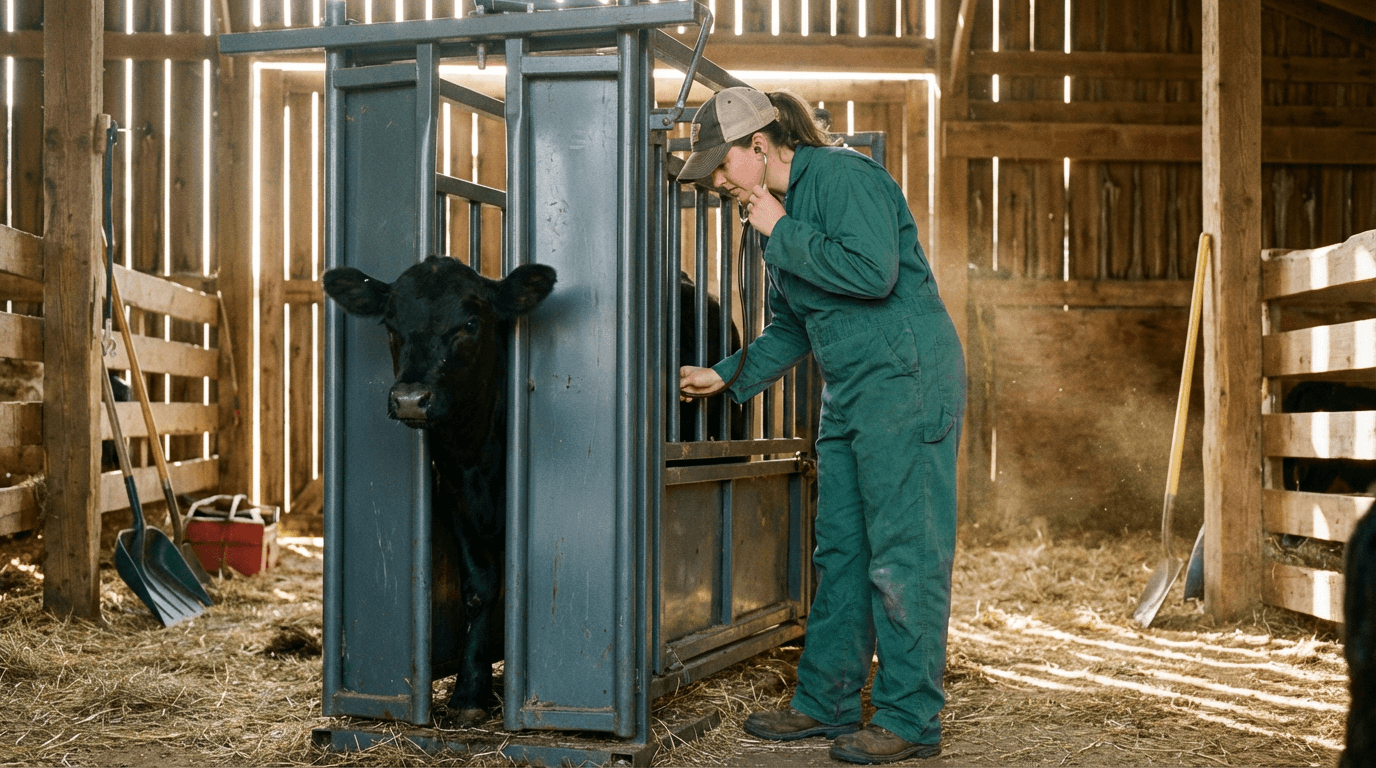
A stethoscope is one of the most valuable tools a cattle producer can own. Normal bovine lung sounds are quiet. Abnormal sounds to listen for include:
- Crackling or rattling (crackles): Fluid in the small airways. Suggests active pneumonia with exudate.
- Wheezing: Airway narrowing, often associated with BRSV or other obstructive processes.
- Absence of sound: Consolidation of lung tissue — the affected lobe is so full of fluid and debris that no air is moving through it. This is a sign of severe, advanced pneumonia.
- Pleural friction rub: A scratching sound timed with breathing, indicating pleuritis. This is a serious complication associated with poor prognosis.
Diagnosis: Working with Your Veterinarian
In straightforward presentations, experienced producers can diagnose and treat BRD based on clinical signs alone. However, there are situations where veterinary involvement is critical to getting the diagnosis right and selecting effective treatment.
When Your Diagnosis Matters
Relying solely on visual observation and a thermometer has real limitations. Multiple studies using lung ultrasound and post-mortem examinations have shown that producers and pen riders miss 30 to 60 percent of BRD cases that are detectable by lung scoring on ultrasound. Consider working with your veterinarian to establish diagnostic protocols for:
- Pen-level outbreaks: When morbidity exceeds 20 percent in a pen, something unusual may be driving disease. Viral diagnostics can identify which pathogens are circulating and inform vaccine protocol adjustments.
- Treatment failures: When calves are not responding to your first-choice antibiotic, culture and sensitivity testing from a recently dead, untreated animal can identify the bacterial pathogen and guide a protocol change.
- Chronic, relapsing cases: Mycoplasma bovis should be suspected in calves that relapse repeatedly. Your vet can confirm with PCR or culture and advise on management strategies.
- Deaths in a short period: Histophilus somni can cause rapid deaths with unusual neurological signs. Necropsy (post-mortem examination) is the most valuable diagnostic tool.
Lung Ultrasound
Portable ultrasound machines are increasingly accessible and affordable, and many large animal veterinarians are trained in bovine lung ultrasonography. The technique allows visualization of consolidated lung tissue — a direct measure of pneumonia severity — without the need for laboratory results. Studies show lung scoring by ultrasound is more sensitive than clinical observation alone for detecting BRD.
Necropsy: The Most Underused Diagnostic Tool
Many producers avoid necropsy because it feels like dwelling on a loss. In reality, a post-mortem examination of a freshly dead calf is the single most informative diagnostic investment you can make during a BRD outbreak. A good necropsy with appropriate tissue samples submitted to a state diagnostic laboratory can identify the specific viral and bacterial pathogens driving disease, detect antibiotic resistance patterns, and reveal management or nutritional factors contributing to susceptibility. Cost at most state diagnostic labs ranges from 75 to 250 dollars per animal, including tissue culture and histopathology.
Treatment Protocols and Antibiotic Selection
When a calf is diagnosed with BRD, rapid, appropriate treatment is essential. Time is lung tissue — every hour of untreated pneumonia means more irreversible damage to the calf's respiratory capacity.
The Antibiotics Used in BRD Treatment
| Drug (Brand examples) | Class | Activity Against Mycoplasma | Typical Withdrawal (meat) | Administration |
|---|---|---|---|---|
| Tulathromycin (Draxxin) | Macrolide | Yes | 18 days | Single injection SQ |
| Gamithromycin (Zactran) | Macrolide | Yes | 35 days | Single injection SQ |
| Tildipirosin (Zuprevo) | Macrolide | Yes | 9 days | Single injection SQ |
| Florfenicol (Nuflor) | Amphenicol | Yes | 28 to 38 days | 2 injections IM/SQ or single SQ |
| Enrofloxacin (Baytril) | Fluoroquinolone | Yes | 28 days | Daily injection SQ (up to 5 days) |
| Ceftiofur (Excenel, Excede) | 3rd-gen Cephalosporin | No | 3 to 13 days | Daily IM/SQ or single LA injection |
| Oxytetracycline (LA-200) | Tetracycline | Yes (moderate) | 22 to 28 days | IM injection, every 48 to 72 hours |
A critical note on antibiotic use: All of the antibiotics listed above require a valid veterinarian-client-patient relationship (VCPR) and a prescription from a licensed veterinarian under FDA Veterinary Feed Directive (VFD) rules. Work with your veterinarian to establish a written treatment protocol for your operation.
First Treatment Success Rates
Research on first-treatment success rates for BRD antibiotics generally shows:
- When calves are treated early (low clinical score, mild signs): 80 to 90 percent success with any FDA-approved BRD antibiotic
- When calves are treated at moderate disease stage: 60 to 75 percent success
- When calves are treated late (severe disease, high score): 30 to 50 percent success
These numbers underscore why early detection matters more than antibiotic choice in most cases. A moderately effective antibiotic given early will outperform the best antibiotic given late.
Non-Steroidal Anti-Inflammatory Drugs (NSAIDs)
Anti-inflammatory therapy is an important companion to antibiotics in BRD treatment. Inflammation in the lungs causes a significant portion of the tissue damage in pneumonia, and NSAIDs can reduce fever, improve feed and water intake, and reduce the severity of the inflammatory response. Common options include:
- Flunixin meglumine (Banamine): The most widely used NSAID in cattle. Given IV or IM, it reduces fever rapidly and effectively. Labeled for 1 to 3 doses.
- Meloxicam: Increasingly popular because it can be given orally, has a long duration of action, and is relatively inexpensive. Studies show meloxicam combined with antibiotics reduces time to recovery and improves weight gain compared to antibiotics alone.
Supportive Care
Beyond specific drug treatment, supportive care dramatically affects outcomes:
- Fluids: BRD calves are often dehydrated from reduced water intake and fever. Oral electrolyte solutions and clean, readily accessible water are important. Severely ill calves may require IV fluids.
- Isolation and reduced stress: Pull sick calves and house them away from competition for feed and water. Sick pens should be close to the hospital area, clean, dry, and well-bedded.
- Nutritional support: Sick calves often go off feed. Offering high-quality hay and ensuring fresh water is available 24 hours a day supports recovery.
- Ventilation and bedding: If calves are housed in a barn, ensure adequate airflow without creating drafts directly on sick animals. Clean, dry bedding reduces pathogen load.
Treatment Failure and Relapse Protocols
When a calf does not respond to first-line therapy within 48 to 72 hours, or relapses within 7 to 14 days, a protocol change is warranted. Work with your veterinarian to establish clear decision trees:
- Define what treatment failure looks like (e.g., no significant improvement in clinical score at 48 hours)
- Select a second-treatment antibiotic from a different drug class
- Establish a maximum number of treatment attempts before a salvage or euthanasia decision is made
- Suspect Mycoplasma bovis in chronic, non-resolving cases with joint swelling or ear droop
Costs of BRD: What It Really Costs Your Operation
The economic impact of BRD goes far beyond the cost of a tube of antibiotics. When you account for every dollar the disease removes from your operation, the true cost is staggering.
Direct Treatment Costs
| Cost Item | Typical Range | Notes |
|---|---|---|
| First-line antibiotic (per animal) | 15 to 40 dollars | Macrolide single dose; varies by weight |
| Second-line antibiotic | 10 to 30 dollars | Florfenicol, ceftiofur, etc. |
| NSAID (flunixin, meloxicam) | 3 to 10 dollars per dose | 1 to 3 doses typical |
| Labor (per treatment episode) | 10 to 25 dollars | Catching, restraint, treatment, recording |
| Veterinary farm call (if required) | 75 to 200 dollars | Plus mileage and treatment costs |
| Total per treated animal | 50 to 150 dollars | First treatment; multiples increase cost |
Indirect Costs
The hidden costs of BRD are typically 3 to 5 times the direct treatment costs:
- Reduced average daily gain (ADG): Calves that experience a BRD episode gain significantly less weight during recovery. Studies show a reduction of 0.1 to 0.4 lbs per day during active disease and a catch-up deficit that may persist for the entire feeding period.
- Reduced feed efficiency: Sick cattle convert feed to gain less efficiently even after clinical recovery. Chronic lung consolidation reduces oxygen delivery to metabolizing tissues, impairing performance at the cellular level.
- Carcass discounts: BRD survivors that reach harvest may have reduced carcass weight and dressing percentage, and some have quality grade discounts due to reduced marbling.
- Death losses: BRD kills cattle. Case fatality rates range from 1 to 5 percent in well-managed operations to 10 to 15 percent in severe outbreaks. A 500-lb calf worth 1,000 dollars represents a total loss when it dies — plus the treatment costs already invested.
- Chronics: Some BRD survivors become chronic non-thrifty cattle that never recover to normal performance. These animals consume resources without adequate return and must eventually be culled at salvage prices.
Operation-Level BRD Cost Scenarios
| Scenario | Pen Size | Morbidity Rate | Estimated Total Cost |
|---|---|---|---|
| Mild outbreak, own-source calves, good management | 100 head | 5% | 500 to 2,000 dollars |
| Moderate outbreak, commingled stockers | 100 head | 15% | 3,000 to 8,000 dollars |
| Severe outbreak, sale barn cattle, high stress | 100 head | 35% | 10,000 to 25,000 dollars |
| Catastrophic, PI cattle present, no vaccination | 100 head | 50% or more | 25,000 to 50,000 dollars or more |
Prevention: Building a BRD Control Program
A comprehensive BRD prevention program addresses the Leukens Triangle from all three angles: reducing stressors, improving host immunity, and minimizing pathogen exposure. No single intervention is sufficient — the best results come from layering multiple strategies.
Vaccination Protocols
Vaccination is the backbone of most BRD prevention programs, but it is only one layer. Vaccines work best when cattle are given adequate time (2 to 3 weeks minimum) to develop immunity before high-risk events like weaning or shipping. Vaccinating cattle the day they arrive at a sale barn or feedlot — when they are already stressed and potentially already incubating disease — produces minimal protection.
A standard BRD vaccine program for beef cow-calf operations includes:
- Pre-weaning (4 to 8 weeks before weaning): Modified-live virus (MLV) 4-way or 5-way combination vaccine covering IBR, BVD1, BVD2, PI3, and BRSV. Intranasal options can provide faster local protection. Clostridial vaccines (7-way or 8-way blackleg) given at the same time. Booster 2 to 4 weeks later if time permits.
- At weaning: Booster if pre-weaning vaccines were given; initial vaccine if first vaccination. Pasteurella/Mannheimia bacterin can be given at this time — they are most effective 3 or more weeks before high-risk shipping.
- For purchased or stocker cattle: Vaccinate upon processing at arrival. Use MLV vaccines if animal health and immune status allow. Give intranasal IBR+PI3 for rapid upper respiratory protection.
BVDV PI testing: Consider testing for BVDV Persistently Infected (PI) animals in any herd or group where BRD morbidity is high and not explained by other factors. A single PI animal can sustain an outbreak. PCR-based PI testing on ear notch samples is available at most diagnostic labs for 4 to 15 dollars per head. Removing PI animals is one of the highest-ROI interventions available for chronically affected herds.
Preconditioning Programs
Preconditioning — the practice of weaning, vaccinating, castrating, dehorning, and adapting calves to bunk feeding before sale — is one of the most powerful BRD prevention strategies available. Preconditioned calves arrive at their next location with most of the major stressors already behind them and adequate vaccine immunity established.
Well-designed preconditioning programs typically require 45 to 60 days of management post-weaning before calves are marketed. Studies consistently show that preconditioned calves have:
- 30 to 60 percent lower BRD morbidity in the subsequent feeding period
- 50 to 70 percent lower death loss
- Improved average daily gain and feed efficiency
- Premium prices at sale — typically 0.08 to 0.20 dollars per lb above auction averages for certified preconditioned calves
Arrival Processing for Purchased Cattle
When you purchase cattle, your processing protocol at arrival sets the foundation for the next 60 days of health. A comprehensive arrival protocol typically includes:
- Assessment: Visually evaluate every animal for obvious sickness or injury before processing. Pull any visibly sick animals for immediate treatment.
- Weigh and assess body condition: Document entry weight. Body condition score below 4 indicates nutritional deficiency that will impair immune response.
- Vaccination: Modified-live or killed BRD viral vaccines per your veterinary protocol. Intranasal IBR+PI3 for rapid mucosal protection. Mannheimia or Pasteurella bacterin.
- Parasite control: Internal and external parasites suppress immune function and reduce feed efficiency. Administer an appropriate anthelmintic and external parasite treatment.
- Tag and record: Individual identification allows tracking of treatment history. Electronic ear tags facilitate large-scale record keeping.
- Rest and nutrition: After processing, give cattle free-choice grass hay, access to fresh clean water, and salt or mineral. Do not push energy intake aggressively in the first week.
Nutritional Support for Immune Function
Trace mineral and vitamin status directly affect immune function in cattle. Deficiencies in copper, zinc, selenium, and vitamin E are associated with impaired neutrophil function, reduced vaccine response, and increased susceptibility to respiratory disease. Before and during high-risk periods:
- Ensure cattle have access to a complete trace mineral salt or loose mineral formulated for your region's soil profile
- Consider injectable trace mineral products at processing — these bypass any dietary intake limitations
- Evaluate hay and forage quality during winter months — poor-quality hay may be deficient in protein, energy, and multiple vitamins and minerals
- Consult your veterinarian or extension nutritionist for a mineral program specific to your forage base and region
Management and Facilities
- Quarantine new arrivals: Keep purchased cattle separate from existing herd animals for at least 2 to 3 weeks. This prevents introduction of new pathogens to your resident cattle.
- Avoid overcrowding: Provide adequate space per animal in confinement situations. Research recommends a minimum of 20 to 25 square feet of bunk space per head.
- Ventilation: For cattle in barns or enclosed facilities, ensure adequate air exchange to dilute pathogen concentration without creating direct drafts. The target is 4 to 8 air changes per hour in cold weather.
- Reduce commingling: Limit the number of sources in any single pen or group. All-in, all-out pen management breaks disease cycles.
- Mud control: Deep mud causes physical stress and inhibits normal immune function. Provide dry lots, bedded areas, or concrete pads at waterers and feed bunks during wet conditions.
BRD in Dairy Cattle and Calves
While BRD is often discussed in the context of beef cattle, it is equally devastating in dairy operations — particularly in pre-weaned dairy calves. BRD is the leading cause of illness and death in pre-weaned dairy calves in the United States, responsible for an estimated 24 percent of all calf deaths and hundreds of millions of dollars in economic losses annually.
Pre-Weaned Dairy Calves
Pre-weaned dairy calves are uniquely vulnerable because they are separated from their dams immediately after birth, relying entirely on colostrum management for passive immunity. They are often housed in individual hutches, which limits social stress but can limit ventilation in extreme weather. Holstein breeds appear to have higher BRD susceptibility than beef breeds under comparable conditions.
BRD in pre-weaned calves also has long-term consequences beyond immediate treatment costs. Multiple studies show that calves with confirmed BRD before weaning produce less milk as adult cows — losses of 100 to 1,000 lbs per lactation have been documented, with the severity correlating with the degree of lung consolidation at time of illness.
Colostrum Management as BRD Prevention
Adequate passive transfer of maternal immunity through colostrum is the foundation of pre-weaned calf health. Best practices include:
- Feed a minimum of 4 quarts (1 gallon) of high-quality colostrum within the first 6 hours of life — ideally within 2 hours
- Test colostrum quality with a Brix refractometer; target readings of 22 percent Brix or higher (equivalent to more than 50 g/L IgG)
- Assess passive transfer in calves using serum total protein or Brix at 24 to 48 hours of age
- Pasteurize colostrum to reduce pathogen load without denaturing antibodies (60 degrees C for 60 minutes)
- Maintain a colostrum bank from your best-producing cows for use when dam colostrum quality is uncertain
Regional Considerations Across the United States
BRD presents somewhat differently across the country, shaped by cattle inventory, climate, dominant production systems, and marketing patterns.
Great Plains and Midwest
The Great Plains — Kansas, Nebraska, Iowa, Missouri, Oklahoma, Texas Panhandle — is the epicenter of US beef production and experiences the highest absolute burden of BRD. Feedlots in the southern plains receive millions of stocker calves annually, and the transition from fall sale barn to feedlot pen is the highest-risk scenario in the industry. Weather in this region is notoriously volatile in fall and winter, with rapid temperature and humidity swings that reliably precede BRD outbreaks.
Southeast
Stocker cattle operations across Georgia, Alabama, Tennessee, Virginia, and the Carolinas are major BRD-affected regions. The combination of warm, humid summers followed by wet, cool fall weather creates challenging conditions. BRSV outbreaks in late fall are common. The region also has a high proportion of backgrounding operations that receive calves from multiple sources.
Northern Plains and Mountain West
Wyoming, Montana, Idaho, Colorado, and the Dakotas run significant cow-calf and stocker operations where harsh winters can extend BRD risk well into spring. Cold stress from below-zero temperatures is a significant driver of BRD in these regions, and calves in remote pasture settings may go longer between daily observations, allowing disease to advance before detection.
Pacific Northwest and California
Wet winters in the Pacific Northwest create challenging conditions for stocker and cow-calf operations. Dairy BRD in California's Central Valley dairies is a significant issue, particularly in pre-weaned Holstein calves. The California dairy industry has driven adoption of some of the most rigorous calf health protocols in the country.
When to Call Your Large Animal Veterinarian
Many routine BRD cases can be managed effectively by producers with a written treatment protocol established by their veterinarian. But there are specific situations that require immediate veterinary involvement.
Call Your Vet Immediately If:
- Morbidity in a group exceeds 15 to 20 percent within a few days — this suggests an outbreak that may require diagnostic investigation and protocol modification
- Calves are dying within 24 to 48 hours of showing first signs — this is consistent with Histophilus somni septicemia or other rapidly fatal BRD presentations
- Your standard treatment protocol is failing — more than 30 percent of treated animals are not responding to first-line antibiotics
- Calves show neurological signs (circling, head pressing, blindness, seizures) in addition to respiratory disease
- You have animals dying unexpectedly and are uncertain of the cause — necropsy before the carcass deteriorates
- Your herd has no established treatment protocol — do not wait for an outbreak to build this relationship
Building a Proactive Relationship with Your Vet
The best time to call your veterinarian about BRD is before you have a crisis. A proactive herd health relationship means:
- Annual or semi-annual herd health consultation to review vaccination protocols
- A written treatment protocol signed by your veterinarian that allows you to treat common conditions with prescription drugs under VCPR
- A drug inventory review to ensure you have the right products on hand before peak BRD season
- A plan for diagnostic submission (where to send samples, what to collect) before you need it
- Familiarity with your operation's history and risk profile so the vet can give specific, relevant advice
Frequently Asked Questions About BRD
What is the difference between BRD and shipping fever?
Shipping fever is a colloquial term for BRD that developed because the disease was so strongly associated with cattle transport. In practice, the terms are used interchangeably. Technically, BRD is the more accurate term because it describes the disease complex regardless of whether transport was involved — cattle on pasture can develop BRD without ever being shipped anywhere. All shipping fever is BRD, but not all BRD is shipping fever.
Can BRD spread between cattle?
Yes, BRD pathogens spread readily through direct and indirect contact. Viral pathogens like IBR, BVDV, BRSV, and PI3 spread via aerosol droplets, nasal secretions, and contact with contaminated surfaces. Bacterial pathogens like Mannheimia and Pasteurella are part of the normal upper respiratory flora of healthy cattle but can be transmitted at elevated levels from sick animals. BRD does not spread like a simple infectious disease where one sick animal inevitably infects all pen mates — the interaction with immune status and stress determines which exposed animals actually develop clinical disease.
How do I know if my antibiotic is working?
Monitor treated cattle closely in the 24 to 48 hours after treatment. Signs of response to appropriate antibiotic therapy include: reduction in fever (temperature dropping toward normal), improved attitude and alertness, increased interest in feed and water, and reduced respiratory distress. Complete clinical resolution typically takes 3 to 7 days. If a calf shows no improvement in 48 hours or gets worse, it requires reassessment.
Can I vaccinate sick cattle?
As a general rule, do not vaccinate clinically ill cattle. Modified-live virus vaccines replicate in the host and require a functioning immune system to produce protection. Administering MLV vaccines to immunocompromised or sick cattle can cause vaccine reactions, may worsen clinical signs, and will not produce adequate immunity. Vaccinate healthy cattle and allow adequate time for immune response before anticipated high-risk periods.
What is a BRD risk score?
Several risk scoring systems have been developed to help producers and veterinarians identify incoming cattle that are at the highest risk of developing BRD. These systems assign points based on factors like: age, source (auction, ranch-direct, country of origin), sex, number of previous owners, distance hauled, vaccination status, body weight, and time of year. Higher scores indicate higher risk and may trigger metaphylaxis or more intensive monitoring protocols. Your veterinarian or a livestock health consultant can help you apply these tools to your operation.
Is there a vaccine that prevents BRD completely?
No. There is no vaccine or combination of vaccines that provides complete protection against BRD under all conditions. Vaccines reduce the severity and incidence of disease but cannot overcome extreme stress, overwhelming pathogen exposure, or the fundamental vulnerability of commingled, stressed cattle. The best outcomes come from combining vaccination with stress reduction, good nutrition, and proactive management. Think of vaccines as one layer of protection among many — not a silver bullet.
How long should I keep cattle in a sick pen?
Cattle that have been treated for BRD should remain in the sick pen until they have been clinically normal for at least 2 to 3 days: normal temperature, normal appetite, normal attitude, and no respiratory distress. Returning cattle to the main pen too early risks disease recurrence due to competition stress and re-exposure. Calves that have had multiple treatments may benefit from extended sick pen time and closer monitoring after return to the main group.
Summary: A BRD Action Plan for Your Operation
Bovine respiratory disease is complex, but a clear action plan takes the guesswork out of your response. Here is a practical framework:
- Know your risk windows: Weaning, transport, commingling, and weather changes are your highest-risk periods. Plan around them.
- Vaccinate before stress, not after: Give vaccines 2 to 3 weeks before anticipated high-risk events so immunity has time to develop.
- Observe daily — twice daily during high-risk periods: Early detection is your most powerful intervention. Train yourself and your crew to recognize subtle early signs.
- Have a written treatment protocol: Know which drug to give at what dose before you have a sick calf in the chute. Work with your vet to establish this before BRD season.
- Treat early and completely: When a calf meets your treatment threshold, treat immediately with the full label dose. Half-measures produce partial outcomes and contribute to resistance.
- Track outcomes: Record which animals were treated, with what, and how they responded. This data guides protocol refinement.
- Call your vet when protocols fail: Treatment failure, outbreak situations, unexpected deaths, and unusual presentations all warrant veterinary consultation.
Find a Large Animal Vet Near You
Managing bovine respiratory disease effectively requires a strong working relationship with a knowledgeable large animal veterinarian. Whether you need help building a vaccination protocol, troubleshooting a BRD outbreak, establishing a written treatment plan, or sending diagnostic samples to a state lab, your vet is an essential partner in protecting your herd.
FarmVetGuide is the most comprehensive directory of large animal and bovine veterinary practices in the United States, with listings for over 9,500 veterinarians across all 50 states. You can search by state, county, species treated, emergency availability, mobile service, and USDA accreditation status to find the right vet for your operation.
Do not wait until you have a BRD crisis to establish that relationship. Find a bovine veterinarian near you today at FarmVetGuide.com and get the herd health partnership your operation needs before peak BRD season arrives.