
Goat Parasite Control: Complete Guide to FAMACHA, Dewormers & Prevention
By FarmVetGuide Editorial Team · Published March 2026 · Updated March 2026 · Based on verified data from our directory of 9,500+ practices
Parasites are the number one health threat facing goat producers across the United States. Unlike cattle or sheep, goats evolved in dry, browse-heavy environments and have comparatively little natural resistance to the gastrointestinal worms that thrive in humid American pastures. The result is a parasite burden that can quietly drain body condition, suppress milk production, stunt growth in kids, and kill animals outright — often before the producer notices anything is wrong. If you raise goats in the Southeast, the Mid-Atlantic, the Midwest, or anywhere that gets warm, humid summers, internal parasites — especially Haemonchus contortus, the barber pole worm — are almost certainly your single biggest production challenge.
The good news is that modern parasite management has advanced enormously. Strategic deworming based on individual animal need, the FAMACHA eye-scoring system, the Five-Point Check, refugia-based grazing management, and targeted selective treatment have replaced the old calendar-based "deworm everyone every six weeks" approach that was destroying drug efficacy and costing producers money. This guide covers every tool in the modern parasite control toolkit — from identifying worm species and clinical signs to FAMACHA scoring, choosing the right dewormer, managing resistance, and knowing when to call a large animal veterinarian.
Understanding Goat Parasites: The Key Species You're Fighting
Not all goat parasites are the same. Understanding which organisms are causing problems on your farm is the first step toward effective control. The three most important categories are gastrointestinal nematodes (roundworms), external parasites, and coccidia — a protozoan organism that is technically not a worm but causes similar clinical signs in kids.
Haemonchus contortus — The Barber Pole Worm
Haemonchus contortus is the most dangerous internal parasite of small ruminants in North America. This bloodsucking worm lives in the abomasum (the true stomach) and can consume up to 0.05 mL of blood per worm per day. A heavily infected goat may harbor thousands of worms. The resulting blood loss causes anemia, bottle jaw (submandibular edema from low protein), weakness, and death — sometimes within days of clinical signs appearing in acute cases.
The barber pole worm thrives in warm, humid conditions. Peak transmission occurs from late spring through early fall across most of the US, with year-round pressure in the Deep South. The larvae are surprisingly resilient on pasture and can survive mild winters. Females are prolific egg layers — a single female can produce 5,000–10,000 eggs per day — making pasture contamination rapid when conditions favor transmission.
What makes H. contortus so dangerous is its speed. A goat can go from appearing normal to in critical condition in 48–72 hours during peak transmission season. This is why FAMACHA scoring — which detects the anemia caused by this worm — is so valuable as a weekly monitoring tool during risk periods.
Other Key GI Nematodes
Teladorsagia circumcincta (brown stomach worm) is the dominant abomasal worm in cooler climates — the Pacific Northwest, northern states, and higher elevations. Unlike H. contortus, it does not cause anemia but damages the stomach lining, impairing digestion and causing poor weight gain, diarrhea, and bottle jaw from protein loss rather than blood loss. It is also less seasonal, with larval survival on pasture extending into cool, wet conditions that kill barber pole worm larvae.
Trichostrongylus colubriformis infects the small intestine and causes the classic "black scours" — profuse, dark, watery diarrhea in kids and adults. It is particularly problematic in the Pacific Northwest and anywhere with cool, wet springs. Cooperia species are less pathogenic but contribute to production losses in mixed infections. Oesophagostomum columbianum (nodular worm) forms nodules in the intestinal wall during larval migration, causing chronic poor condition and occasional secondary bacterial infection.
External Parasites
Lice are the most common external parasite of goats in the US. Both biting lice (Damalinia caprae) and sucking lice (Linognathus stenopsis) occur, with infestations peaking in late winter and early spring when coat growth is heaviest. Signs include intense itching, hair loss, poor coat condition, and — with heavy sucking lice loads — anemia in kids. Mange mites (Sarcoptes scabiei) cause crusty, thickened skin lesions and are notifiable in some states. Keds (sheep keds rarely affect goats) and flies, including nose bots, are seasonal nuisances that cause stress and reduce production.
Ticks deserve special mention: goats are hosts for Ixodes, Dermacentor, and Amblyomma species across different US regions, and heavy infestations can cause anemia in kids. Tick-borne diseases including anaplasmosis and Lyme disease can affect goats in endemic areas, though clinical disease is less common than in cattle.
Coccidia
Eimeria caprina and Eimeria christenseni are the most pathogenic coccidial species in goats. Unlike GI worms, coccidia are host-specific (goat coccidia do not infect cattle or sheep) and are primarily a disease of kids under 6 months of age. The organism damages intestinal villi, causing bloody or watery diarrhea, dehydration, weight loss, and death in severe cases. Subclinical coccidiosis — causing production loss without obvious diarrhea — is probably more economically significant than clinical outbreaks.
Stress is the key trigger: weaning, shipping, crowding, dietary change, or bad weather can tip a kid from controlled exposure to clinical disease. Prevention through management (clean, dry pens; avoiding overcrowding; proper creep feeding) is more effective than treatment. Coccidiostats (amprolium, decoquinate, lasalocid, monensin) used prophylactically during high-risk periods are an important tool. Note that monensin is toxic to goats at high doses and must be used carefully under veterinary supervision.
Clinical Signs of Parasite Overload
Early recognition of parasite problems saves lives and money. By the time an animal is in obvious distress, significant damage has already occurred. Learning to recognize early and intermediate signs — and building a routine monitoring program — is essential for effective parasite management.
Signs of Barber Pole Worm (Haemonchus) Infection
The hallmark of H. contortus infection is anemia. Affected goats show pale white or grayish mucous membranes (visible on the inner eyelid — this is what FAMACHA scores), weakness, rapid breathing, reduced feed intake, and decreased milk production. Bottle jaw — a soft, fluid-filled swelling under the chin — indicates severe hypoproteinemia from blood loss and appears in advanced cases. The feces may appear normal in color (unlike worms that cause diarrhea), which is why bottle jaw or pale membranes may be the first sign noticed.
Acute barber pole worm disease can kill a goat within 24–48 hours of apparent normalcy, particularly in young animals, late-gestation does, or animals under additional nutritional stress. During peak transmission season (June through September in most of the US), any goat showing lethargy, poor appetite, or a rough coat should be FAMACHA scored immediately.
Signs of Intestinal Worm Infections
Intestinal worms — Trichostrongylus, Cooperia, Oesophagostomum — typically cause diarrhea ranging from soft stools to profuse watery scours. The diarrhea may be dark or bloody. Affected animals show weight loss, rough coat, dull eyes, and reduced growth rates in kids. Bottle jaw can occur from protein loss even without significant anemia. Chronic infections cause "ill-thrift" — animals that eat well but fail to gain or maintain weight, constantly thin despite adequate nutrition.
Differentiating Parasites from Other Diseases
Several other conditions mimic internal parasite disease. Copper deficiency causes ill-thrift and poor coat condition. Caseous lymphadenitis causes chronic wasting. Johne's disease causes intractable diarrhea and weight loss in adults. CAE (caprine arthritis encephalitis) virus suppresses production and causes chronic debility. Nutritional deficiencies (selenium, vitamin B12) cause weakness and poor condition. When parasite treatment does not produce the expected improvement, consult a veterinarian to rule out other causes. Fecal egg counts and bloodwork (packed cell volume, total protein) are the most valuable diagnostic tools.
FAMACHA: The Cornerstone of Strategic Parasite Management
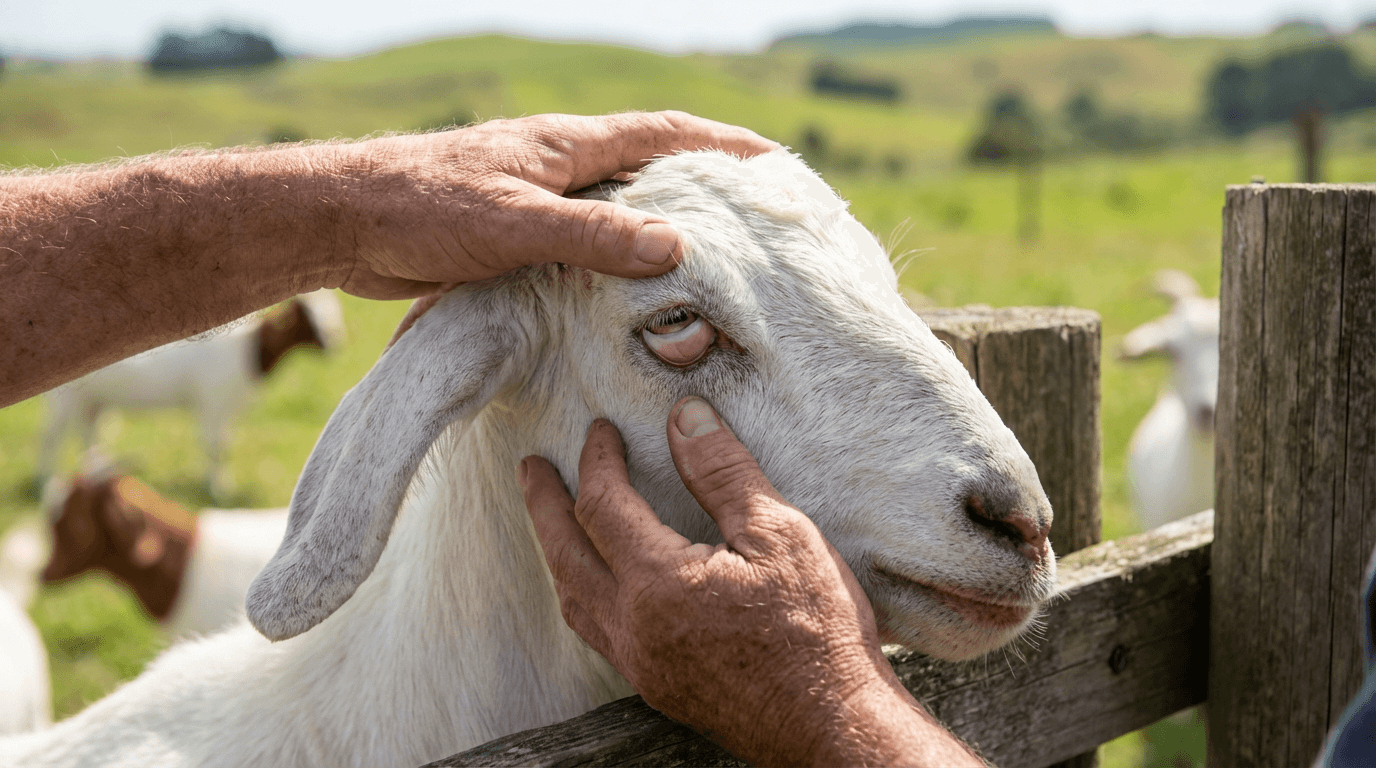
FAMACHA (Faffa Malan Chart) is a clinical scoring system developed in South Africa and now widely used throughout the US to guide selective deworming decisions. The system scores the color of the lower inner eyelid (conjunctival mucous membrane) on a scale of 1 to 5, correlating with the level of anemia caused primarily by Haemonchus contortus. Animals with higher scores (more anemia) are treated; those with lower scores are spared, preserving a population of worms unexposed to dewormers (the "refugia population") that keeps resistance from developing as rapidly.
How to Perform a FAMACHA Score
FAMACHA scoring requires brief hands-on training to do accurately — ideally through a local extension service FAMACHA certification program. The basic technique: restrain the goat, gently pull the lower eyelid down to expose the inner lining (palpebral conjunctiva), and compare the color to the FAMACHA reference card. Good lighting is essential; scoring in bright outdoor light or with a headlamp gives the most accurate results. The card should be laminated and kept handy in the barn.
Score 1 = Red (healthy, no anemia) — no treatment needed. Score 2 = Red-pink — no treatment needed in most animals. Score 3 = Pink — treat animals with additional risk factors (late pregnancy, very young, poor body condition). Score 4 = Pink-white — treat. Score 5 = White — treat immediately; this animal needs emergency veterinary attention as it may be in critical condition.
FAMACHA is a tool for detecting H. contortus-induced anemia specifically. It does NOT detect intestinal worm infections, coccidia, liver fluke, or non-anemic conditions. This is why FAMACHA should be used as part of the Five-Point Check, not as the sole parasite assessment tool.
FAMACHA Scoring Frequency
During peak parasite season (spring through fall in temperate climates), score your entire herd every 2–4 weeks. High-risk animals — does in late pregnancy or early lactation, kids under 6 months, newly introduced animals, animals recovering from illness — should be scored more frequently. In winter or in dry climates where H. contortus pressure is low, monthly or bimonthly scoring is sufficient. Keep records: animals that consistently score 3 or above are "high responders" that likely have genetic susceptibility to barber pole worm and should be culled from the breeding program.
The Five-Point Check
The Five-Point Check (5-Point Check, or FAMACHA Plus) extends the FAMACHA concept to other indicators of parasite burden beyond anemia. The five assessment points are: (1) FAMACHA eye score for anemia; (2) Body condition score (animals losing condition despite adequate feed); (3) Coat score (dull, rough, or dry coat); (4) Dag score (manure soiling of the breech, indicating diarrhea or scouring); (5) Bottle jaw (submandibular edema). An animal scoring poorly on two or more of these five indicators should be treated even if the FAMACHA score alone would not trigger treatment.
Fecal Egg Counts: The Diagnostic Foundation
Fecal egg counts (FEC) are the quantitative foundation of parasite monitoring. While FAMACHA detects the clinical impact of worm infection, FEC tells you how much pasture contamination is occurring and — critically — whether your dewormers are still working. Every goat producer should incorporate FEC into their management program, especially if resistance is suspected.
How to Collect and Submit Fecal Samples
Collect fresh fecal pellets directly from the rectum (or immediately after defecation) into individual labeled bags. Do not pool samples from multiple animals for diagnostic purposes — individual samples are needed to identify high shedders. Refrigerate samples and submit to your veterinarian or diagnostic lab within 24 hours. Most university extension diagnostic labs and private veterinary labs offer fecal flotation (qualitative) and McMaster egg count (quantitative, reported as eggs per gram, EPG) services for $10–$30 per sample.
For herd-level monitoring, collect samples from 10% of the herd (minimum 6–10 animals), focusing on kids, does in early lactation, and any animals with clinical signs. This gives a population-level picture of worm burden and helps identify the highest shedders who may be driving pasture contamination.
Fecal Egg Count Reduction Test (FECRT)
The Fecal Egg Count Reduction Test (FECRT) is the standard method for detecting anthelmintic resistance on a farm. The procedure: collect fecal samples from 10–15 animals before treatment (Day 0), treat with the dewormer being tested, and collect samples again 10–14 days post-treatment. Calculate percent reduction: (pre-treatment EPG - post-treatment EPG) / pre-treatment EPG × 100. Efficacy below 95% indicates resistance; below 80% indicates high-level resistance. A dewormer showing less than 95% efficacy should no longer be used as a primary treatment on that farm.
Run FECRT annually or whenever you suspect resistance (animals not responding to treatment, recurring high FAMACHA scores after deworming). Test each drug class separately. Many farms in the southeastern US now have triple resistance — worms resistant to all three major dewormer classes — making professional veterinary guidance essential for resistance management.
Dewormer Classes, Dosing, and Resistance
There are three main anthelmintic drug classes used in goats in the US. Understanding how each works, the correct dose, and the resistance situation is critical for effective treatment and resistance management. Note that most dewormers are not FDA-approved specifically for goats — they are used extra-label, which requires a valid veterinarian-client-patient relationship (VCPR). Using dewormers without veterinary guidance is both legally questionable and practically risky given the severity of resistance problems.
Class 1 — Benzimidazoles (White Drenches)
Benzimidazoles include fenbendazole (Safeguard, Panacur), oxfendazole, and albendazole. These drugs work by interfering with worm energy metabolism. They are effective against most GI nematodes, lungworms, and tapeworms, and some (albendazole) have activity against liver flukes. Resistance is widespread in H. contortus across the US, particularly in the Southeast.
Goat dosing is critical: Goats metabolize benzimidazoles much faster than sheep or cattle. The goat dose of fenbendazole is 10 mg/kg (double the cattle/sheep label dose). Under-dosing is the primary driver of resistance development. Always dose by accurate body weight using a livestock scale or weight tape. Never estimate high — err on the side of the correct calculated dose.
| Drug | Class | Goat Dose | Meat Withdrawal | Milk Withdrawal |
|---|---|---|---|---|
| Fenbendazole (Safeguard) | Benzimidazole | 10 mg/kg PO | 8 days (extra-label) | Extra-label: consult vet |
| Albendazole (Valbazen) | Benzimidazole | 10 mg/kg PO | 27 days (cattle label) | Not for dairy use |
| Oxfendazole (Synanthic) | Benzimidazole | 10 mg/kg PO | Extra-label | Extra-label: consult vet |
Class 2 — Macrocyclic Lactones (Clear Drenches)
The macrocyclic lactone class includes ivermectin (Ivomec) and moxidectin (Cydectin). These drugs paralyze worm nerve and muscle function and are effective against GI nematodes, lungworms, and external parasites. They do not have activity against tapeworms or liver flukes.
Goat dosing is again higher than label: ivermectin is typically used at 0.4 mg/kg orally (double the cattle label dose of 0.2 mg/kg). Moxidectin is used at 0.4 mg/kg orally. Subcutaneous injection is less effective than oral dosing in goats due to different pharmacokinetics. Resistance to ivermectin is extremely widespread — on many farms in the Southeast, ivermectin is essentially useless against H. contortus. Moxidectin retains better efficacy in many locations but resistance is spreading. FECRT is essential to know whether these drugs are working on your farm.
Class 3 — Nicotinic Agonists (Yellow Drenches)
Levamisole (Prohibit) is the primary drug in this class. It works differently from the first two classes, stimulating worm nerve and muscle until paralysis and death. Levamisole has a narrow safety margin in goats (therapeutic dose is close to toxic dose), which is why accurate weight-based dosing is essential. Overdose can cause salivation, muscle tremors, and — at high doses — death. Use 8 mg/kg orally (not SC).
Levamisole resistance exists but is less prevalent than benzimidazole or macrocyclic lactone resistance in most US regions, making it a valuable tool in rotation and combination protocols. However, it has no activity against arrested (hypobiotic) larval stages, which are important in Teladorsagia control in winter/spring.
Closantel and Monepantel
Closantel (not currently FDA-approved in the US) is used extra-label in some situations for H. contortus control and has activity against liver fluke. Monepantel (Zolvix), a Class 4 amino-acetonitrile derivative, has been available in some countries but is not approved in the US as of this writing. If multiple-drug resistance makes conventional options ineffective, consult a veterinary parasitologist about available alternatives and any clinical trial opportunities.
Combination Treatments and Resistance Management
When resistance to individual drug classes is documented by FECRT, combination treatments using two or three drug classes simultaneously can be highly effective. The rationale: if resistance to Drug A is 80% and to Drug B is 75%, independent resistance mechanisms mean that only 5% of worms (0.2 × 0.25) may survive both drugs. Combinations should only be used under veterinary guidance and with FECRT confirmation of resistance, as indiscriminate use accelerates resistance to all classes simultaneously.
The most important resistance management principle is maintaining refugia — a population of worms that has never been exposed to dewormers. These susceptible worms dilute resistant genes in the population, slowing resistance development. The key practices: treat only animals that need treatment (targeted selective treatment), never deworm at introduction without fecal testing first, leave some animals untreated at each deworming event, and manage pasture to reduce contamination. Animals with consistently low FAMACHA scores and FEC — "low responders" — are genetically resistant to barber pole worm and should be preferentially kept for breeding.
Strategic Deworming Timing: When to Treat
Calendar-based deworming — treating everyone on a fixed schedule regardless of individual need — has been largely abandoned by progressive producers and veterinary parasitologists. It is expensive, it treats animals that don't need it, it destroys refugia, and it accelerates resistance. The modern standard is targeted selective treatment (TST): identify animals that need treatment using FAMACHA, Five-Point Check, and FEC, and treat only those animals.
High-Risk Periods and Events
Certain physiological states and management events dramatically increase parasite susceptibility. Does in the periparturient period (the last 4 weeks of pregnancy through 6 weeks post-kidding) experience a natural immunosuppression that allows established worm burdens to surge and new larvae to establish in large numbers. This "periparturient relaxation of immunity" means that even does that were managing their parasite load well through the year may need deworming around kidding time. FAMACHA score all does at 2–4 weeks pre-kidding and again at 2 and 4 weeks post-kidding.
Kids are highly susceptible to both GI worms and coccidia from birth through about 6 months, as they have not yet developed effective immunity. Kids grazing in contaminated pastures may need more frequent monitoring and lower FAMACHA treatment thresholds. Weaning is a particular stress point that triggers clinical parasitism — monitor kids closely for the first 4–6 weeks post-weaning. Newly purchased animals of unknown parasite/resistance history should be quarantine-treated with a combination dewormer and held off pasture for 48 hours to prevent introducing resistant worms to your farm.
Seasonal Treatment Strategy by US Region
Parasite pressure varies enormously by geography and climate. Producers in the Southeast face virtually year-round barber pole worm pressure and may need biweekly FAMACHA monitoring from April through October. Producers in the Northern Plains or Mountain West face a different worm spectrum (more Teladorsagia, less H. contortus) and may have a more defined seasonal window. Work with your local extension service and veterinarian to develop a region-specific protocol.
| Region | Primary Worm Risk | Peak Season | FAMACHA Monitoring |
|---|---|---|---|
| Southeast (AL, GA, MS, LA, AR, SC) | H. contortus dominant | April–October; year-round risk | Every 2 weeks, April–October |
| Mid-Atlantic (VA, NC, TN, KY, WV) | H. contortus + Teladorsagia | May–September | Every 2–4 weeks, May–September |
| Midwest (OH, IN, IL, MO, KS) | Mixed species | June–August | Monthly, May–September |
| Northeast (PA, NY, NE, New England) | Mixed; Teladorsagia in cool wet springs | May–August | Monthly, May–September |
| Pacific NW (WA, OR) | Teladorsagia dominant | Spring/fall wet seasons | Monthly; target periparturient does |
| Southwest (TX, NM, AZ, OK) | H. contortus in humid areas; lower risk in dry zones | June–September | Monthly peak season |
| Mountain West / Great Plains | Lower overall pressure; mixed species | Summer | Quarterly; monitor periparturient closely |
Pasture Management and Non-Chemical Control
Dewormers treat animals. Pasture management reduces the challenge those animals face. Integrating both strategies is the only sustainable long-term approach. Relying solely on drugs will eventually fail as resistance spreads; relying solely on management is insufficient on highly contaminated farms. The goal is to reduce pasture larval burden while maintaining refugia in the animal population.
Rotational Grazing for Parasite Control
Rotational grazing with rest periods long enough to allow larval die-off is one of the most effective non-chemical parasite control tools. Infective third-stage larvae (L3) of H. contortus survive on pasture for varying periods depending on temperature and humidity: 2–4 weeks in warm, wet summer conditions; 6–12 weeks in cool, wet spring/fall conditions; much shorter in hot, dry conditions. A rest period of 6–8 weeks between grazing events during summer, or 10–12 weeks in spring/fall, significantly reduces pasture larval burden.
Practical rotational systems for goat parasite control include: (1) moving animals to "clean" pastures (not grazed by goats or sheep for the required rest period) after kidding, (2) using hayfields or corn stubble as parasite-safe grazing in late summer, (3) alternating goats with cattle or horses (species-specific parasites do not cross), and (4) providing browse and elevated feeding areas that reduce nose-to-ground grazing where larvae concentrate.
Stocking Rate and Pasture Hygiene
Overstocking dramatically increases parasite pressure by increasing larval density per square foot of grazed area and forcing animals to graze close to manure deposits where larvae concentrate. General recommendation: stocking at or below the carrying capacity of your pastures not only reduces parasite pressure but improves nutrition, which in turn improves immune function and parasite resistance. Thin, nutritionally stressed animals are significantly more susceptible to clinical parasitism than well-nourished animals on the same pasture.
Remove manure from drylots and loafing areas regularly — at minimum twice weekly in warm weather. Allow manure to compost (minimum 90 days in a hot, active pile) before spreading on pastures. Larvae die during proper composting but survive in raw manure. Spread manure only on pastures that will not be grazed for at least 6 weeks in warm conditions.
Biological Control: Duddingtonia flagrans
Duddingtonia flagrans is a nematophagous (nematode-trapping) fungus that is commercially available in the US as a feed supplement (BIOX-M, STELITROL). When goats consume pellets containing viable spores, the spores pass through the digestive system and germinate in manure on pasture, where the fungal hyphae trap and kill infective larvae before they can migrate onto grass. Studies show 50–80% reduction in infective larvae on pasture when used consistently in heavily contaminated situations.
D. flagrans is most valuable as part of an integrated program during peak transmission season. It must be fed daily (spores are fragile and die quickly) and is most cost-effective in high-density or high-risk situations — crowded drylots, kidding areas, and heavily used pastures. Cost is approximately $0.10–0.25 per animal per day depending on body weight and concentration. It does not replace deworming but can meaningfully reduce pasture contamination and treatment frequency.
Nutritional Support and Immune Function
Nutrition profoundly affects parasite resistance. Protein status is the single most important nutritional factor: protein-deficient animals mount weaker immune responses and are dramatically more susceptible to clinical parasitism. Meeting or exceeding protein requirements (12–18% crude protein depending on production stage) is essential. Supplementing protein during peak worm season — particularly for periparturient does — can reduce the need for deworming treatment.
Copper deficiency is extremely common in goats (they have higher copper requirements than sheep) and impairs immune function and parasite resistance. Ensure adequate copper status through properly formulated goat minerals or individually targeted supplementation. Selenium and vitamin E also support immune function; deficiencies are common in many US regions. Zinc and cobalt play roles in immune response. Work with your veterinarian or nutritionist to assess the mineral status of your herd — blood selenium and liver copper levels are the most useful diagnostics.
Liver Flukes in Goats
Fasciola hepatica (common liver fluke) infects goats in geographic areas with suitable habitat for the intermediate host snail (Galba truncatula and related species): wet, boggy areas, stream margins, seepy hillsides, and flooded pastures. Liver fluke is a significant problem in the Gulf Coast states, Pacific Coast, and parts of the Pacific Northwest; less so in dry interior regions. Fascioloides magna (giant liver fluke), whose primary hosts are deer and elk, can cause lethal aberrant migration in goats in areas where deer and goats share habitat.
Recognizing and Diagnosing Liver Fluke
Acute fluke disease from massive simultaneous ingestion of metacercariae (encysted larvae) causes sudden death from liver hemorrhage — rare but dramatic. Subacute disease causes ill-thrift, bottle jaw, anemia, and mortality over weeks. Chronic infection causes persistent poor condition, reduced production, and liver condemnation at slaughter. Diagnosis requires fecal sedimentation (not standard flotation) to detect fluke eggs — request this specifically when submitting samples. Blood tests (GGT, liver enzyme elevation) and ultrasound are used by veterinarians for individual diagnosis.
Treatment options are limited in the US: albendazole has some efficacy against adult flukes (reduced compared to immature stages); closantel (extra-label) is effective against adult flukes; clorsulon (Curatrem, available in the US) is effective against adult flukes only and is the most commonly used flukicide. There is no approved treatment for immature fluke stages in the US. Preventing access to wet areas where snails live is the most effective control strategy.
When to Call a Veterinarian
While much of routine parasite monitoring can be done by experienced producers, veterinary involvement is essential in several situations. Establishing a VCPR with a large animal veterinarian — ideally one experienced with small ruminants — before you have a crisis is one of the most valuable investments you can make in your parasite management program.
Emergencies Requiring Immediate Veterinary Care
- FAMACHA score 5 (white mucous membranes): This animal may be in life-threatening anemia. Call immediately. Emergency treatment may include blood transfusion and intensive IV fluids in addition to deworming.
- Bottle jaw with weakness or recumbency: Advanced disease requiring veterinary assessment of total protein, packed cell volume, and fluid status.
- Multiple animals down in the same pasture: Suggests a sudden high larval challenge from a recently contaminated pasture. Emergency pasture rotation and immediate treatment of all affected animals.
- Kids with bloody profuse diarrhea: Could be severe coccidiosis, enterotoxemia, or salmonellosis — all potentially fatal within hours without treatment.
- Fever above 104.5°F with diarrhea or collapse: Likely bacterial disease secondary to parasitism; may need antibiotics and supportive care.
Non-Emergency Veterinary Consultations
- Developing and reviewing your farm's deworming protocol annually
- Running and interpreting FECRT results
- Persistent poor performance despite treatment — investigate other diseases
- Choosing appropriate dewormers given local resistance patterns
- Diagnosis and treatment of liver fluke, tapeworms, or external parasites
- Coccidiosis outbreaks in kids requiring prescription coccidiostats
- Designing a breeding selection program for parasite resistance
Estimated Veterinary Costs for Parasite-Related Services
| Service | Typical Cost Range | Notes |
|---|---|---|
| Farm call (herd visit) | $65–$150 + mileage | Base fee; procedures extra |
| Fecal flotation (per sample) | $15–$35 | Extension labs often less |
| McMaster egg count | $20–$40 | Quantitative; needed for FECRT |
| Fecal sedimentation (fluke) | $20–$40 | Must request specifically |
| Packed cell volume / total protein | $25–$60 | In-clinic; quick results |
| Full blood panel | $80–$180 | Includes liver enzymes, minerals |
| FECRT consultation | $200–$500 | Includes sampling, testing, interpretation |
| Emergency call (after hours) | $150–$400+ | Plus time, mileage, treatment costs |
| Blood transfusion (severe anemia) | $300–$800+ | Depends on donor availability |
Genetic Selection for Parasite Resistance
The most sustainable long-term parasite management strategy is breeding animals with natural resistance to internal parasites. Significant genetic variation in parasite resistance exists within and between goat breeds, and resistance is moderately heritable — meaning selection can meaningfully improve resistance over generations.
Breed Differences in Parasite Resistance
Spanish goats and Kiko goats were developed in part for hardiness and parasite resistance and generally show better FAMACHA scores and lower FEC than dairy or meat breeds in equivalent conditions. Boer goats, the dominant US meat breed, are relatively susceptible to barber pole worm. Myotonic (fainting) goats show intermediate susceptibility. Dairy breeds (Nubian, LaMancha, Alpine, Saanen) vary considerably but are generally more susceptible than Spanish or Kiko. Crosses between resistant breeds and productive breeds can combine parasite resistance with production traits.
Research programs including the ATTRA Sustainable Parasite Management program and breeding value estimation through fecal egg count EPD (expected progeny differences) are being developed for small ruminants. Working with a veterinarian or extension specialist to track FAMACHA scores and FEC by sire and dam over time can help you identify which animals in your herd are passing on resistance to their offspring.
Selecting and Culling for Resistance
Keep records of FAMACHA scores for every animal at every scoring event. Animals that consistently require deworming (score 3–5 repeatedly) despite adequate nutrition are likely genetic "high responders." These animals consume disproportionate amounts of your dewormer budget, contaminate your pastures with resistant worm eggs, and pass susceptibility to their offspring. Culling or selling consistently susceptible animals — even productive ones — improves herd parasite resistance more than any dewormer.
Conversely, animals that maintain FAMACHA scores of 1–2 with low FEC throughout the parasite season, even without treatment, are valuable genetic resources. These "low responders" should be retained for breeding and their offspring monitored for inheritance of resistance traits. Over 5–10 years, systematic selection can substantially reduce dewormer requirements for the entire herd.
Parasite Control Records and Compliance
Good record-keeping is essential for both legal compliance (extra-label drug use requires records) and for making evidence-based management decisions. The minimum records every goat producer should keep for parasite management include: animal ID, date, FAMACHA score, FEC result if performed, drug used, dose, route, lot number, withdrawal period, and operator initials.
Under the Veterinary Feed Directive (VFD) rules and extra-label drug use (ELDU) regulations, use of many common dewormers at goat-appropriate doses requires a valid veterinarian-client-patient relationship. Your veterinarian can provide written protocols covering the drugs, doses, and indications for your specific operation. These protocols provide legal protection and ensure you are using drugs correctly. They also open the door to prescription medications that may be more effective than over-the-counter options.
Frequently Asked Questions About Goat Parasite Control
How often should I deworm my goats?
There is no single correct answer — it depends on your region, your herd's parasite pressure, and individual animal needs assessed through FAMACHA scoring and fecal egg counts. Modern best practice is targeted selective treatment: score animals every 2–4 weeks during peak season and treat only those with FAMACHA scores of 3 or above (plus additional risk factors). This approach reduces dewormer use by 40–70% compared to calendar-based programs while maintaining equal or better animal health outcomes.
My animals keep getting reinfected after I deworm. What's wrong?
This is extremely common and usually reflects one or more of the following: under-dosing (weigh your animals and use the correct goat dose — not the cattle dose); dewormer resistance (run a FECRT to confirm your drugs are working); pasture recontamination (larvae survive on pasture for weeks to months; dewormers don't prevent reinfection); or treating in the face of high pasture larval challenge during peak season. Consider rotational grazing to reduce larval challenge and have a veterinarian run resistance testing.
What is the safest dewormer to use around kidding time?
All major dewormer classes require careful consideration around kidding. Albendazole is contraindicated in early pregnancy (first 45 days) due to teratogenicity. Fenbendazole, levamisole, and moxidectin are generally considered safer in late pregnancy but discuss specific timing with your veterinarian. Accurate dosing by body weight is critical — underdosing a heavy, near-term doe leads to treatment failure.
Can goat kids get the same parasites as adult goats?
Yes, though the relative importance differs. Kids are highly susceptible to coccidiosis (which rarely causes clinical disease in adults) and to all GI nematodes. Their immature immune systems mount less effective responses than adults. For kids, the most important interventions are: clean dry environment to reduce coccidial oocyst ingestion, early FAMACHA monitoring starting at 6–8 weeks of age, ensuring adequate colostrum intake at birth, and appropriate creep feeding to maintain good nutritional status.
Is it safe to use ivermectin pour-on on goats?
No. Pour-on ivermectin (Ivomec Pour-On) applied topically to goats achieves much lower blood levels than injectable or oral dosing and is not recommended. Goat skin has different drug absorption characteristics than cattle skin. If ivermectin is being used, the oral route (drench) at 0.4 mg/kg is preferred. Even then, resistance to ivermectin is widespread in H. contortus — FECRT should be run to confirm efficacy before continuing use.
How do I know if my goats have barber pole worm versus other intestinal worms?
The most reliable differentiation is through larval development culture — fresh fecal samples are incubated to develop to infective L3 larvae, which are then identified to species under a microscope. This is done by diagnostic labs. Clinically, H. contortus causes anemia (detectable by FAMACHA) without diarrhea; intestinal worms cause diarrhea (dag score) with or without bottle jaw. Mixed infections are common. Knowing the species composition on your farm helps guide drug selection and management strategy.
What withdrawal times apply when using dewormers extra-label in goats?
Extra-label drug use withdrawal times must be established by your veterinarian and will typically be longer than the label withdrawal for the approved species. For example, fenbendazole (Safeguard) labeled for cattle has a 13-day meat withdrawal; used extra-label in goats at twice the dose, veterinarians typically recommend a 21–30 day withdrawal. Never use your own judgment on withdrawal times for extra-label use — always consult your veterinarian and document the withdrawal period in your treatment records. Milk withdrawal for goats on dewormers is a particular concern for licensed dairy operations.
Parasite Management Cost Summary
| Strategy / Product | Approximate Cost per Animal per Year | Notes |
|---|---|---|
| Fenbendazole (1–2 treatments/year, TST) | $1–$5 | Based on targeted selective treatment |
| Ivermectin (1–2 treatments/year) | $1–$4 | Oral drench at goat dose |
| Levamisole (1 treatment/year) | $1–$3 | Per calculated dose |
| D. flagrans (Biox-M) — peak season only | $10–$25 | Based on 90-day peak season feeding |
| Fecal egg count testing | $5–$15 | Herd-level testing, shared across animals |
| FAMACHA card and training | $10–$30 one-time | Required training through extension |
| Veterinary consultation (annual) | $15–$50 | Prorated across herd |
| Estimated total (strategic program) | $25–$80 | vs. $60–$120+ with calendar-based deworming |
Summary: Building Your Farm's Parasite Control Program
Effective goat parasite control in 2026 means moving away from calendar-based, treat-all programs toward a science-based, individualized approach. The core principles: monitor consistently using FAMACHA and the Five-Point Check, treat only animals that need treatment, use the correct dose by body weight, maintain refugia to slow resistance, manage pastures to reduce larval challenge, support immune function through nutrition, select for genetic resistance, and partner with a veterinarian for diagnostics and protocol development.
No single tool solves the parasite problem. The producers who have the best outcomes combine FAMACHA monitoring, accurate deworming, rotational grazing, nutritional management, and regular fecal testing into a coherent program tailored to their specific region, breeds, and production system. The investment in getting this right pays for itself many times over in reduced treatment costs, improved production, and — most importantly — fewer dead animals.
The parasite resistance crisis is real and worsening on many farms. If your dewormers aren't working as well as they used to, don't wait — run a FECRT, consult a veterinarian, and get ahead of the problem before your options become severely limited.
Find a Large Animal Vet Near You
Developing an effective parasite management program for your goat herd requires a partnership with a knowledgeable large animal or small ruminant veterinarian. A good vet will help you run fecal egg count reduction tests, identify resistance on your farm, create legally compliant extra-label drug protocols, and troubleshoot persistent problems. Don't wait for a crisis to establish that relationship.
FarmVetGuide is the most comprehensive directory of large animal and small ruminant veterinarians in the United States, with listings for over 9,500 practices across all 50 states. Search by county to find goat-experienced veterinarians near you — including those offering mobile farm call service, emergency availability, and USDA accreditation.
Find a goat vet in your county at FarmVetGuide.com — the trusted directory for livestock producers across America.